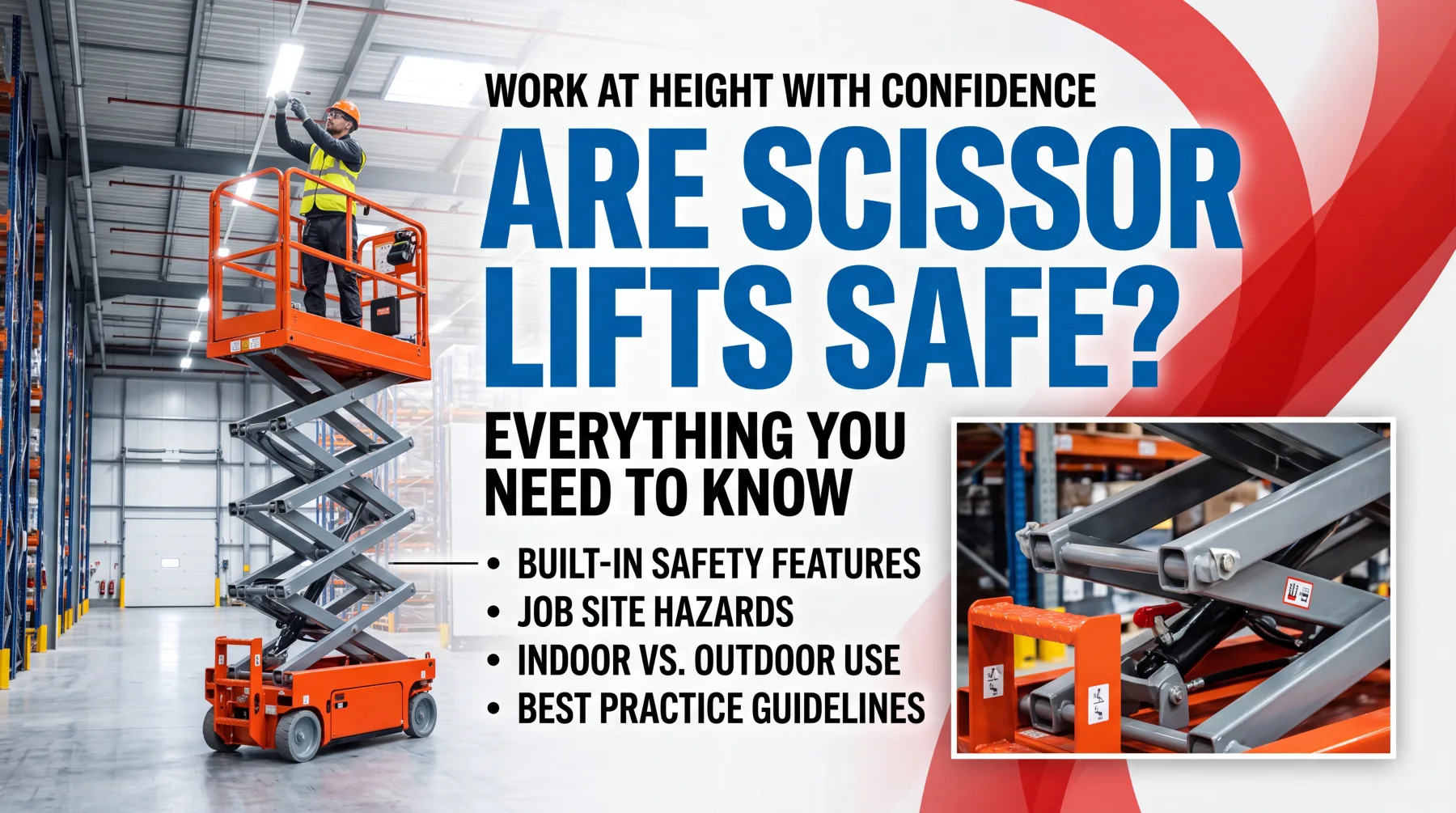
Scissor lifts are a trusted solution for working at height, giving crews a stable platform to reach elevated areas across construction sites, warehouses, and maintenance jobs. Used correctly, they are among the safest ways to work above ground level. Used carelessly, they can become the source of serious injuries, and that difference comes down to knowing the equipment, respecting its limits, and following proven safety practices. The good news is that scissor lift safety is well within your control. This guide walks you through the built-in features that protect operators, the hazards worth watching for, the best practices that keep every job accident-free, the differences between indoor and outdoor use, and the steps that reduce risk. Read on to work at height with confidence.
Built-In Safety Features of Scissor Lifts
Modern scissor lifts are engineered with safety in mind, and several protective features come standard on nearly every machine. These systems are designed to prevent the most common accidents and to give operators a secure platform even at significant heights. Understanding what each feature does helps you rely on it correctly and recognize when something is not working as it should. A machine's safety equipment only protects you when it is intact and functioning, so knowing these systems is the first step toward safe operation.
The platform itself carries much of the protection. Guardrails surround the work area to keep operators from falling, and most lifts include a swing gate or chain at the entry point to close off that opening once you are aboard. Beyond the railings, several built-in systems actively guard against operational hazards:
Emergency stop buttons let the operator halt all movement instantly, both on the platform and at the ground controls.
Tilt sensors detect when the machine sits on ground too steep or uneven for safe elevation and prevent the lift from rising further.
Overload protection systems monitor the weight on the platform and warn or restrict operation when the load exceeds safe limits.
These features work together to create multiple layers of defense. Guardrails guard against falls, tilt sensors guard against tip-overs, and overload protection guards against structural failure, while the emergency stop gives the operator a final measure of control at any moment. It is worth remembering that these systems are safeguards, not substitutes for careful operation. They perform reliably when maintained and tested, but they cannot compensate for reckless use. Treat them as your partners in safety, check that they function before each job, and they will do their part to keep you protected.
Common Hazards When Using a Scissor Lift
Even with strong safety features, scissor lifts carry real risks, and being aware of them is essential to avoiding accidents. Tip-overs rank among the most serious hazards. A raised scissor lift has a high center of gravity, and operating on a slope, driving with the platform elevated, or overreaching from the platform can all upset its balance. When a lift tips, the consequences are often severe, which is why stability deserves constant attention throughout every job.
Falls are another major concern, even with guardrails in place. Operators who climb on the rails, lean out over the edge, or remove protective barriers put themselves at direct risk of falling from height. Overloading compounds the danger, since exceeding the platform's rated capacity strains the machine and can lead to structural failure or instability. The weight of workers, tools, and materials adds up quickly, so staying within limits matters more than many operators realize.
Ground conditions and overhead obstacles round out the most common hazards. The main risks to watch for include:
Tip-overs caused by slopes, uneven ground, or moving the lift while elevated.
Falls from climbing on rails, overreaching, or bypassing guardrails.
Overloading the platform beyond its rated weight capacity.
Unstable ground, including soft soil, potholes, or debris that can shift under the machine.
Overhead obstacles and power lines, which pose crushing and electrocution risks.
Contact with overhead power lines is especially dangerous, as electrocution can be fatal even without direct touch when the lift comes too close. Recognizing these hazards before you begin lets you plan around them. Most scissor lift accidents trace back to one of these predictable risks, and awareness is your strongest first line of defense against every one of them.
Best Practices for Safe Scissor Lift Operation
Safe scissor lift operation begins before the machine ever leaves the ground. A thorough pre-use inspection is one of the most valuable habits an operator can build, since it catches problems while they are still easy to fix. Walk around the lift and check the controls, guardrails, tires or wheels, hydraulic system, and safety features to confirm everything works as it should. Test the emergency stop, verify the platform gate closes securely, and look for leaks, damage, or worn components. Skipping this step invites the very failures that inspections are designed to prevent.
Personal protective equipment and load awareness form the next layer of safe operation. Wearing the right PPE, including a hard hat and, where required, a harness, protects you from falling objects and reduces the consequences of a fall. Just as important is respecting the platform's load capacity. Every scissor lift has a clearly stated weight limit that accounts for operators, tools, and materials together, and staying within that limit keeps the machine stable and structurally sound.
Following the manufacturer's instructions ties these practices together. The operator's manual contains specific guidance for your exact model, and it should always guide how you use the machine. Keep these essential guidelines in mind:
Perform a pre-use inspection before every shift, testing all controls and safety systems.
Wear appropriate PPE suited to the job and the site's requirements.
Stay within the rated load capacity, counting workers, tools, and materials.
Follow the manufacturer's instructions for safe operation, height limits, and terrain.
Operators should also be properly trained and, where applicable, certified before running a scissor lift. When you combine careful inspections, the right protective gear, disciplined load management, and strict adherence to the manual, you create a routine that keeps both the operator and everyone nearby safe on every job.
Indoor vs. Outdoor Scissor Lift Safety
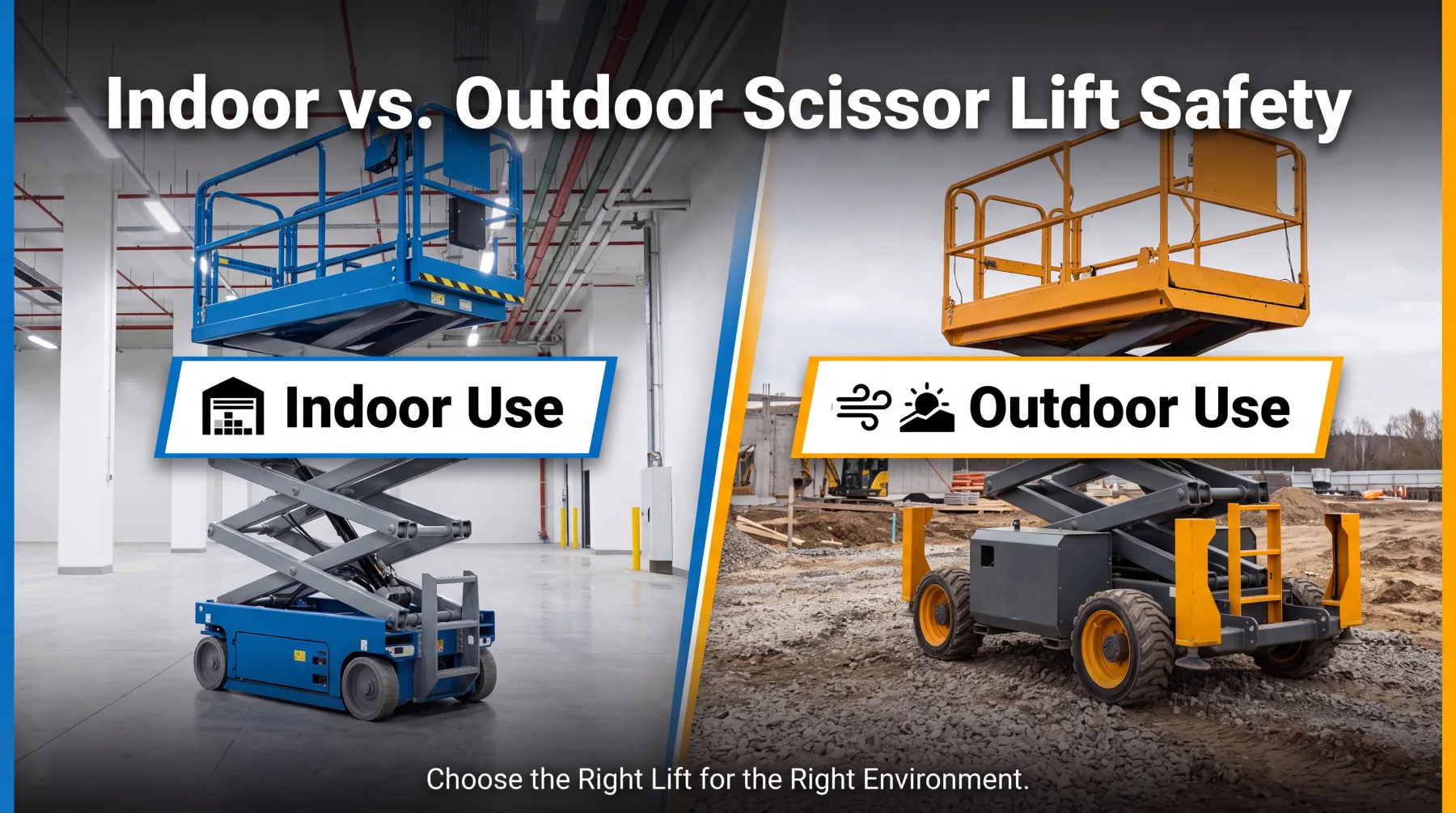
Where you use a scissor lift changes the safety considerations significantly, and understanding those differences helps you match the machine and your approach to the environment. Indoor operation generally offers a more controlled setting. Floors are typically level, smooth, and stable, and the enclosed space shields the lift from wind and weather. Even so, indoor work brings its own concerns, including overhead obstacles like pipes, beams, and lighting, along with the need for adequate ventilation when using engine-powered machines. Many indoor jobs call for electric scissor lifts specifically because they produce no emissions and run quietly in confined spaces.
Outdoor operation introduces variables that demand extra caution. Weather is the biggest factor, and wind in particular poses a serious threat. A raised platform acts like a sail, so gusts can destabilize the lift and increase the risk of a tip-over. Manufacturers specify maximum safe wind speeds, and operators must respect those limits, avoiding elevated work when winds climb too high. Rain, ice, and cold add further hazards by making surfaces slippery and reducing traction.
Ground stability separates the two environments most clearly. Consider how conditions differ:
Surfaces indoors are usually firm and level, while outdoor ground may be soft, sloped, or uneven.
Weather is a non-issue indoors but a constant consideration outdoors, especially wind and precipitation.
Machine selection often favors electric lifts indoors and rugged, rough-terrain lifts outdoors.
Outdoor sites frequently require rough-terrain scissor lifts built with wider bases and stronger traction for uneven ground. Before elevating outdoors, check that the ground is firm enough to support the machine and free of holes, debris, or slopes beyond safe limits. By reading the environment carefully and choosing the right lift for the conditions, you keep operation safe whether you are working inside a warehouse or out on an open site.
How to Reduce the Risk of Accidents
Reducing scissor lift accidents comes down to combining sound preparation with disciplined daily habits. Proper training stands at the foundation of every safe operation. Operators who understand the machine, its controls, and its limits make far better decisions than those who learn on the fly. Formal training and certification, where required, ensure that everyone using the lift knows how to inspect it, operate it correctly, and respond to problems. Investing in that knowledge pays off directly in fewer incidents and greater confidence on the job.
Routine maintenance keeps the machine itself dependable and safe. A well-maintained scissor lift performs predictably, while a neglected one can fail at the worst possible moment. Regular servicing of the hydraulic system, controls, tires, and safety features prevents the gradual wear that leads to breakdowns and dangerous malfunctions. Pair that maintenance with keen hazard awareness, and you address risk from both the equipment side and the operator side.
Safe operating techniques bring everything together at the moment. Put these practical steps into daily practice:
Ensure proper training so every operator understands the machine and its limits.
Keep up with routine maintenance to prevent mechanical failures.
Stay alert to hazards like slopes, overhead lines, unstable ground, and nearby workers.
Use safe operating techniques, keeping the platform lowered while moving, avoiding overreaching, and never exceeding load or height limits.
Clear communication on the job site strengthens all of these efforts, since spotters and coworkers can warn of hazards the operator may not see. When training, maintenance, awareness, and careful technique work together, most accidents become entirely preventable. Build these practices into your routine, and you protect not only the operator on the platform but everyone working around the machine.
Conclusion
Scissor lifts are safe when you understand how they work and commit to using them responsibly. Their built-in features, including guardrails, emergency stops, tilt sensors, and overload protection, provide a strong foundation of protection, but they perform best when paired with careful operation. Knowing the common hazards, following proven best practices, and adjusting your approach for indoor or outdoor conditions all keep risk firmly in check. Above all, proper training, routine maintenance, and constant hazard awareness turn a potentially dangerous task into a controlled, dependable one. Treat the equipment with respect, prepare thoroughly before each job, and operate with discipline, and a scissor lift becomes exactly what it was designed to be: a safe, reliable way to get work done at height.
Need help turning this research into a real quote request?
Send the machine category, intended use, or product name to the KUVUO team and we can help you take the next step.
Contact KUVUO