
Can Excavators Perform Effectively During the Snowy Season?
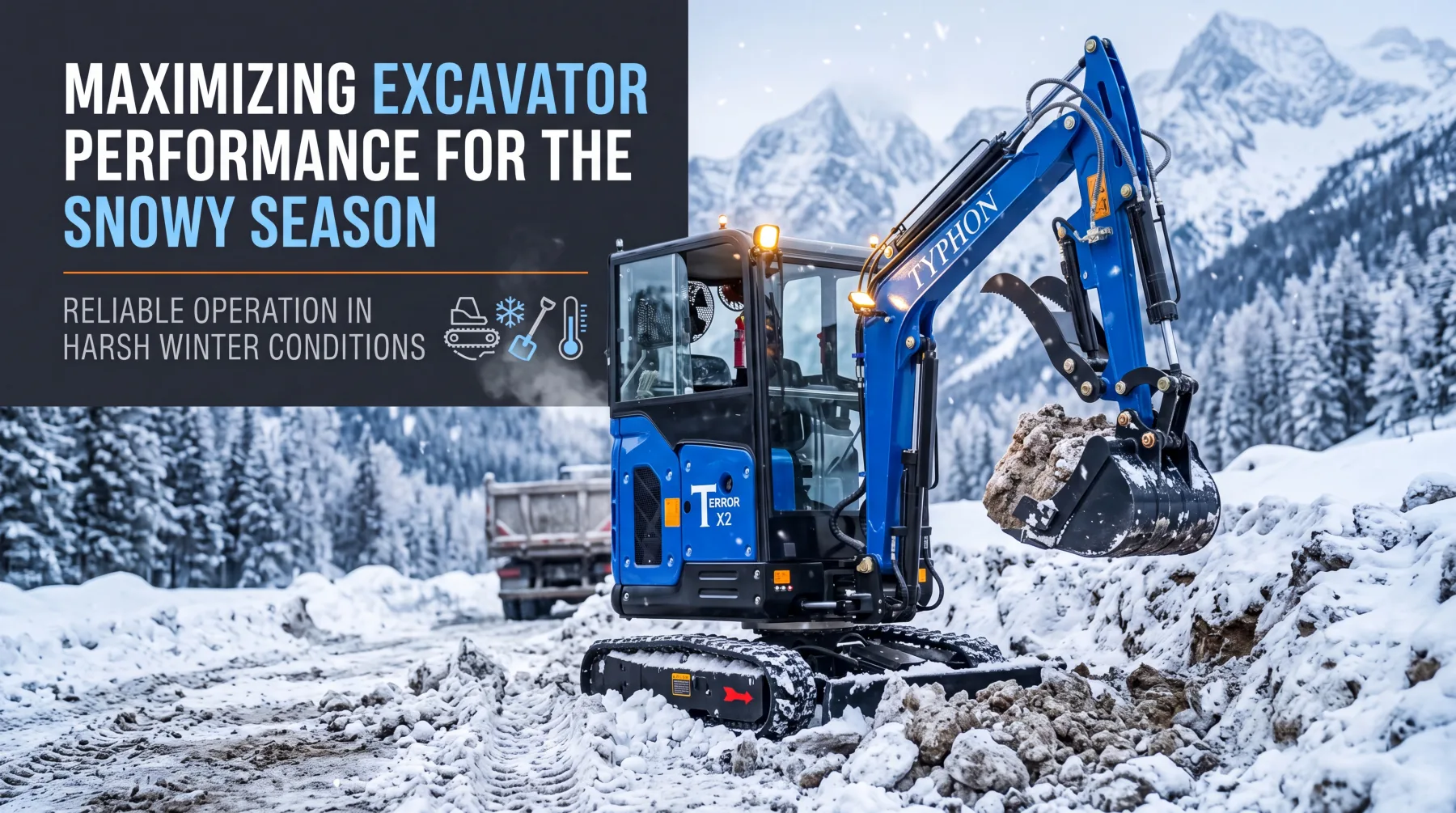
Cold weather does not mean your excavator has to sit idle. With the right preparation and technique, these machines keep digging, trenching, and moving material through the harshest winter conditions. The catch is that snow, ice, and freezing temperatures place real demands on your equipment, and ignoring them leads to breakdowns, downtime, and safety risks you can easily avoid. The good news is that winter operation comes down to preparation and smart practices rather than luck. This guide walks you through how cold weather affects excavator performance, the maintenance that keeps your machine reliable, safe operating techniques on slippery ground, practical ways to stay productive, and the winter jobs where excavators genuinely outperform other equipment.
How Snow and Cold Weather Affect Excavator Performance
Freezing temperatures challenge an excavator from the moment you turn the key. Cold weather thickens engine oil and diesel fuel, making the engine harder to start and slower to reach operating temperature. A cold battery also loses much of its cranking power, so a unit that fires up instantly in summer may struggle on a frigid morning. Until the engine warms fully, it runs less efficiently and works harder to deliver the power you expect, which is why cold starts are one of the most common winter frustrations operators face. Hydraulic systems feel the cold just as sharply. Hydraulic fluid thickens in low temperatures, and thick fluid moves slowly through the system. This sluggishness makes the boom, arm, and bucket respond more slowly and stiffly, reducing the smooth control you rely on for precise work. Running the machine hard before the hydraulic fluid warms up strains the pump, cylinders, and seals, accelerating wear and inviting costly failures over a long winter season. Traction and overall efficiency round out the picture. Snow and ice reduce grip beneath the tracks, making the machine more likely to slip on slopes and uneven ground. At the same time, general performance dips across the board: Engine performance suffers from thick oil, cold fuel, and weakened battery output. Hydraulic response slows as cold fluid resists smooth, controlled movement. Traction drops sharply on snow-covered and icy surfaces. Overall efficiency declines as the machine works harder in the cold. Understanding these effects is the foundation of successful winter operation. When you know how freezing conditions strain the engine, hydraulics, traction, and efficiency, you can prepare your excavator properly and avoid the problems that catch unprepared operators off guard.
Essential Winter Maintenance Before Operation
Reliable winter performance starts with thorough maintenance before the machine ever hits the job site. Fluids deserve your first and closest attention, since they are directly affected by the cold. Switch to the correct winter-grade engine oil and hydraulic fluid recommended by the manufacturer, because lower-viscosity fluids flow properly in freezing temperatures and protect components from cold-start strain. Check coolant to confirm it has the right antifreeze concentration to prevent freezing, and use winter-blend or treated diesel to stop fuel from gelling and clogging the fuel system on the coldest mornings. The battery, tracks, and lubrication points all need equal care as temperatures drop. A weak battery that performs adequately in warm weather often fails in the cold, so test it and replace it if it shows any sign of weakness. Inspect the tracks and undercarriage carefully, clearing out packed snow, ice, and mud that can freeze solid and damage components. Keep every grease point properly lubricated, since fresh grease protects pins and bushings that work hard in demanding winter conditions. Working through these steps before each cold-weather shift dramatically reduces the risk of unexpected breakdowns: Fluids: Use winter-grade oil, hydraulic fluid, proper antifreeze, and treated fuel. Battery: Test cranking power and replace any battery showing weakness. Tracks and undercarriage: Clear packed snow, ice, and mud before and after use. Lubrication: Grease all points to protect pins and bushings in the cold. Proper preparation is far cheaper than a mid-shift failure in the middle of winter. A machine that has been serviced for the season starts more reliably, operates more smoothly, and holds up under conditions that would sideline a neglected unit. Building this maintenance routine into your winter schedule keeps your excavator dependable when you need it most and protects your investment through the toughest months of the year.
Operating Safely on Snow and Ice
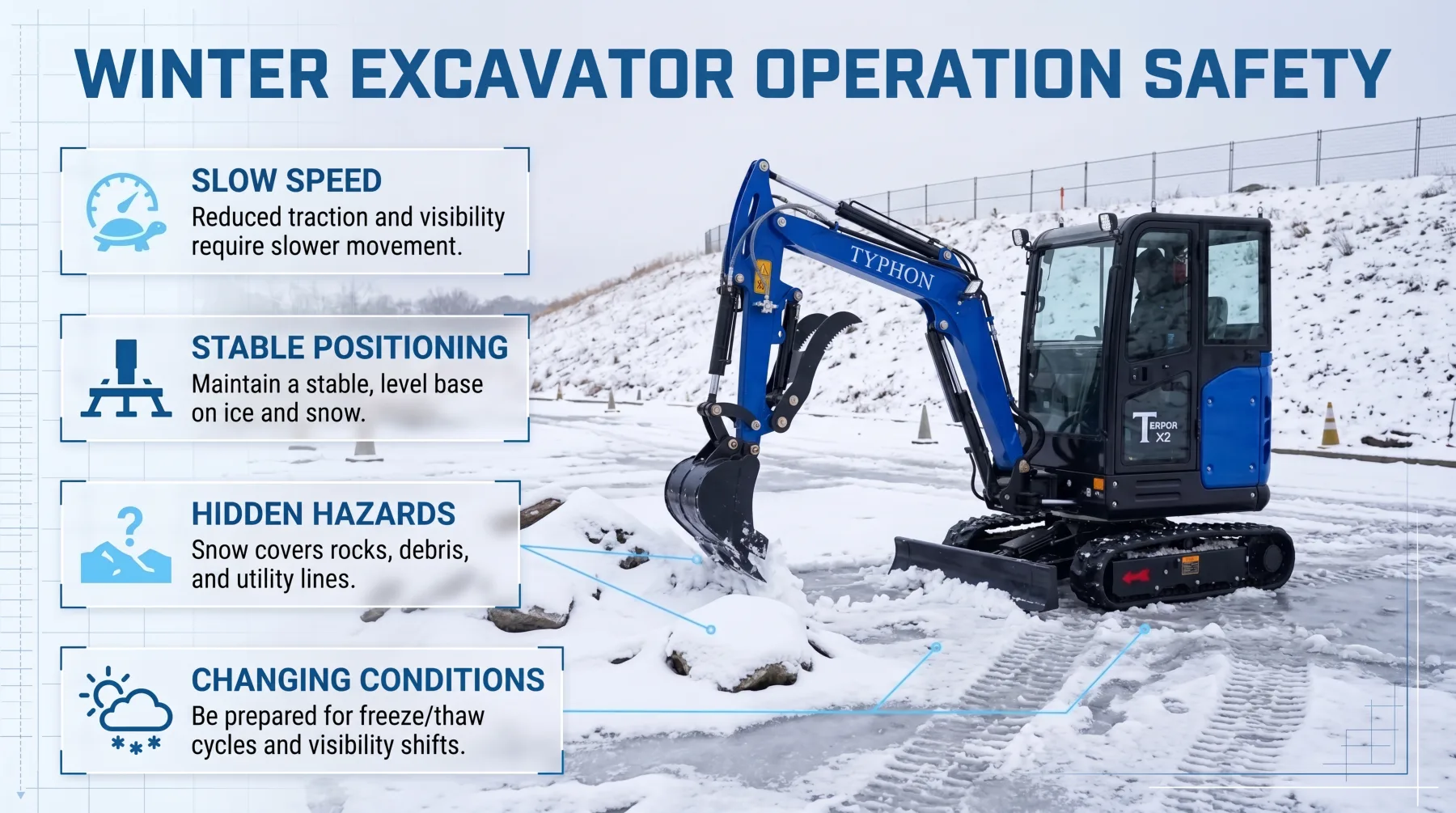
Safe winter operation depends on adjusting your technique to match slippery, unpredictable conditions. Speed is the first thing to control. Move the machine slowly and deliberately, since snow and ice reduce traction and give you far less margin for error. Sudden movements, quick turns, and abrupt stops can cause the tracks to slip or the machine to slide, so smooth, gradual inputs keep you in control. Take your time traveling across the site and repositioning, because rushing on a slick surface invites the very accidents you want to avoid. Proper positioning protects both stability and safety throughout the shift. Whenever possible, position the excavator on firm, level ground before you begin working, and be especially cautious on slopes where reduced traction raises the risk of sliding. Keep the machine's load and swing under control, avoiding sharp movements that could shift its balance on an unstable surface. Setting up carefully before each task pays off with steadier, more predictable operation. Awareness of changing ground conditions ties everything together. Snow often hides what lies beneath it, so a surface that looks solid may conceal ice, soft mud, or hidden obstacles. Stay alert to these key hazards as you work: Hidden ice beneath snow that reduces traction without warning. Concealed obstacles and uneven ground masked by snow cover. Soft or unstable spots that can shift the machine unexpectedly. Changing conditions as temperatures and surfaces shift through the day. Because winter ground changes constantly as it freezes, thaws, and refreezes, the surface you trusted in the morning may behave differently by afternoon. Staying watchful and adjusting your approach as conditions evolve is what keeps operation safe. When you combine slower movements, careful positioning, and constant awareness, you maintain the stability and control that safe, productive winter work demands.
Best Practices for Maximizing Productivity in Winter
Staying productive through the snowy season comes down to a handful of smart adjustments that protect both performance and safety. Proper warm-up is the most important habit to build. Before working the machine hard, let the engine and hydraulic system reach operating temperature by idling and gently cycling the controls. This warm-up allows thick oil and hydraulic fluid to thin out and flow properly, so the machine responds smoothly and its components avoid the strain of running cold. A few extra minutes at the start of each shift prevents wear that would otherwise shorten the life of your equipment. Clearing your work area and planning around the weather make the biggest difference to daily output. Removing snow and ice from the immediate work zone gives you firmer footing, better visibility, and safer conditions for both the machine and the crew. Planning operations around the weather is equally valuable, since scheduling demanding work during milder parts of the day and keeping an eye on the forecast helps you avoid the worst conditions. A little foresight keeps small winter challenges from turning into lost hours. These practical strategies keep winter work efficient and safe: Warm up thoroughly so the engine and hydraulics reach operating temperature before heavy work. Clear the work area of snow and ice for firmer footing and better visibility. Plan around the weather by scheduling tasks during milder conditions when possible. Store the machine sheltered overnight to ease cold starts the next morning. Small adjustments like these add up to meaningful gains over a long season. When you warm the machine properly, prepare your work area, and plan operations thoughtfully, you keep productivity high while reducing the wear and safety risks that cold weather brings. Winter work never has to mean lost time, provided you approach it with preparation and a sensible routine that respects the conditions.
When Excavators Are the Right Choice for Snowy Job Sites
Excavators truly earn their place on winter job sites because they handle work that stops other equipment cold. Frozen ground digging is a prime example. When soil freezes solid, lighter machines struggle to break through, but an excavator's powerful hydraulics and strong breakout force let it dig into hard, frozen earth that would defeat lesser equipment. Fitted with the right attachment, such as a frost bucket, ripper, or hydraulic breaker, an excavator tackles frozen ground that would otherwise bring a project to a standstill. Snow trenching and utility work are two more areas where excavators outperform the alternatives. When crews need to cut trenches through snow-covered or frozen ground for drainage, cables, or pipework, the excavator's reach, digging power, and precise control make quick work of the task. Emergency and seasonal utility repairs often cannot wait for spring, and an excavator lets crews reach and repair underground lines even in the depths of winter. Its ability to dig accurately in tough conditions keeps essential infrastructure work moving when timing matters most. Excavators prove their value across several demanding winter scenarios: Frozen ground digging where strong breakout force cuts through hard, frozen soil. Snow trenching for drainage, cables, and pipework through snow and frost. Utility work that keeps underground repairs and installations on schedule. Heavy material handling where power and reach outmatch lighter equipment. The excavator's combination of digging power, reach, and attachment versatility makes it the right choice for the toughest winter jobs. Where other machines slow down or fail against frozen ground and demanding conditions, a well-prepared excavator keeps working reliably. For contractors and utility crews who cannot afford to pause through the cold months, this capability is exactly what keeps critical projects on track when winter would otherwise force a halt.
Conclusion
Excavators can absolutely perform effectively during the snowy season, provided you prepare them properly and operate them with care. Cold weather strains the engine, hydraulics, and traction, but winter-grade fluids, a thorough pre-season service, and smart operating habits keep your machine reliable through the harshest conditions. Slower, more deliberate movements, careful positioning, and constant awareness of changing ground protect both your crew and your equipment, while proper warm-ups, cleared work areas, and weather-conscious planning keep productivity high. Best of all, excavators excel exactly where other equipment falls short, powering through frozen ground, snow trenching, and urgent utility work that cannot wait for spring. Prepare thoughtfully, operate wisely, and your excavator will deliver dependable, capable performance all winter long.
Need help turning this research into a real quote request?
Send the machine category, intended use, or product name to the KUVUO team and we can help you take the next step.
Contact KUVUO