Selecting the Right Excavator's Bucket Type for Different Soil Conditions
The bucket on your excavator does the real work, and choosing the wrong one turns a straightforward job into a slow, frustrating grind. Soil conditions vary enormously from one site to the next, and a bucket that excels in soft topsoil may struggle badly in fractured rock or leave a rough finish where a clean grade is needed. Matching the bucket to the material is what separates efficient, profitable work from wasted hours and premature wear. The right choice speeds up digging, protects your machine, and delivers the quality your projects demand. This guide walks through five common bucket types, explaining what each one is built for, the soil and site conditions where it performs best, and the design features that make it effective. Use it to build a bucket lineup that keeps your crew productive across every job you take on.
General Purpose Buckets
General purpose buckets are the workhorses of any excavation fleet, and for most operators they handle the bulk of everyday earthmoving. As the name suggests, these buckets are built for versatility, designed to excavate soft to medium-hard soil and move loose materials without any specialized setup. When you face a typical dig in ordinary ground, this is the bucket you reach for first. Its all-around capability makes it the most-used attachment on countless job sites, from residential foundations to routine site development, and it delivers dependable results without the need to switch tools for every task.
What makes the general purpose bucket so effective is its balanced profile. The shape is engineered to strike the right compromise between efficient digging and solid material retention, so it penetrates the ground cleanly and holds onto the load as you lift and swing. That balance matters, because a bucket that digs well but spills material wastes time, while one that holds material but struggles to penetrate slows the whole operation. The general purpose design avoids both problems, giving you smooth, productive cycles in the conditions you encounter most often.
These buckets typically come fitted with teeth that help break into soil and improve digging force, making them well suited to a wide range of common materials. They handle dirt, loose gravel, sand, and medium-hard ground with ease, though they are not meant for heavy rock or highly abrasive conditions that demand a tougher build. For general excavation, backfilling, loading, and trenching in reasonable soil, the general purpose bucket offers the reliability and efficiency that keep everyday work moving. If you buy only one bucket to start, this is the sensible foundation for your lineup.
Heavy-Duty Rock Buckets
When the ground turns hard and abrasive, a general purpose bucket simply cannot keep up, and that is where heavy-duty rock buckets earn their place. These buckets are engineered specifically for punishing environments, built to break through compacted earth, shale, and fractured rock that would quickly destroy a standard attachment. If your work regularly takes you into quarries, rocky terrain, or dense, stubborn ground, a rock bucket is not a luxury but a necessity. It stands up to conditions that punish equipment, letting you keep digging where lesser buckets would fail.
The strength of a rock bucket comes down to how it is constructed. Every element is reinforced to withstand the constant impact and abrasion of hard material. Consider the features that set these buckets apart:
- Reinforced structures that resist the flexing and cracking caused by heavy impact
- High-strength, wear-resistant steel that stands up to abrasive rock and debris
- Heavy-duty teeth and adapters built to penetrate compacted and fractured ground
- Added wear plates and protection on high-contact areas to extend service life
- Land clearing that removes rocks, roots, and debris while returning soil to the ground
- Site preparation where clean, workable soil needs to be separated from larger material
- Sorting and screening loose piles to pull out oversized material efficiently
- Rock and debris removal from fields, lots, and areas being readied for construction
These design choices matter because abrasive material wears equipment down fast. A standard bucket forced into rock suffers premature damage, with teeth breaking, edges wearing away, and the structure fatiguing long before it should. That damage means downtime, repair costs, and lost productivity, which is exactly what a rock bucket is built to prevent.
By investing in a bucket matched to tough conditions, you protect your machine and keep demanding jobs on schedule. The reinforced build and hardened steel absorb the punishment that would otherwise fall on a weaker attachment, giving you dependable performance in shale, compacted earth, and fractured rock. For operators who work these environments regularly, a heavy-duty rock bucket is one of the smartest ways to control long-term costs while maintaining the digging power that hard ground demands.
Trenching and Drainage Buckets
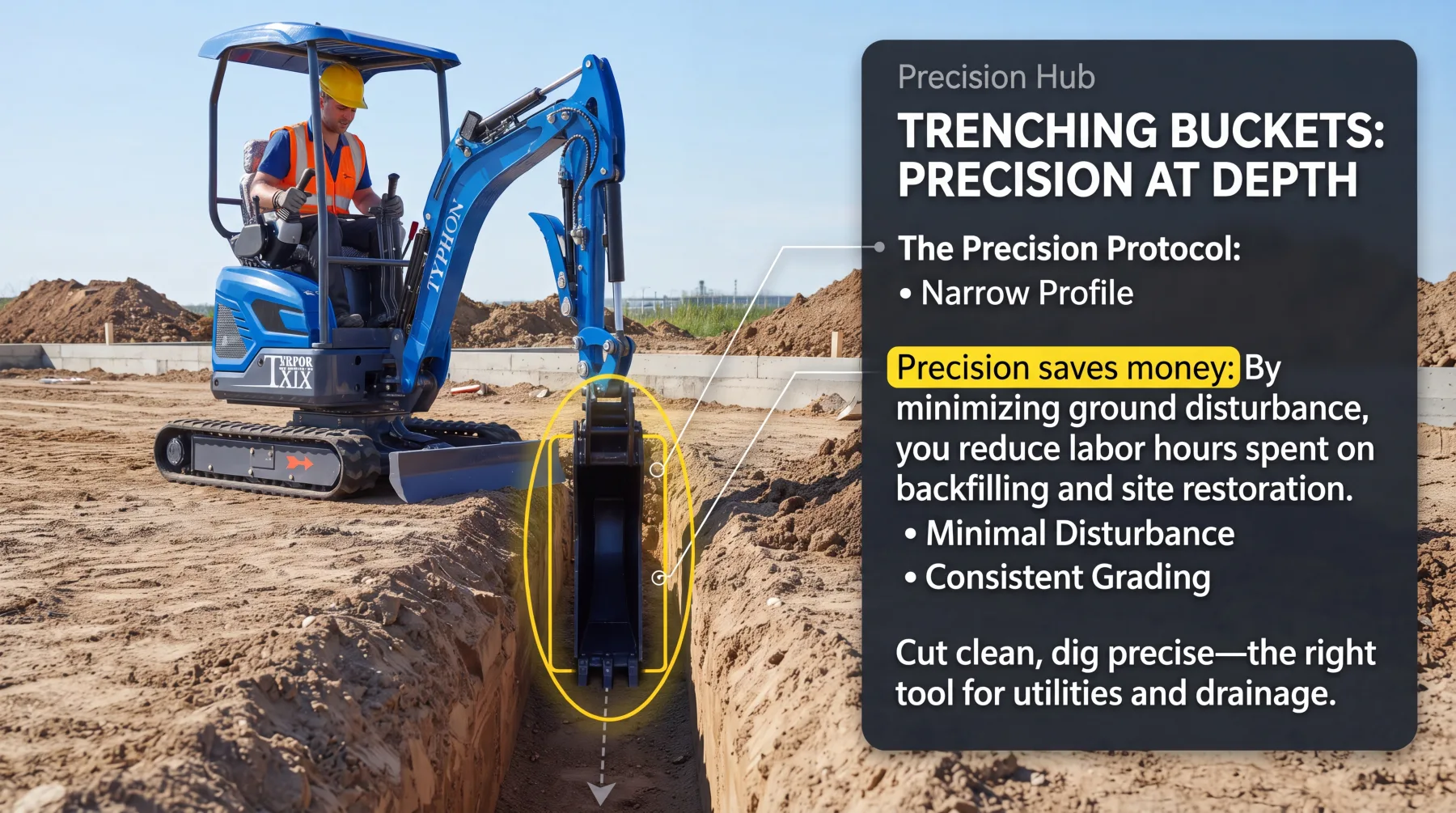
Some jobs call for precision rather than raw volume, and trenching and drainage buckets are purpose-built for exactly that kind of work. Their defining characteristic is a narrow, deep profile that lets them cut clean, accurate trenches in confined spaces. Where a wide bucket would remove far more material than necessary, a trenching bucket digs a tight, controlled channel that matches the width of the pipe, cable, or drainage line you need to install. This precision makes them essential for utility work, irrigation, and any project where the trench needs to follow a specific size and path.
The narrow, deep design serves a practical purpose beyond just fitting into tight spots. By excavating only the material required, these buckets minimize the amount of ground disturbed during the dig. That efficiency saves time on the excavation itself and reduces the backfilling and restoration work afterward, since you are not filling in an oversized trench. For installing utilities, pipes, or drainage systems, keeping the disturbance to a minimum protects the surrounding area and keeps the job clean and manageable.
Trenching buckets are commonly used for laying water and sewer lines, running electrical conduit, and creating drainage channels that carry water away from structures and roadways. Their focused digging profile produces trenches with consistent width and depth, which matters when the finished channel must accept pipe at a proper grade or route utilities along a precise line. When your work involves installing anything below grade in a controlled, accurate way, a trenching and drainage bucket delivers the precision that a general purpose bucket cannot match. It is a specialized tool, but for the jobs it is built for, nothing else does the work as efficiently or as cleanly.
Cleanup and Grading Buckets
Not every task involves aggressive digging, and finishing work demands a completely different tool. Cleanup and grading buckets are designed for the final stages of a job, where the goal is a smooth, level surface rather than deep excavation. Their most recognizable feature is a wide, shallow design without side teeth, which allows them to skim and shape material cleanly instead of biting into it. That toothless, broad profile is exactly what you want when you are leveling a surface or putting the finishing touches on a grade, because it moves material evenly and leaves a clean result behind.
The absence of teeth is a deliberate and important design choice. Teeth are excellent for penetrating and breaking ground, but they leave gouges and an uneven surface that ruin a finished grade. By removing the teeth and widening the cutting edge, these buckets glide across the ground and produce a smooth, professional appearance to the final surface. This makes them highly effective for leveling, backfilling, and spreading loose material with control and consistency. The wide edge covers more ground in each pass, so you finish grading work faster while maintaining a clean, uniform result.
Cleanup and grading buckets excel at moving loose materials such as dirt, sand, and gravel, where their broad profile lets you scoop, carry, and spread efficiently. They are the tool of choice for shaping slopes, leveling building pads, grading roadways, and cleaning up a site once the heavy digging is done. When the job shifts from excavation to finishing and appearance matters, this bucket delivers the smooth, tidy grade that reflects quality workmanship. Keeping one in your lineup ensures you can move seamlessly from rough digging to a polished final surface without compromise.
Skeleton Buckets
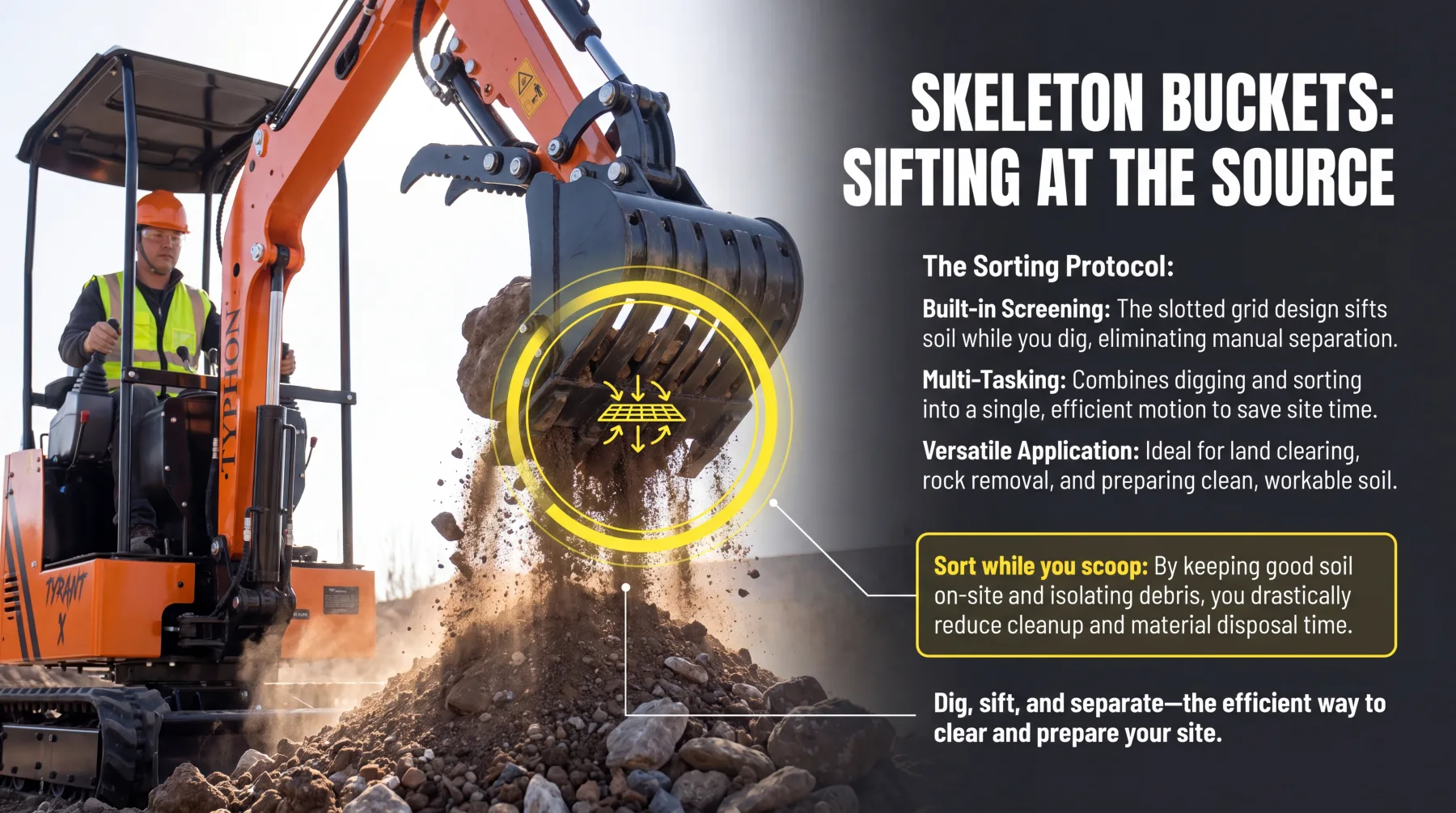
Skeleton buckets bring a clever function to the job site: the ability to separate materials as you dig. Rather than a solid base, these buckets feature a slotted or grid-like design that acts as a built-in sifter. As you scoop, finer soil falls through the openings while larger rocks, roots, and debris stay behind in the bucket. This simple but effective concept turns a single pass into both a digging and a sorting operation, saving you the trouble of separating materials by hand or with additional equipment.
The design makes skeleton buckets ideal for land clearing and site preparation, where separating unwanted material from usable soil is a common and often tedious task. Consider where this capability proves most valuable:
The core advantage is right there in how the bucket works. When you need to retain large materials while letting finer soil pass through, the grid-like base does the sorting automatically as you operate. This keeps the good soil on site where it belongs and gathers the rocks and debris for easy disposal or relocation, all without a separate screening step.
For operators who regularly clear land or prepare sites with mixed material, a skeleton bucket is a genuine time-saver. It reduces the labor of manual sorting, speeds up cleanup, and helps you make the most of the material already on the ground. When your work involves separating the usable from the unwanted, this specialized bucket handles the job in a single, efficient motion.
Conclusion
Choosing the right excavator bucket comes down to understanding the material in front of you and the result you need to achieve. A general purpose bucket handles the everyday digging that makes up most jobs, while a heavy-duty rock bucket protects your machine in abrasive, unforgiving ground. Trenching and drainage buckets deliver the precision that utility and drainage work demands, cleanup and grading buckets give you the smooth, professional finish that quality projects require, and skeleton buckets take the labor out of separating soil from debris during land clearing. Each one is built for specific conditions, and using the wrong bucket for the job slows your work, drives up wear, and compromises your results. Start by assessing the soil conditions and tasks you encounter most often, then build a bucket lineup that matches those needs. With the right attachments ready to go, you keep your crew productive, protect your equipment, and deliver dependable, high-quality work on every job you take on.
Need help turning this research into a real quote request?
Send the machine category, intended use, or product name to the KUVUO team and we can help you take the next step.
Contact KUVUO