How to Calculate the Right Lift Capacity for Your Skid Steer
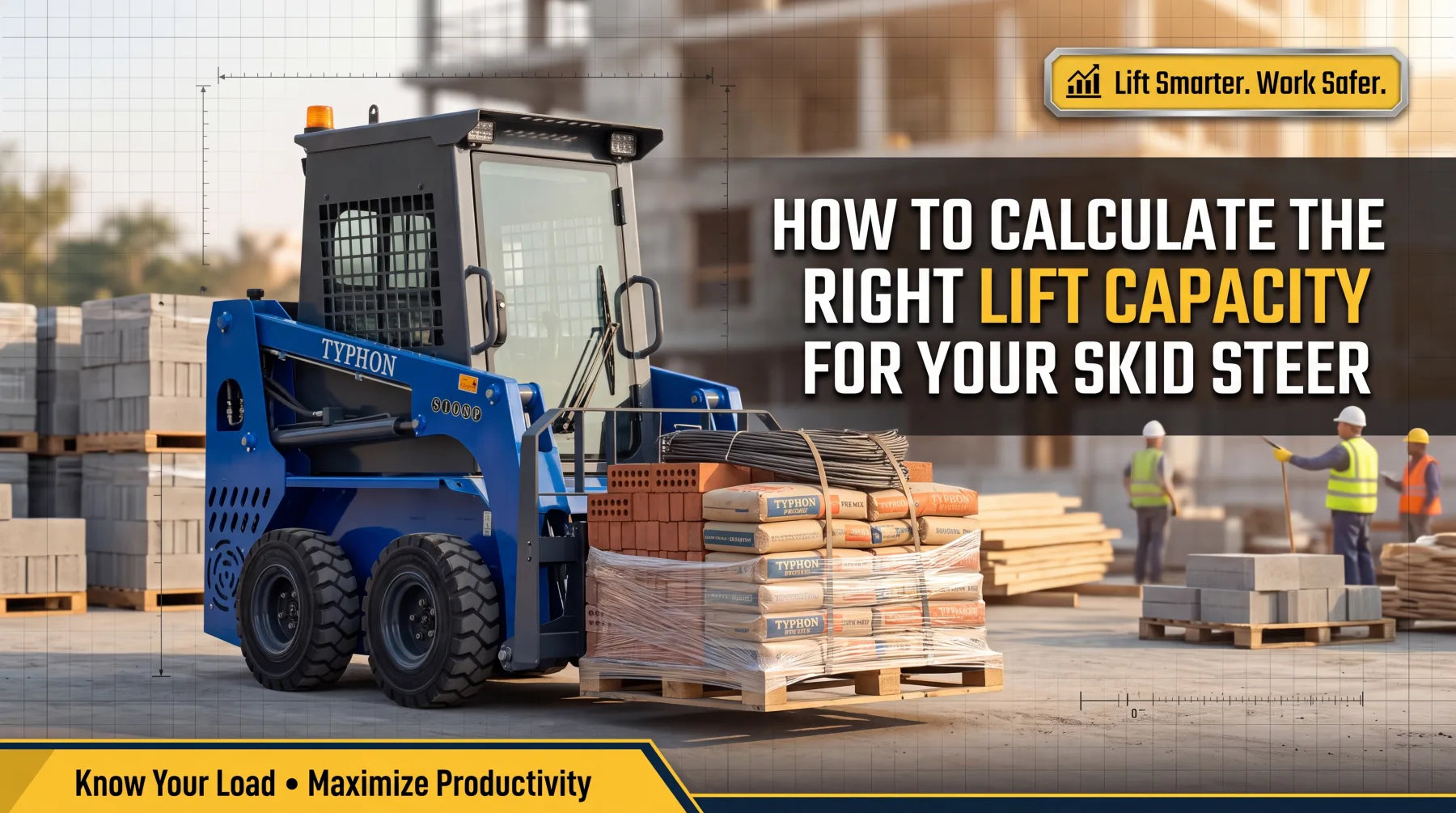
Choosing a skid steer starts with one question that shapes everything else: how much can it lift safely? Get the answer right, and you gain a machine that handles your daily loads with confidence and room to spare. Get it wrong, and you face slow progress, unstable lifts, and equipment strain that shortens the machine's life. Lift capacity is more than a single number on a spec sheet, since operating weight, rated operating capacity, tipping load, and attachment weight all shape what a skid steer can truly handle. This guide walks you through what lift capacity means, the factors that affect it, how to match it to your work, why rated operating capacity matters most, and the mistakes worth avoiding.
Understanding Skid Steer Lift Capacity
Lift capacity is the amount of weight a skid steer can safely raise and carry, and it stands among the most important specifications you will evaluate when choosing a machine. It tells you, in practical terms, whether the skid steer can handle the pallets, buckets of material, and attachments your work demands. A machine with too little capacity forces you to split loads and work slowly, while one matched correctly to your tasks moves material efficiently and stays stable throughout the lift. Because so much of a skid steer's value comes from lifting and carrying, this single specification often determines whether the machine truly fits your operation. What makes lift capacity so important is how directly it connects to both productivity and safety. Every load you lift places demand on the machine's balance and hydraulics, and a skid steer working comfortably within its capacity performs predictably shift after shift. Push it beyond that limit, and you risk tipping, dropped loads, and accelerated wear on the equipment. Lift capacity matters most when you consider the range of work a skid steer performs: Material handling such as moving soil, gravel, sand, and aggregate with a bucket. Pallet work that involves lifting and placing packaged goods, bales, and supplies. Attachment tasks using grapples, augers, forks, and other tools that add weight. Loading and stacking where loads are raised to height and stability becomes critical. Understanding lift capacity from the start gives you a clear standard to measure any machine against. Rather than guessing whether a skid steer can handle your loads, you can compare its rated capability directly to the weights you lift most often. That clarity is the foundation of a smart, confident purchasing decision.
Factors That Affect Lift Capacity
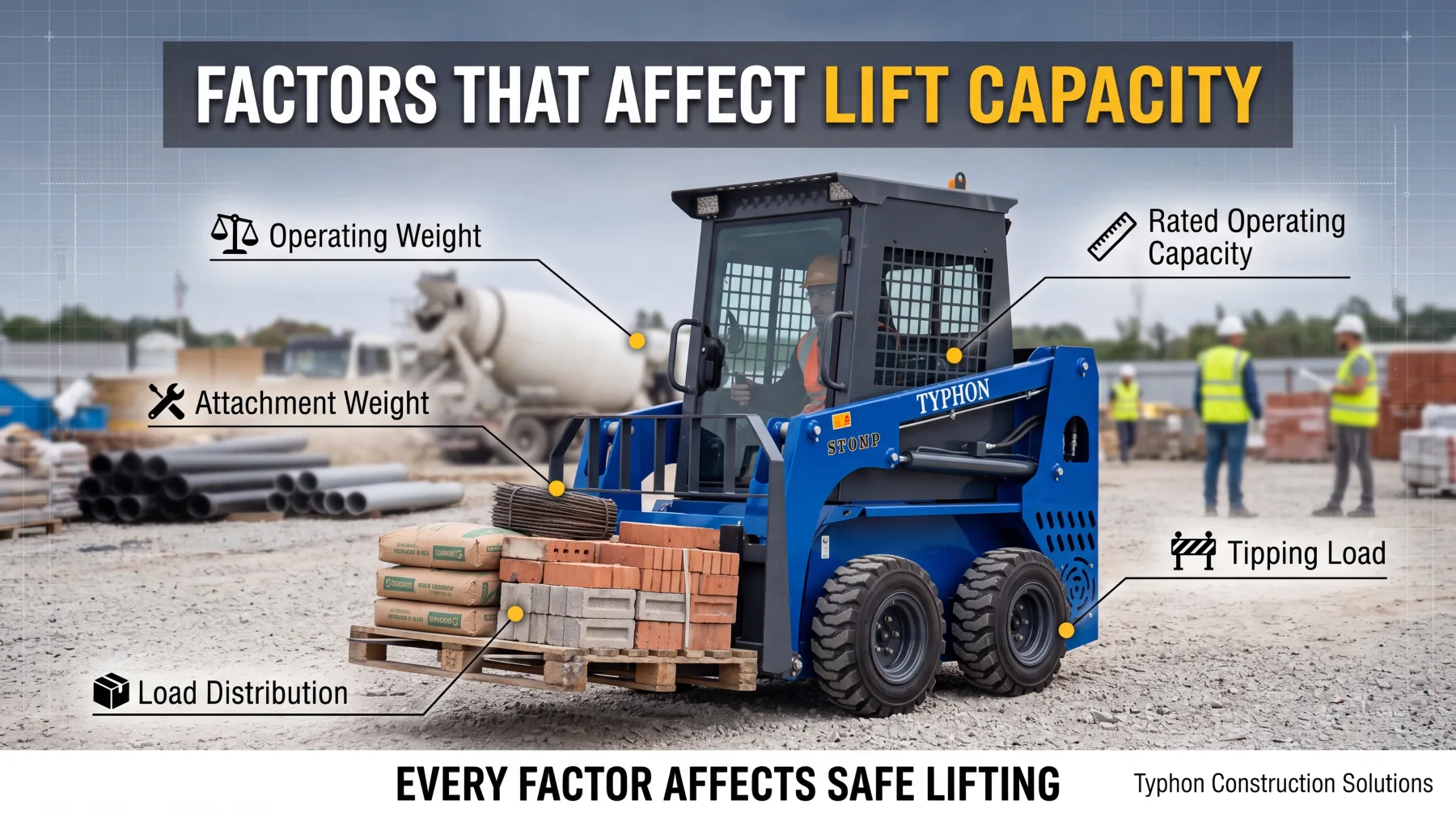
A skid steer's lifting performance is not defined by one number alone, because several related factors combine to determine what the machine can safely handle. Operating weight is the starting point. This is the total weight of the machine ready to work, and it provides the counterbalance that keeps the skid steer stable when lifting a load at the front. A heavier, well-balanced machine generally lifts more safely, since its mass resists the forward pull of a load. This is why lifting capability always ties back to the machine's overall design rather than to engine power alone. Rated operating capacity and tipping load work hand in hand to define safe limits. The tipping load is the weight at which the machine begins to lose stability, while the rated operating capacity is set at a fraction of that figure to build in a margin of safety. These two numbers give you the honest picture of what the skid steer can lift repeatedly and safely throughout a shift, rather than the point at which it becomes unstable. Attachment weight and load distribution round out the picture, and both are easy to underestimate. Consider how each factor shapes real lifting performance: Operating weight provides the counterbalance that supports stable lifting. Rated operating capacity defines the safe working load with a built-in margin. Tipping load marks the limit where stability is lost, forming the basis for the rated figure. Attachment weight subtracts from available capacity, since a heavy attachment counts against the load. Load distribution affects balance, as loads carried farther out reduce safe capacity sharply. Because these factors combine, the actual capacity available for your load in a given situation may be lower than the headline number suggests. Evaluating them together gives you a realistic understanding of what the machine can truly handle on your job.
Matching Lift Capacity to Your Daily Work
Choosing the right lift capacity begins with an honest look at the work you do most often. The goal is a sensible match between the skid steer's rated capability and the real demands of your operation, with comfortable headroom rather than a machine constantly working at its ceiling. Start by identifying the materials you handle regularly and their typical weights, paying close attention to your heaviest routine loads. Those heaviest loads, not the average, define the capacity you genuinely need, since a machine that only meets your demands at its absolute limit will struggle over time. Pallet weights deserve particular attention if lifting and placing packaged goods is part of your daily routine. A loaded pallet can vary widely in weight depending on its contents, so plan around the heaviest pallets you handle rather than a light or typical one. The same principle applies to bulk materials, since a bucket of dense wet gravel weighs far more than the same volume of loose mulch or wood chips. Your attachment use is the final piece of the equation. Remember that attachments reduce the capacity available for your load, so factor them into your calculation: Material types you move most, weighing the heaviest and densest routinely handled. Pallet weights based on your heaviest loaded pallets, not the lightest. Attachments you rely on, since their weight counts against your available capacity. Working height required, as lifting to height can reduce stable capacity. Matching capacity to these genuine daily conditions is what drives real productivity. A skid steer sized to handle your heaviest routine loads, with the attachments you use fitted and margin to spare, delivers safer, steadier performance. Take the time to assess your work accurately, and you invest in a machine that performs dependably without straining against its limits.
Why Rated Operating Capacity Matters More Than Maximum Lift
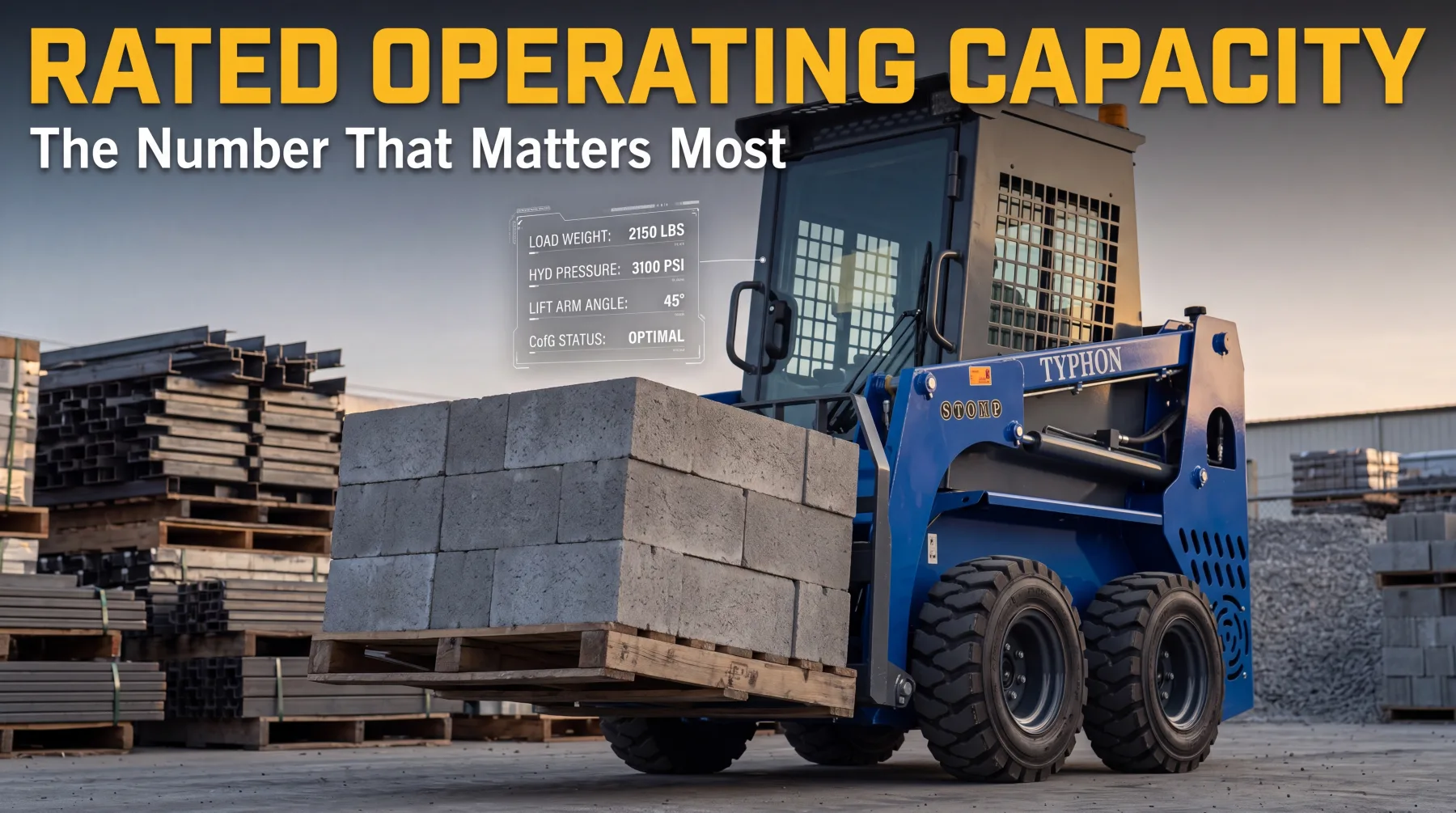
It is easy to be drawn to a skid steer's maximum lift height or its most impressive-sounding specification, but the number that truly matters for safe, productive work is the rated operating capacity. Maximum lift height tells you how high the machine can reach, yet it says nothing about how much weight it can safely carry to that height. A machine may reach an impressive elevation while handling only a modest load at the top, so relying on height alone gives you an incomplete and potentially dangerous picture of what the skid steer can do. Rated operating capacity, by contrast, tells you the weight the machine can lift and carry safely throughout its normal operation. Manufacturers calculate this figure as a fraction of the tipping load, deliberately building in a margin of safety so the machine stays stable during real-world work. This is the number you should plan your daily lifting around, because it reflects safe, repeatable performance rather than a best-case limit. When you select a machine whose rated operating capacity comfortably exceeds your typical loads, you gain the stability and reliability that keep every lift secure. Focusing on rated operating capacity protects your operation in several clear ways. It keeps the machine balanced under load, reducing the risk of tipping and dropped material. It ensures the skid steer handles your work without straining its hydraulics and structure, which extends the equipment's life. It also gives operators confidence, since they can lift within known, verified limits rather than guessing how much the machine will tolerate. Treating rated operating capacity as the true measure of a skid steer's lifting ability, rather than being swayed by maximum height figures, leads to safer decisions and more dependable performance on every job.
Common Lift Capacity Mistakes to Avoid
Even experienced operators fall into capacity-related errors, and these mistakes rank among the leading causes of skid steer accidents and equipment damage. Overloading tops the list. Lifting more than the rated operating capacity, or ignoring the reduced capacity that comes with a heavy attachment or a load carried far from the machine, compromises stability and invites a tip-over. The temptation to move one heavy load rather than two safe ones is understandable, but it is never worth the risk to the operator, nearby workers, or the equipment itself. Using oversized attachments is another frequent and costly error. Attachments add weight and change the machine's balance, and fitting one that is too large or too heavy for the skid steer eats into the capacity available for your load, sometimes dramatically. Lifting on uneven or unstable ground compounds the danger further, since a machine that is perfectly stable on firm, level ground can become precarious on a slope or soft surface, especially with a load raised high. Avoiding these problems comes down to consistent, disciplined practice grounded in the manufacturer's ratings. Keep these guidelines front of mind on every lift: Never exceed the rated operating capacity, and account for attachment weight and load position. Match attachments to your machine, choosing tools sized correctly for its capacity. Work on firm, level ground, preparing the surface before lifting heavy loads. Follow the manufacturer's load ratings, treating them as verified limits rather than suggestions. Following proper load ratings is what separates safe, efficient handling from preventable incidents. These practices are not complicated, but they demand attention and respect for the machine's limits every single time. Build them into your daily routine, and you protect your people, preserve your equipment, and keep your operation running smoothly without the costly disruptions that capacity mistakes bring.
Conclusion
Calculating the right lift capacity for your skid steer is the foundation of safe, productive material handling, and it goes well beyond reading a single number. Lift capacity determines whether a machine can handle your daily loads, and it is shaped by operating weight, rated operating capacity, tipping load, attachment weight, and load distribution working together. Matching that capacity to your heaviest routine materials, pallet weights, and attachments ensures the machine performs with confidence and room to spare. Rated operating capacity, not maximum lift height, is the specification that truly reflects safe, reliable performance under load, and respecting it helps you avoid the overloading, oversized attachments, and unstable lifting that lead to accidents. Assess your work honestly, weigh it against each machine's verified ratings, and follow the manufacturer's guidelines, and you will choose a skid steer that delivers dependable, safe performance for years to come.
Need help turning this research into a real quote request?
Send the machine category, intended use, or product name to the KUVUO team and we can help you take the next step.
Contact KUVUO