How to Identify and Fix Hydraulic Leaks on Your Mini Excavator Attachment

Hydraulic leaks are a critical issue that rarely occur at a convenient time. At first, you may notice your attachment operating more slowly or with reduced power. If left unaddressed, hydraulic fluid can begin pooling beneath the machine, leading to significant performance loss and costly repairs. For owners who rely on consistent productivity, a hydraulic leak is more than an inconvenience. It can quickly lead to unexpected downtime and increased operating costs.
Even a minor hydraulic leak can reduce system pressure, weaken attachment performance, and place unnecessary strain on pumps, cylinders, hoses, and other hydraulic components. Identifying the problem early helps maintain efficient operation, minimizes downtime, and prevents small issues from developing into expensive component failures.
This guide walks through four essential stages of hydraulic leak diagnosis and prevention: understanding why leaks demand immediate attention, identifying common leak types and locations, following a step-by-step inspection process, and adopting preventive maintenance practices. By following this structured approach, you can protect your hydraulic system, extend component life, and keep your mini excavator attachments operating at peak performance.
Why Hydraulic Leaks Demand Fast Action
Understanding the impact of a hydraulic leak is fundamental to proper machine maintenance. The consequences involve three critical areas: performance, machine health, and safety. A prompt response is always the most professional and cost-effective approach.
Ignoring a leak does not save time. A minor loss of fluid gradually degrades performance, accelerates wear on hydraulic components, and leads to unscheduled downtime that disrupts your project schedule.
Addressing hydraulic leaks as soon as they appear helps preserve system pressure, maintain attachment performance, and prevent minor problems from developing into expensive component failures. Early action not only extends the life of the hydraulic system but also keeps equipment operating safely and efficiently throughout demanding jobs.
The Impact on Attachment Performance
Hydraulic fluid is essential for the operation of your attachment. Every function, including gripping, drilling, and digging, relies on pressurized fluid flowing efficiently through hoses, cylinders, and fittings. When hydraulic fluid is lost, the system loses pressure, reducing attachment power and increasing operating temperatures. The result is slower cycle times, weaker performance, and lower productivity.
As hydraulic pressure continues to drop, attachment response becomes less consistent and more difficult to control. Reduced responsiveness affects operating precision, decreases efficiency, and can significantly impact overall jobsite productivity if the leak is not repaired promptly.
Mitigating the Risk of Component Failure
A minor leak today can quickly develop into a major hydraulic failure. As fluid levels drop, system pressure decreases, forcing pumps, cylinders, and other hydraulic components to operate beyond their intended limits. This added strain can lead to overheating, contamination, accelerated wear, and costly breakdowns. Addressing leaks early is one of the most effective ways to prevent expensive repairs.
Continuing to operate with a known hydraulic leak also increases the likelihood of damage spreading throughout the system. Replacing a worn hose, fitting, or seal is typically a straightforward repair, while replacing a damaged hydraulic pump or cylinder can result in significantly higher repair costs and extended downtime.
Prioritizing Operational Safety
Safety should always be the first priority when working with hydraulic systems. Pressurized hydraulic fluid can reach thousands of PSI, and even a pinhole leak can inject fluid through the skin, causing a serious medical emergency. Professional operators treat every hydraulic leak as both a performance concern and a critical safety hazard. To learn more, review this hydraulic fluid safety guidance from OSHA.
Hydraulic fluid leaks can also create slippery work surfaces and contribute to environmental contamination if left unaddressed. Performing regular inspections and repairing leaks as soon as they are discovered helps protect operators, maintain a safer jobsite, and keep the hydraulic system operating reliably.
Knowing Your Leak: Types and Common Locations
Successful repair begins with precise identification. You must determine the specific type of leak and inspect high-traffic areas. This methodical approach ensures a reliable fix.
Accurately diagnosing a leak before replacing parts is the most efficient way to manage repair costs. A thorough inspection prevents the unnecessary replacement of functional hoses, fittings, or hydraulic components.
Hydraulic leaks can develop gradually and may be difficult to detect during standard operation. Understanding common warning signs allows for early detection, ensuring the hydraulic system maintains full efficiency.
Taking a systematic approach to identifying leak types and inspection points also shortens repair time and improves maintenance accuracy. Knowing where leaks commonly occur allows operators to troubleshoot more efficiently, minimize equipment downtime, and restore the hydraulic system to full working condition with confidence.
External vs. Internal Leaks
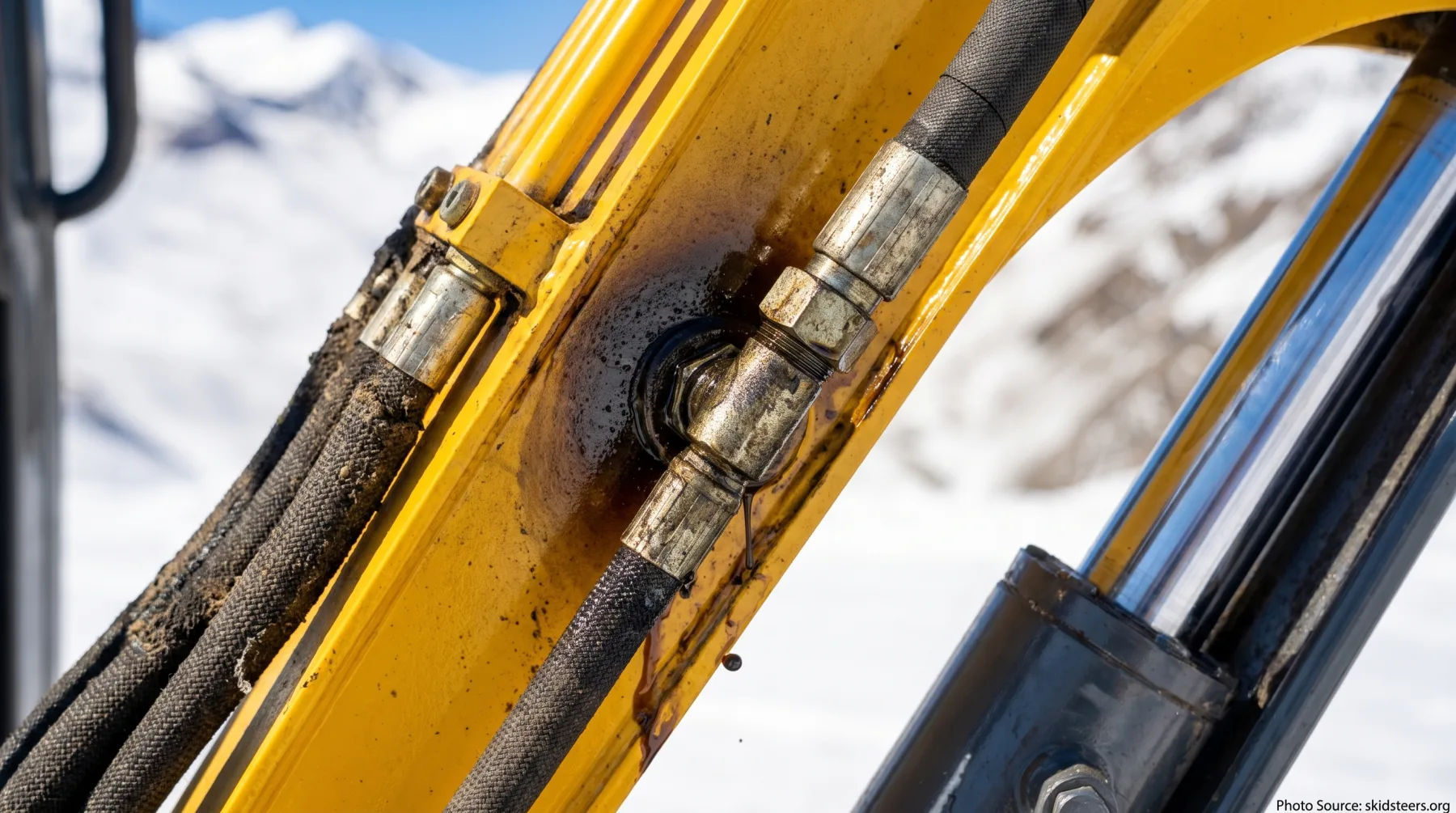
External leaks are the easiest to identify because hydraulic fluid escapes the system and becomes visible around the machine. These leaks commonly occur at hoses, fittings, seals, cylinders, or quick couplers, appearing as drips, wet spots, or oil residue beneath the equipment.
Inspect for oily films on hydraulic hoses, dirt collecting on damp surfaces, loose fittings, or a gradual drop in the hydraulic reservoir level. Identifying external leaks early allows repairs to be completed before fluid loss affects hydraulic performance or causes additional component damage.
Internal leaks are more difficult to diagnose because the hydraulic fluid never leaves the system. Instead, it bypasses worn seals inside cylinders or control valves, reducing hydraulic efficiency without creating visible leaks.
Common signs include attachments drifting under load, cylinders failing to hold their position, sluggish hydraulic response, or increased operating temperatures. When hydraulic fluid levels remain stable but machine performance continues to decline, an internal leak is often the underlying cause and should be investigated promptly.
Primary Source Locations
Once the leak type is identified, inspect these high-risk areas: Hose fittings and connections often succumb to vibration and pressure cycles. O-rings and seals can harden and crack due to heat and age. Cylinder rod seals wear naturally with use, which is a frequent cause for seal replacement. Quick couplers may leak if contaminated by dirt or if the connection is insecure. A focused inspection of these areas ensures a quick and accurate diagnosis.
A Step-by-Step Process to Find the Leak
A methodical diagnostic process is superior to guesswork. These steps provide a structured path from initial inspection to a confirmed solution, helping you identify the true source of the leak before replacing parts or performing repairs. Working through the hydraulic system in a logical order improves accuracy and reduces unnecessary downtime.
Following a logical sequence ensures that small leaks are not overlooked. Taking a professional, deliberate approach helps distinguish fresh hydraulic fluid from old residue or dirt that has accumulated over time. A careful inspection also reduces the risk of overlooking worn hoses, loose fittings, or damaged seals that could develop into larger hydraulic failures.
Consistency in your diagnostic process simplifies future troubleshooting. By checking components in the same sequence during every inspection, you can identify changes more quickly, compare current conditions with previous inspections, and reduce equipment downtime. Establishing a routine inspection process also improves maintenance efficiency and helps keep the hydraulic system operating at peak performance.
Professional Preparation and Safety
A thorough inspection requires a clean starting point. Wipe down all hoses, fittings, and cylinders before beginning. Clean components make fresh leaks significantly easier to identify.
Before inspecting any components, fully shut down the machine and relieve all hydraulic pressure according to the manufacturer’s specifications. Once the system is depressurized, perform a detailed visual inspection for oil residue, cracks, or damage. This provides a safe and accurate baseline for your diagnosis.
Testing Under Load
Many leaks only manifest when the system is under operational pressure. Start the machine and operate the attachment through its full range of functions while observing suspected areas.
Utilize cardboard or wood to detect fine sprays; never use your hand to check a pressurized line. Because fluid can travel along the exterior of a hose, follow the residue to its highest point to confirm the true source of the leak.
Performance and Fluid Verification
If no external leak is visible but hydraulic performance continues to decline, inspect the hydraulic fluid level and evaluate the machine's overall responsiveness. Stable fluid levels combined with drifting cylinders, sluggish attachment operation, or reduced hydraulic power often indicate an internal leak that requires further diagnosis.
Comparing hydraulic performance with fluid condition helps narrow down the source of the problem and avoids unnecessary component replacement. Once the leak has been accurately identified, the focus should shift to completing the appropriate repair and adopting preventive maintenance practices to reduce the risk of future hydraulic failures.
Preventing Hydraulic Leaks for Good
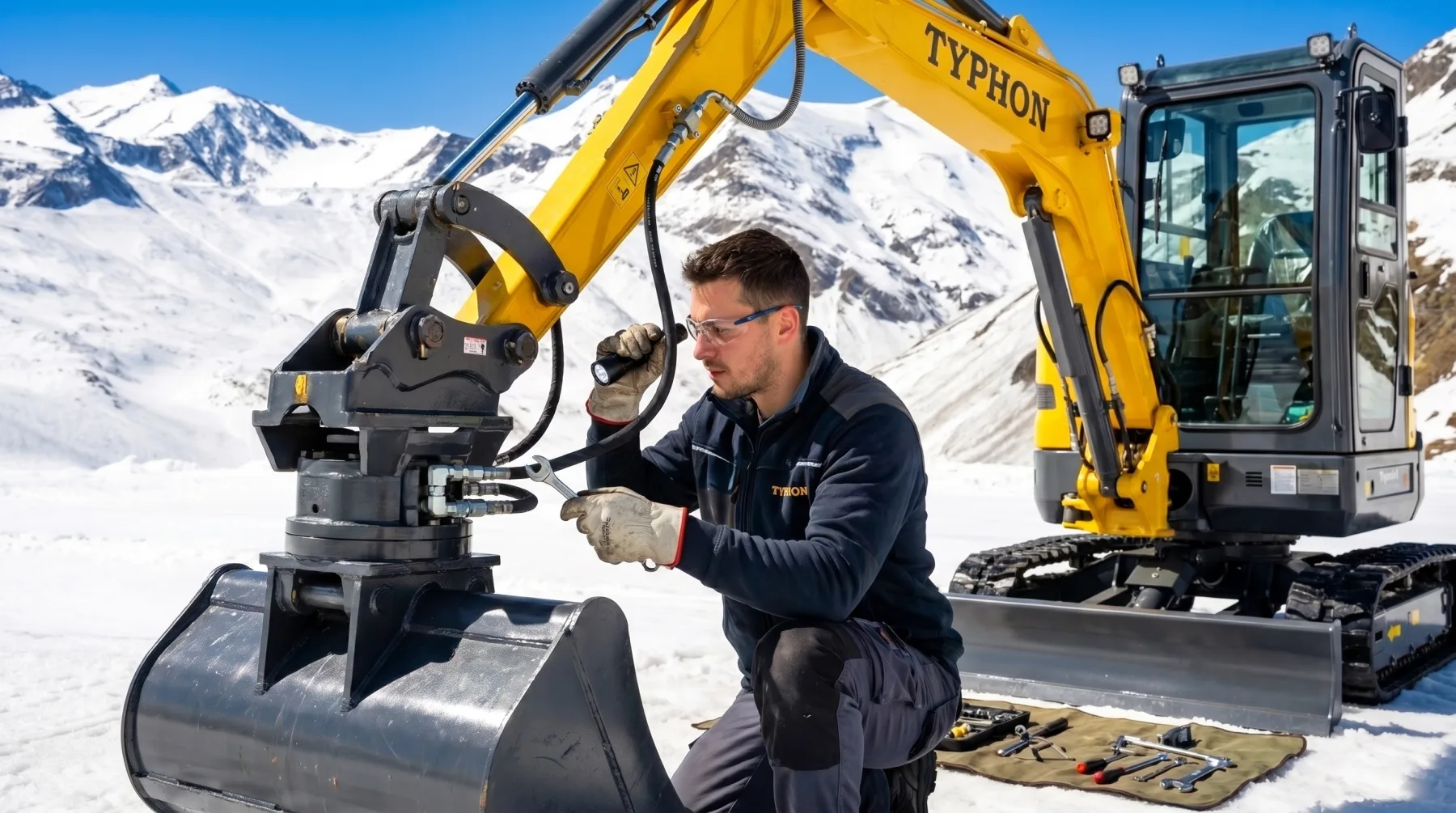
The most effective maintenance strategy is prevention. Routine care for connection points, hoses, seals, and hydraulic components is the best way to ensure long-term reliability. Building preventive maintenance into your regular service routine helps reduce the risk of unexpected hydraulic failures and costly repairs.
Preventive maintenance is significantly more cost-effective than emergency repairs. A brief pre-job inspection of hoses, fittings, cylinders, and hydraulic fluid levels can identify developing issues before they lead to leaks, reduced performance, or unplanned downtime. Addressing small problems early helps keep the hydraulic system operating efficiently.
Incorporating these inspections into your daily routine ensures the long-term reliability of both your excavator and its attachments. Consistent maintenance preserves hydraulic pressure, extends component service life, and keeps your equipment ready to perform reliably on demanding jobsites.
Routine Inspection Protocols
Incorporate a hydraulic check into every walk-around. Inspect for abrasion, cracks, or weeping at the fittings to prevent mid-job blowouts. Ensure you are using the correct fluid type and adhering to filter replacement schedules to protect all internal seals and surfaces.
Making hydraulic inspections part of your daily routine helps detect wear before it develops into a serious failure. Consistent checks improve equipment reliability, reduce unexpected downtime, and ensure the hydraulic system continues delivering the pressure and performance needed for efficient attachment operation.
Proper Connection and Operation
Coupler leaks are often the result of improper connection. Always wipe couplers clean before use, seat them fully, and ensure hoses are not kinked. Furthermore, always operate attachments within their rated flow and pressure specifications. Exceeding these limits stresses the system, whereas matching the attachment to the machine’s capacity ensures total system protection.
Conclusion
Hydraulic leaks are manageable challenges when you utilize a professional approach. By understanding the impact of leaks, identifying their sources accurately, and following a structured diagnostic process, you can resolve problems quickly while avoiding unnecessary repairs and costly downtime.
The most effective way to protect your investment is to make hydraulic inspections and preventive maintenance part of your daily routine. Regularly checking hoses, fittings, seals, hydraulic fluid levels, and filters helps maintain system pressure, extends component life, and ensures your attachments continue delivering reliable performance on demanding jobsites.
Moving forward, apply these inspection and maintenance practices before every job and address small hydraulic issues before they become major failures. Consistent preventive care will keep your mini excavator operating efficiently, reduce long-term operating costs, and provide the dependable hydraulic performance your projects demand.
Need help turning this research into a real quote request?
Send the machine category, intended use, or product name to the KUVUO team and we can help you take the next step.
Contact KUVUO