
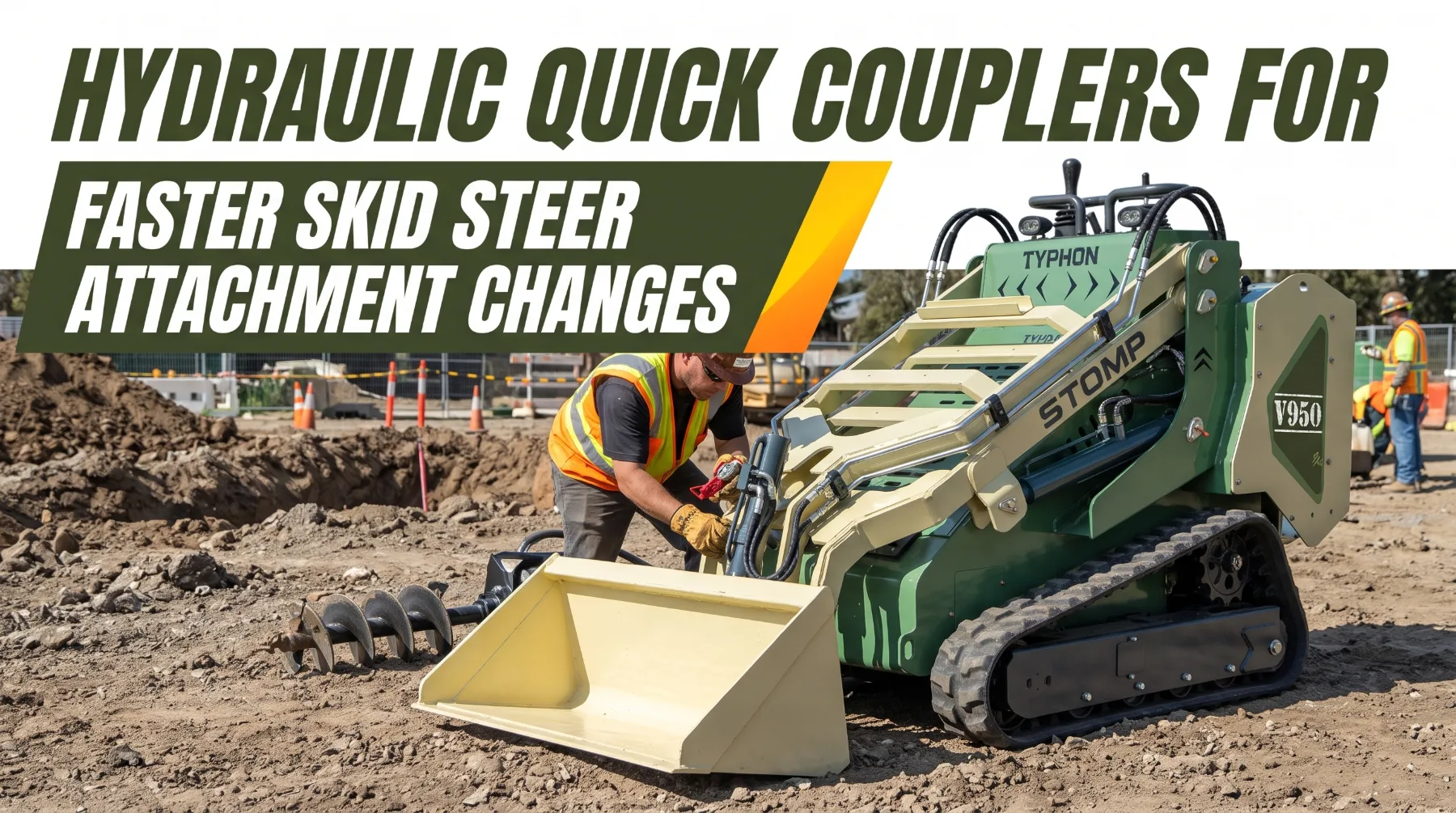
A skid steer earns its value through versatility. In a single day, one loader may dig with a bucket, carry pallets on forks, drill post holes with an auger, clear brush with a grapple, and sweep a lot with an angle broom. Each change of task means a change of attachment. The faster and more reliably those changes happen, the more productive the machine becomes.
Quick couplers make that speed possible. On the mechanical side, a quick-attach mounting plate lets the loader engage an attachment without wrestling heavy pins into place. On the hydraulic side, quick-connect couplers let the operator join and separate the auxiliary hoses that power attachment motors and cylinders without tools. Together, they can cut an attachment change to a few minutes.
Speed also invites shortcuts. An attachment that looks seated but is not fully locked can separate from the loader under load. A coupler forced together under trapped pressure can damage seals or release a high-pressure stream of oil. A dirty coupler face can send contaminants straight into the loader's hydraulic system, where they wear pumps, valves, and motors. An attachment left on uneven ground after disconnection can roll or tip onto a worker. Each of these hazards is preventable, and each comes down to doing the job correctly every time.
Understanding Quick Coupler Compatibility
A quick coupler connects a loader to an attachment, allowing operators to change tools for different jobs. Before connecting anything, confirm that the loader and attachment are designed to work together mechanically and hydraulically.
Check the mounting plate, locking pins, and clearance around the loader arms and hoses. The attachment's weight and working load must also stay within the loader's rated capacity. Even if two machines use similar mounting systems, their connection points may differ.
Hydraulic attachments require additional checks. Confirm that the couplers match in size, type, and pressure rating, and that the attachment's flow requirements match the loader's hydraulic circuit. Check any special return-line, case-drain, or electrical connection requirements in both manufacturers' manuals.
Key takeaway: Confirm mechanical fit, locking compatibility, load capacity, and all hydraulic requirements before connecting an attachment.
Connecting Hydraulic Lines
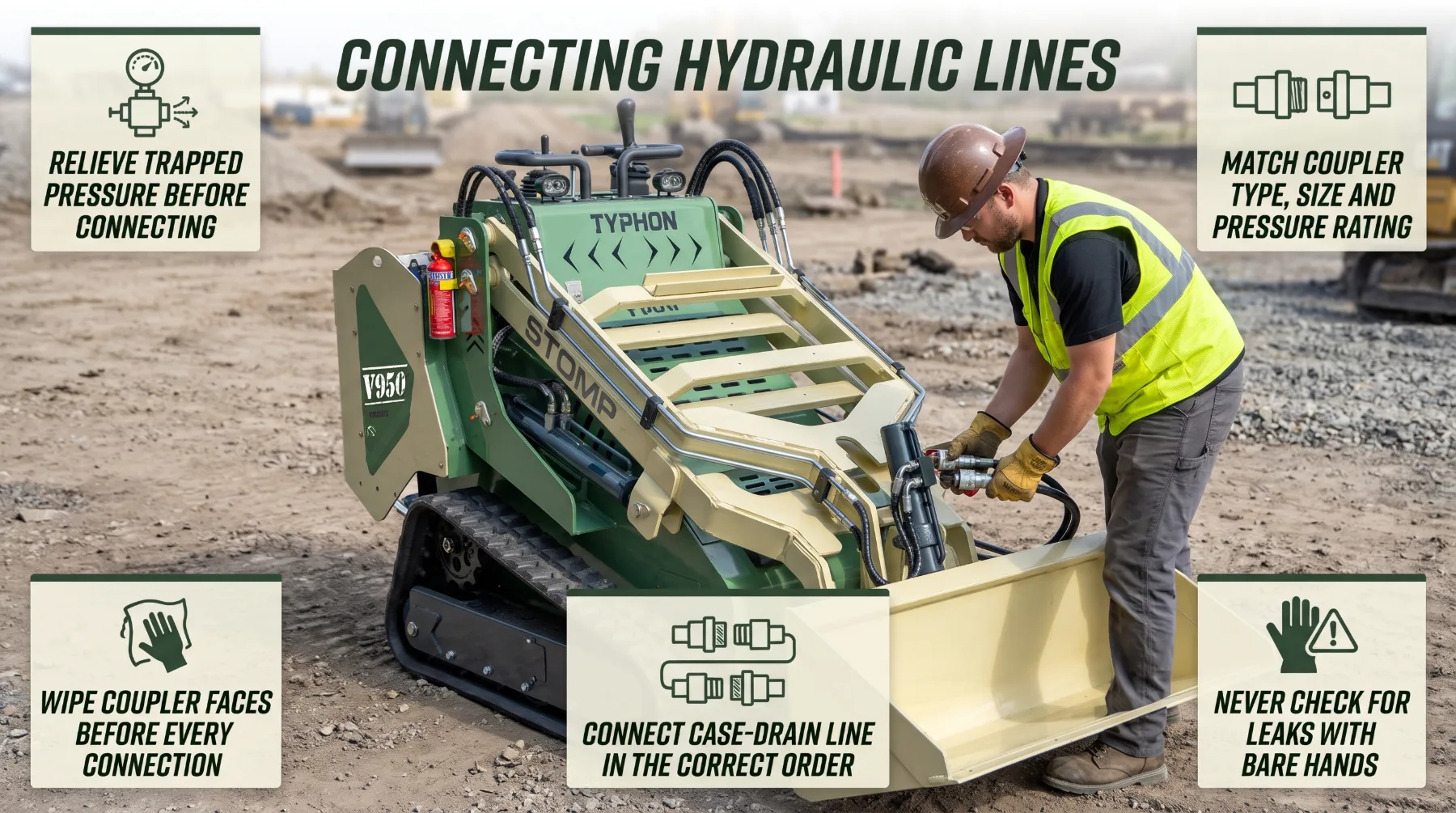
Hydraulic lines supply power to attachments such as grapples, augers, and other powered tools. Before connecting them, confirm that the couplers, hoses, pressure ratings, and circuit requirements match the attachment specifications.
Relieve trapped hydraulic pressure using the loader manufacturer's approved procedure. Pressure may remain after the engine stops or build up when oil heats in the sun. Never force couplers together, strike them with a hammer, or use improvised methods to release pressure. Connect return and case-drain lines in the required order.
Keep couplers clean to prevent dirt from entering the hydraulic system. Wipe connection faces with a clean, lint-free cloth, use protective caps when lines are disconnected, and route hoses so they cannot snag, stretch, or rub against moving parts. Never search for leaks with bare hands because high-pressure oil can penetrate the skin. Use cardboard or wood to check for leaks, and seek immediate medical care if an injection injury is suspected.
Key takeaway: Relieve pressure safely, match the hydraulic connections, keep couplers clean, route hoses correctly, and never use your hands to check for leaks.
Performing a Connection Check
After mounting an attachment and connecting its hydraulic lines, test the system before starting work. Choose a clear area with firm, level ground and move people, vehicles, and obstacles away from the testing zone.
First, confirm that the mechanical lock is secure. Raise the attachment slightly and tilt it slowly, following the manufacturer's test procedure. Watch for gaps, shifting, or unusual movement between the mounting plates. If the attachment moves unexpectedly, lower it immediately, shut down the loader, and inspect the locking system.
Once the lock is verified, test the hydraulic functions at low engine speed. Check that the attachment moves in the correct direction and responds smoothly. Listen for unusual noises and watch for leaks, overheating, weak movement, or hoses contacting moving parts. Stop the test if anything appears wrong, and keep everyone clear of pinch points around the attachment and loader arms.
Key takeaway: Test the mechanical lock first, then check hydraulic direction and movement at low speed in a clear area while keeping people away from moving parts.
Disconnecting an Attachment Safely
Disconnecting an attachment requires careful handling because heavy components, trapped hydraulic pressure, and moving mounting plates can create serious hazards. Choose firm, level ground away from traffic and pedestrian routes, and make sure the attachment can rest securely after removal.
Lower the attachment into the storage position recommended by its manufacturer, secure the loader, and shut down as instructed. Relieve hydraulic pressure using the approved procedure before disconnecting hoses. Wear suitable protective equipment, clean the couplers, disconnect the lines in the required order, and immediately cap or plug the connections to keep dirt out.
Release the mechanical lock according to the loader's instructions and confirm that the locking pins have retracted fully. Tilt the mounting plate forward slowly, lower the arms until the plate clears the attachment, and reverse straight away at low speed. Keep people clear throughout the process and ensure the detached attachment cannot roll, tip, or shift.
Key takeaway: Lower and secure the attachment, relieve hydraulic pressure, protect disconnected lines, release the lock correctly, and store the attachment in a stable position.
Mechanical Locking and Attachment Security
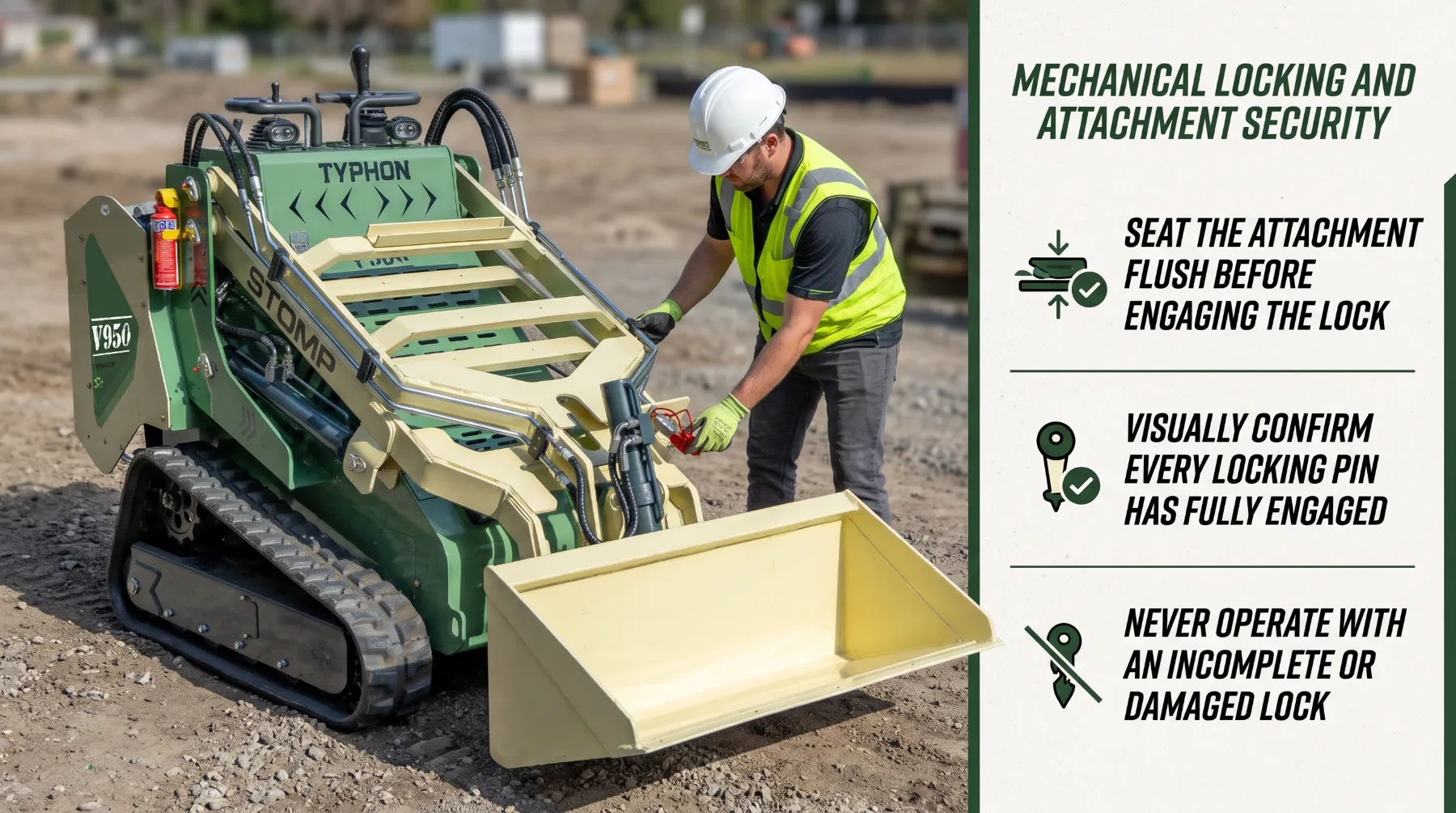
The locking system keeps an attachment secured to the loader during lifting, tilting, pushing, and dumping. If the lock is incomplete or damaged, the attachment may separate unexpectedly and cause serious injury or equipment damage.
Loaders commonly use manual or powered quick-attach locks. Manual systems require the operator to move locking levers, while powered systems operate from the cab. Regardless of the type, operators must confirm that both locking pins or wedges engage fully.
Approach the attachment on firm, level ground and follow the manufacturer's mounting procedure. Ensure the plates sit flush without trapped dirt or gaps, then inspect the locking points visually. Never operate with partially engaged pins, bent components, damaged levers, or a faulty locking mechanism. Lower the attachment and correct the problem before continuing.
Key takeaway: Seat the attachment correctly, confirm both locking points are fully engaged, and never operate with an incomplete or damaged lock.
Inspection and Maintenance
Quick coupler systems are exposed to dirt, weather, vibration, and repeated attachment changes. Regular inspections help identify wear or damage before it causes connection failures, hydraulic leaks, or unexpected attachment separation.
Check coupler faces, seals, O-rings, hoses, fittings, locking pins, levers, springs, and mounting plates. Look for cracks, corrosion, bent parts, worn slots, damaged seals, and hoses with cuts or bulges. Inspect with the attachment lowered, the engine off, and hydraulic pressure relieved. Use cardboard or wood to check for leaks rather than touching suspected leak points.
Clean couplers before every connection and maintain locking components according to the manufacturer's schedule. Replace damaged parts only with approved components that meet the required specifications. Never grind mounting plates to force a fit, modify locking pins, or bypass safety switches. Record inspections and repairs, and remove equipment from service when a defect could affect safe operation.
Key takeaway: Inspect and clean coupler components regularly, use approved replacement parts, record maintenance, and never modify or bypass the locking system.
Conclusion
Hydraulic quick couplers can reduce the time needed to change skid steer attachments, but correct compatibility and secure connection are essential. Every safe connection begins with confirming that the mounting plate, locking system, couplers, pressure rating, flow, and return and case-drain requirements match the loader. Seating the attachment flush and visually confirming that every locking pin has fully engaged keeps the attachment attached through every lift and push. Relieving trapped pressure, wiping coupler faces clean, and connecting lines in the specified order protects both the hydraulic system and the people working around it.
A short connection check in a clear area confirms that the lock holds and the hydraulics respond correctly before real work begins. A disciplined disconnection sequence, from lowering and shutdown to pressure relief and controlled separation, leaves the attachment stable and ready for its next use. Regular inspection and maintenance, using only approved replacement parts and never modifying the locking system, keep the entire coupling system dependable.
Throughout every step, treat pressurized oil with respect: wear eye and hand protection, keep your body away from couplers under pressure, and use cardboard rather than bare hands to check for leaks. When your team applies these practices consistently, clean hydraulic connections, proper pressure relief, and reliable locking checks protect operators and equipment, and faster attachment changes become a lasting advantage on every job.
FAQs
Can any skid steer attachment use a hydraulic quick coupler?
No. The attachment must match the loader's mechanical interface and hydraulic requirements. Its mounting plate must engage the loader's quick-attach plate fully and allow the locking pins to seat. Its hydraulic couplers must match in type, size, and pressure rating, and its flow, return, and case-drain requirements must suit the loader's auxiliary circuit. Compare the attachment manual with the loader specifications, and never force couplers together or modify mounting plates to make an attachment fit.
Why should hydraulic pressure be relieved before connecting hoses?
Trapped pressure can prevent connection and may cause fluid injection injuries or unexpected movement. Pressure can remain in the loader's auxiliary circuit after shutdown and can build in attachment hoses as trapped oil warms. Forcing couplers together under pressure can damage seals and release oil at high pressure. Lower the attachment, shut down the engine, and relieve pressure using the manufacturer's approved method before connecting or disconnecting, and always check for leaks with cardboard or wood rather than your hand.
Can an attachment be tested before the mechanical lock is checked?
No. Confirm that the attachment is securely locked before testing hydraulic functions. Visually verify that each locking pin or wedge has fully engaged, then raise and tilt the attachment slightly in a clear area to confirm it stays seated against the plate. Only after the lock is confirmed should you test auxiliary hydraulic functions at low engine speed. If the attachment shifts or separates at any point, lower it immediately and recheck the lock.
How can coupler contamination be prevented?
Keep connection faces clean, use protective caps when available, and inspect hoses and seals during attachment changes. Wipe both coupler halves with a clean, lint-free rag before every connection, cap and plug couplers immediately after disconnecting, and store hoses off the ground using the attachment's hose holders. Replace missing or damaged caps, increase cleaning frequency in muddy or dusty conditions, and replace worn seals with approved parts to keep dirt out of the hydraulic system.
Need help turning this research into a real quote request?
Send the machine category, intended use, or product name to the KUVUO team and we can help you take the next step.
Contact KUVUO