
Increasing Your Mini Excavator Efficiency: How to Optimize Your Cycle Times
When operating a small excavator, every second matters. On a single scoop, a cycle that takes a few seconds longer than necessary might not seem like much, but when you increase that small delay over hundreds of cycles per day, it quickly adds up to lost hours, fuel waste, and delayed projects. Tightening your cycle time is one of the best strategies to do a lot more work without putting in more effort. Cycle time is basically the heartbeat of your productivity.
The best aspect is that you don't have to push your machine to its limits in order to achieve faster cycle times. Rather, they are the result of cleaner operating methods and more intelligent site setup. You may move more material in less time and significantly lessen the pressure on the machine by properly positioning your work, keeping your site orderly, trimming your movements, and matching your instruments to the particular task at hand. Because of lower operational costs and increased overall output, this efficiency directly affects your bottom line. By concentrating on these minor adjustments, you can improve your everyday performance and make sure that every action on every job site you visit results in a quicker, more efficient, and more lucrative workflow.
Master the V Loading Pattern

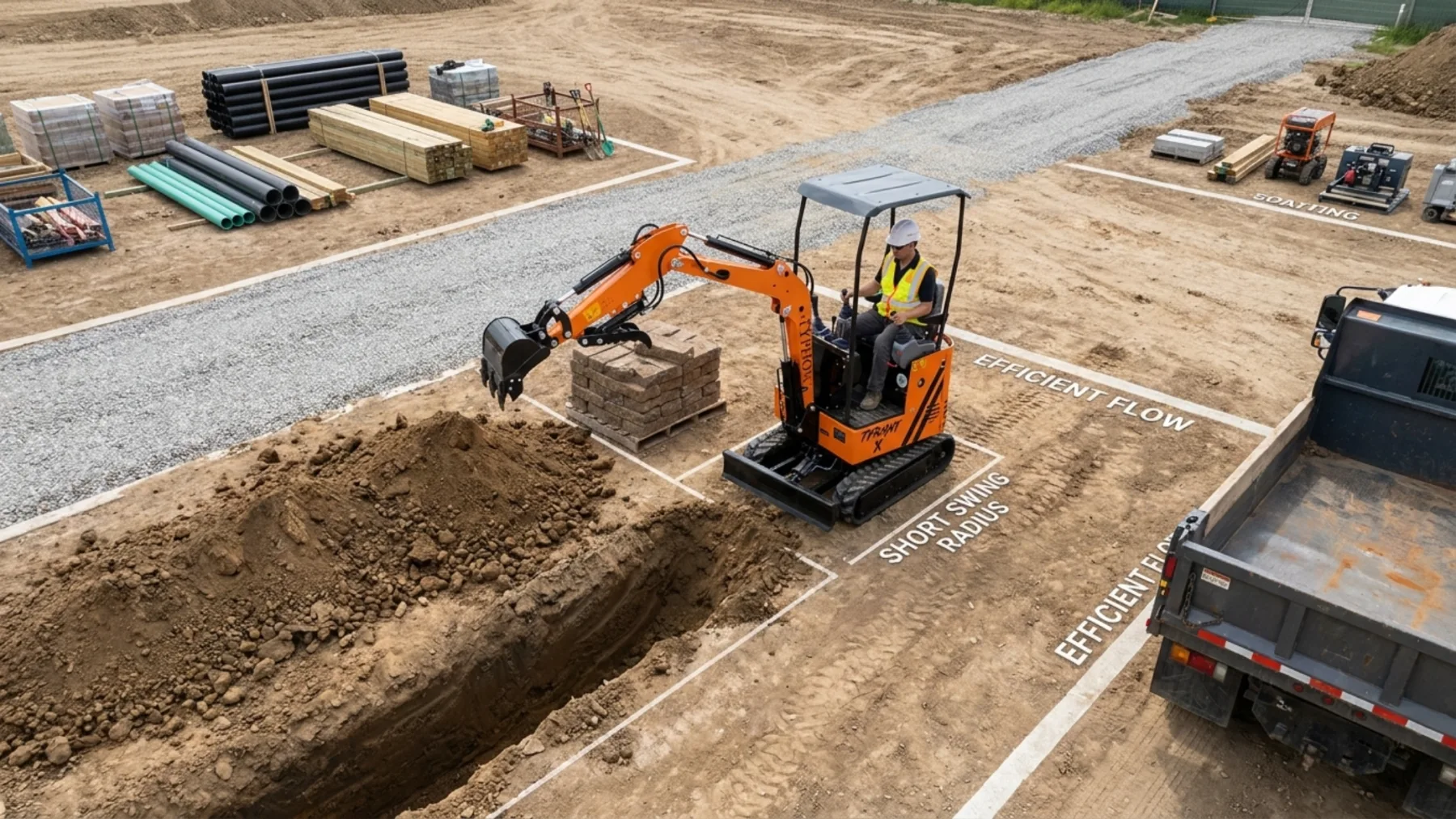
How you position your machine, your dig site, and your truck sets the foundation for every cycle that follows. Get the layout wrong, and you waste motion on every single scoop. Get it right, and the machine practically loads itself. The V loading pattern is the smartest way to set up that layout. Instead of working in a long, straight line that forces you to travel and turn the full distance between digging and dumping, position your truck and your dig site in a V shape with the excavator at the point. This minimizes both the distance you travel and the amount you have to turn between scooping and dumping. Those saved seconds on every cycle compound into real time savings across a full day of work.
Set the angle tight by keeping the V narrow so your swing and travel stay short, but leave the truck enough room to maneuver in and out safely. You should also reposition as you go; as the dig face moves, shift the machine to maintain that efficient V rather than letting your distances stretch out over time. Finally, plan your truck access first. Set up your loading position so trucks can pull in and out without forcing you to wait or reposition the excavator. By creating a tight V layout, you ensure that every movement of the arm is productive, cutting out unnecessary travel and turning on every scoop, which saves precious seconds that add up fast for your total output.
Keep Your Work Area Level and Smooth
The condition of the ground you are working on has a direct effect on how fast and confidently you can run the machine. A rough, cluttered workspace forces you to slow down, while a clean, level one lets you work at full pace. This is one of the easiest efficiency gains available, and many operators overlook it entirely. A bumpy or uneven floor makes you drive slower to avoid spilling your load or losing control of the machine. Debris in your path means constant stopping and steering around obstacles. By keeping your workspace flat, firm, and clear of clutter, you can maintain higher travel speeds and perform every movement with confidence instead of caution. A smooth surface also reduces wear and tear on the machine and keeps the operator steadier through a long, demanding shift.
Grade your work platform by taking a few minutes to level the area where you will be tracking back and forth, especially your loading and digging zones. Clear debris early by removing rocks, roots, and loose material from your travel path before you start production digging. You should also maintain the surface as conditions change throughout the day, smoothing out ruts and bumps before they slow you down. Investing just a few minutes in leveling your site is a small cost that pays off in speed and efficiency, letting you move faster and more confidently through every cycle.
Minimize Your Swing Angle
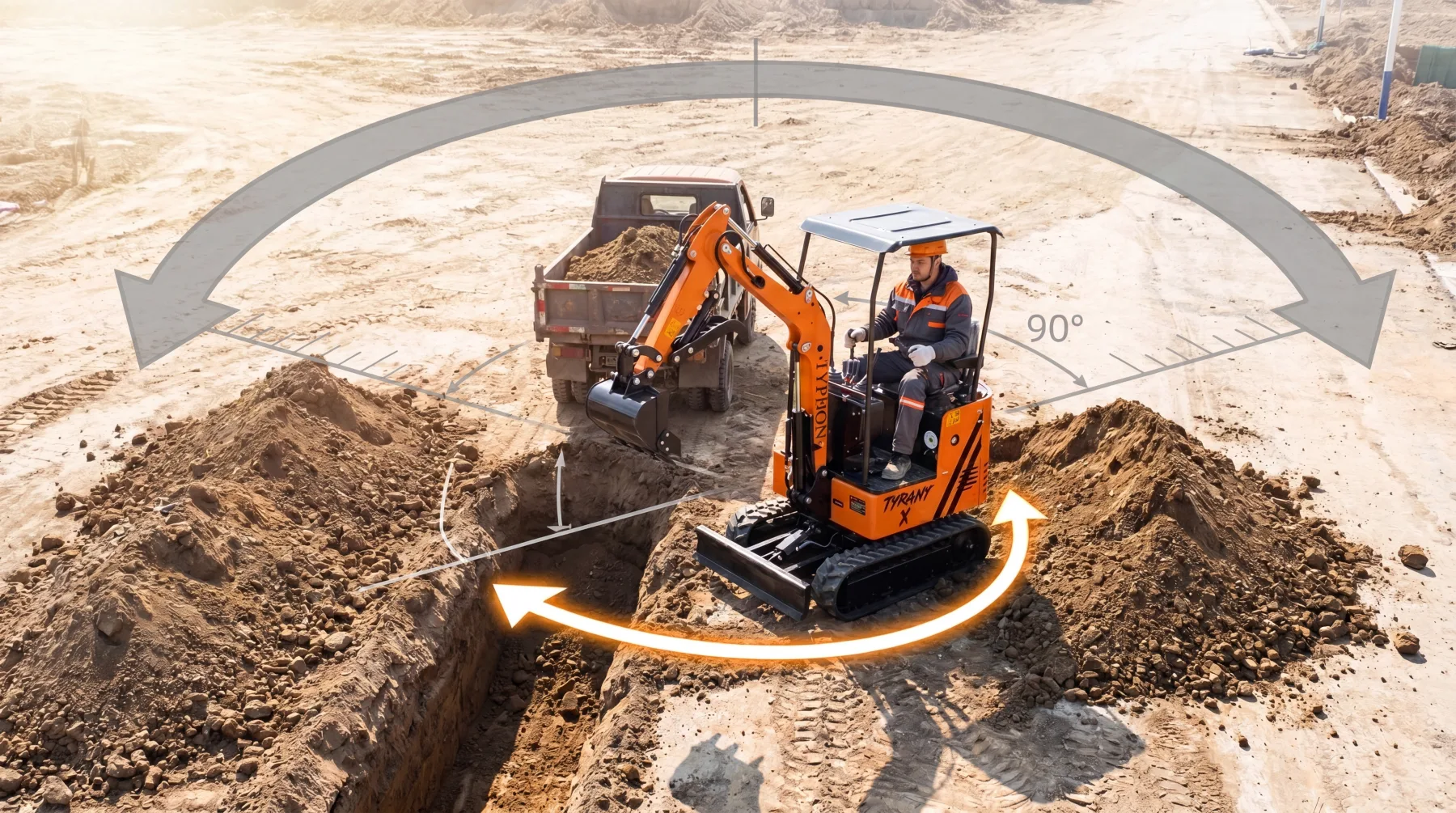
Swinging the machine is one of the most repeated movements in any digging cycle, and it is also one of the biggest opportunities to save time. The further the arm has to swing to dump a load, the longer each cycle takes. Trim that swing, and you trim seconds off every pass. The key is keeping your dump target as close as possible to where you are digging. When your pile or truck sits right beside the dig face, you dump with the shortest possible movement instead of swinging the machine through a wide arc. A swing of 45 degrees takes far less time than one of 90 or 180 degrees, and that difference repeats on every single scoop. Tightening your swing angle is one of the most effective ways to shorten your cycle significantly.
Before you start digging, position the machine so your spoil pile or truck is as close to the dig site as the job safely allows. Aim for under 90 degrees; whenever possible, keep your swing angle below 90 degrees to cut cycle time. If your dump point drifts too far away as you clear a section, reposition the pile or your machine to restore a short, efficient swing. The wider your swing, the longer your cycle, so maintaining this tight geometry is a simple yet powerful way to maximize your production over the course of a day.
Focus on Fluid, Continuous Motion
Smooth operators are fast operators. The difference between a choppy, start stop technique and a flowing, continuous one is enormous over a full day of cycles. When you blend your movements together instead of completing each one separately, the machine never sits idle waiting for the next command, and your cycle times drop noticeably. Many operators finish one action completely before starting the next, such as lift, stop, swing, stop, and then dump. That start stop rhythm wastes a fraction of a second at every transition, and those fractions add up across hundreds of cycles. Instead, blend your lifting, swinging, and dumping into one continuous motion. Begin your swing as you are still curling and lifting the bucket, so the load arrives at the dump point already in position to release. The machine stays in constant motion, doing useful work at every moment.
Overlap your movements so the machine works constantly instead of pausing between steps. Use proportional controls smoothly by feathering the levers rather than jamming them to their stops, which keeps movements blended and reduces jerky stress on the machine. Fluid operation is a skill, so build the rhythm with practice. Focus on smoothing your transitions until the motion becomes second nature, allowing you to maintain a steady, high-speed pace throughout the entire shift.
Match Your Bucket Size to the Job
The bucket on the end of your arm determines how much material you move per pass, and choosing the right one is a balancing act. Too small, and you waste cycles. Too big, and you bog the machine down. Matching the bucket to the material and the machine lets you hit your target volume in the fewest possible passes. A bucket that is too small forces you to take extra scoops to finish the job, adding cycles and time you do not need to spend. A bucket that is too large for the material or the machine overloads the hydraulics, slows every movement, and can make the excavator unstable or tippy when fully loaded. The right sized bucket fills cleanly, lifts smoothly, and keeps the machine balanced, so you move maximum material per cycle without sacrificing speed or safety.
Match the bucket to the material, using a wider bucket for light, loose material like loam and a narrower one for heavy, dense material like wet clay or rock. Respect the machine capacity by choosing a bucket your excavator can fill and lift comfortably without straining the hydraulics or compromising stability. Finally, switch when the job changes; keep the right buckets on hand and swap as the material or task changes rather than forcing one bucket to do everything. Choosing the right tool for the specific task prevents wasted scoops and keeps your excavator performing at its absolute best.
Conclusion
Every operation can achieve faster cycle times without requiring you to push your machine harder or take safety precautions. Working more intelligently leads to true efficiency. You can change your workflow by arranging your site in a tight V loading pattern, maintaining a level and uncluttered workspace, reducing your swing angle, combining your movements into a single continuous motion, and matching your bucket to the task. Each strategy reduces your cycles by a few seconds on its own, and when combined, they result in a significant increase in productivity for a complete shift.
For your operation, that efficiency pays off in real, measurable terms: you move more material, burn less fuel, reduce wear on the machine, and finish jobs ahead of schedule. The habits that make you faster are the same ones that make you a better, more confident operator, and they continue paying you back on every project you take on. Efficiency is about removing unnecessary motion so the machine is always performing meaningful work, not about hurrying. You will discover that you are accomplishing more with less effort as these techniques become second nature, which will ultimately reduce your expenses and boost your competitive advantage. Your daily production will increase if you view every moment as a chance to get better without ever having to sacrifice your quality or your attention to safety.
Watch the Video
Watch the video below to see these mini excavator efficiency techniques in action. Visual demonstrations can help operators better understand proper machine positioning, smooth control movements, and jobsite setup for faster cycle times.
Whether you're a contractor, landscaper, construction professional, or property owner, improving your mini excavator cycle times is one of the most effective ways to increase productivity while reducing operating costs. Applying these proven techniques will help you complete projects faster, extend equipment life, and maximize the return on your investment with every job.
Need help turning this research into a real quote request?
Send the machine category, intended use, or product name to the KUVUO team and we can help you take the next step.
Contact KUVUO