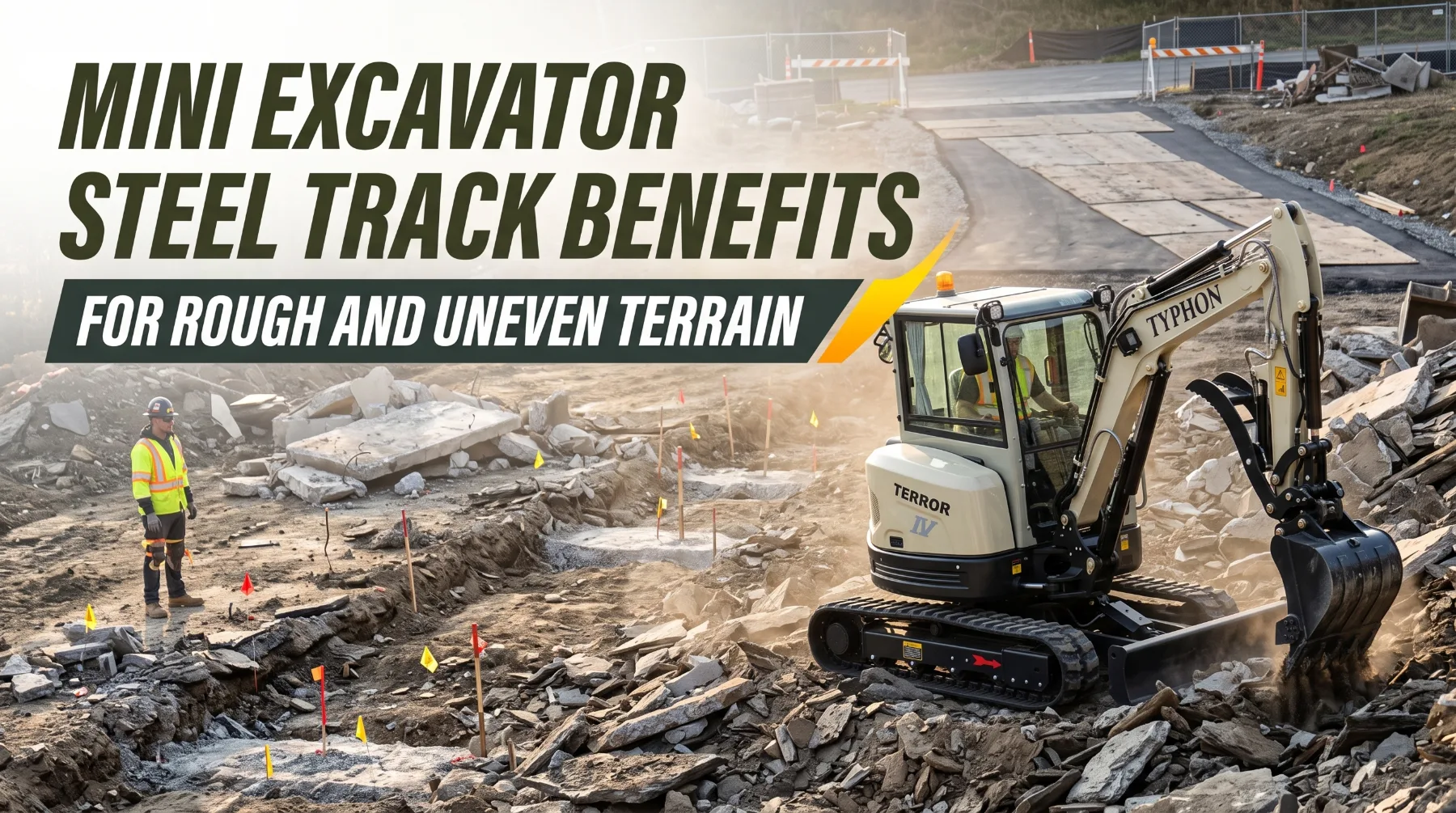
Rough excavation sites often contain broken concrete, sharp rock, and uneven ground that place substantial demands on a mini excavator's undercarriage. Steel tracks provide a durable contact surface for these conditions and help the machine travel across abrasive terrain. Even so, trapped debris, loose hardware, and incorrect track tension can cause wear or interrupt operation if they are not addressed promptly.
Compared with rubber tracks, steel tracks are generally better suited to demanding demolition, foundation excavation, and utility trenching environments where sharp debris is common. However, rock fragments and concrete pieces can become lodged around the track links, rollers, and sprockets. Operators should watch for loose shoe bolts, abnormal track sag, damaged links, and incorrect tension, following the manufacturer's specifications when adjustments or repairs are required.
Before beginning a shift, operators should examine the tracks, fasteners, rollers, sprockets, and surrounding undercarriage for damage or packed material. Clearing debris and maintaining the correct track tension help reduce unnecessary wear and downtime. Because steel grousers can damage asphalt, concrete, and other finished surfaces, crews should plan travel routes and use suitable ground protection when crossing sensitive areas.
Durability on Abrasive Ground
Durability is the main reason contractors choose steel tracks. A steel track is built from interlocking links joined by pins and bushings, with steel shoes bolted to those links. Each shoe carries one or more raised ribs, called grousers, that contact the ground. The result is a heavy, rugged ground-contact system designed to withstand repeated impact and abrasion.
That construction matters most on jobsites with rock, broken concrete, rebar, and abrasive material. Sharp edges that can slice or puncture a rubber track usually leave only surface wear on a steel shoe. A machine climbing over demolition rubble or crossing fractured stone takes constant impact through its tracks. Steel absorbs that punishment and keeps working, which reduces the risk of a sudden track failure in the middle of a project.
Steel tracks also offer a practical repair advantage. Because the shoes bolt onto the links, a damaged or worn shoe can often be replaced on its own instead of replacing the entire track. Links, pins, and bushings can also be serviced as they wear. With proper care, that serviceability can extend the working life of the undercarriage on sites that would quickly wear out other track types.
Durability still has limits. Steel tracks wear over time, especially on highly abrasive ground, and rock packed into the undercarriage can accelerate wear on rollers, idlers, and sprockets. Not every mini excavator is designed to run steel tracks, either. Track options depend on the machine's undercarriage design, so confirm compatibility with the manufacturer or dealer before planning a change.
Key takeaway: Steel tracks withstand repeated contact with rock, broken concrete, and abrasive material, and their bolt-on shoes and serviceable components support long undercarriage life on demanding ground.
Traction on Rough Surfaces
Traction lets a mini excavator travel to the work area, climb onto a setup position, and hold its place while digging. On suitable rough terrain, steel tracks can provide strong grip. Their grousers press into loose soil, gravel, broken rock, and uneven ground, which helps the machine move and position itself with confidence.
Actual traction depends on several factors working together. Track design matters, since grouser height and pattern affect how deeply the shoes bite. Soil type matters too. Steel grousers often grip well in loose, rocky, and broken ground, but they can slide on hard, smooth surfaces such as concrete, pavement, and solid rock faces. Moisture changes conditions quickly, since wet clay can pack between the grousers and wet steel on hard ground can become slippery. Slope adds another layer, because gravity pulls the machine downhill and reduces the margin for slipping.
Track condition plays a direct role as well. Grousers worn down to a low profile lose much of their bite. Incorrect track tension can let a track slip on the sprocket or come off the rollers during a turn. Keep tension set to the manufacturer's specification, and recheck it after working in mud or packed rock, since buildup changes tension quickly.
Operating technique protects traction on any surface. Travel straight up and down slopes rather than across them, and follow the manufacturer's slope limits. Slow down before rough sections instead of braking hard on them. Keep the bucket low during travel to support stability, and avoid sharp counter-rotating turns on hard or abrasive ground, which can cause the tracks to slip and speed wear.
Key takeaway: Steel tracks can provide useful traction on rough terrain, but real-world grip depends on track design, soil type, moisture, slope, and track condition, so match technique to the ground.
Maintenance and Undercarriage Inspection
Steel tracks are durable, but regular maintenance is essential to reduce wear and prevent unexpected downtime. Inspecting the undercarriage helps identify damage early and keeps the machine operating reliably.
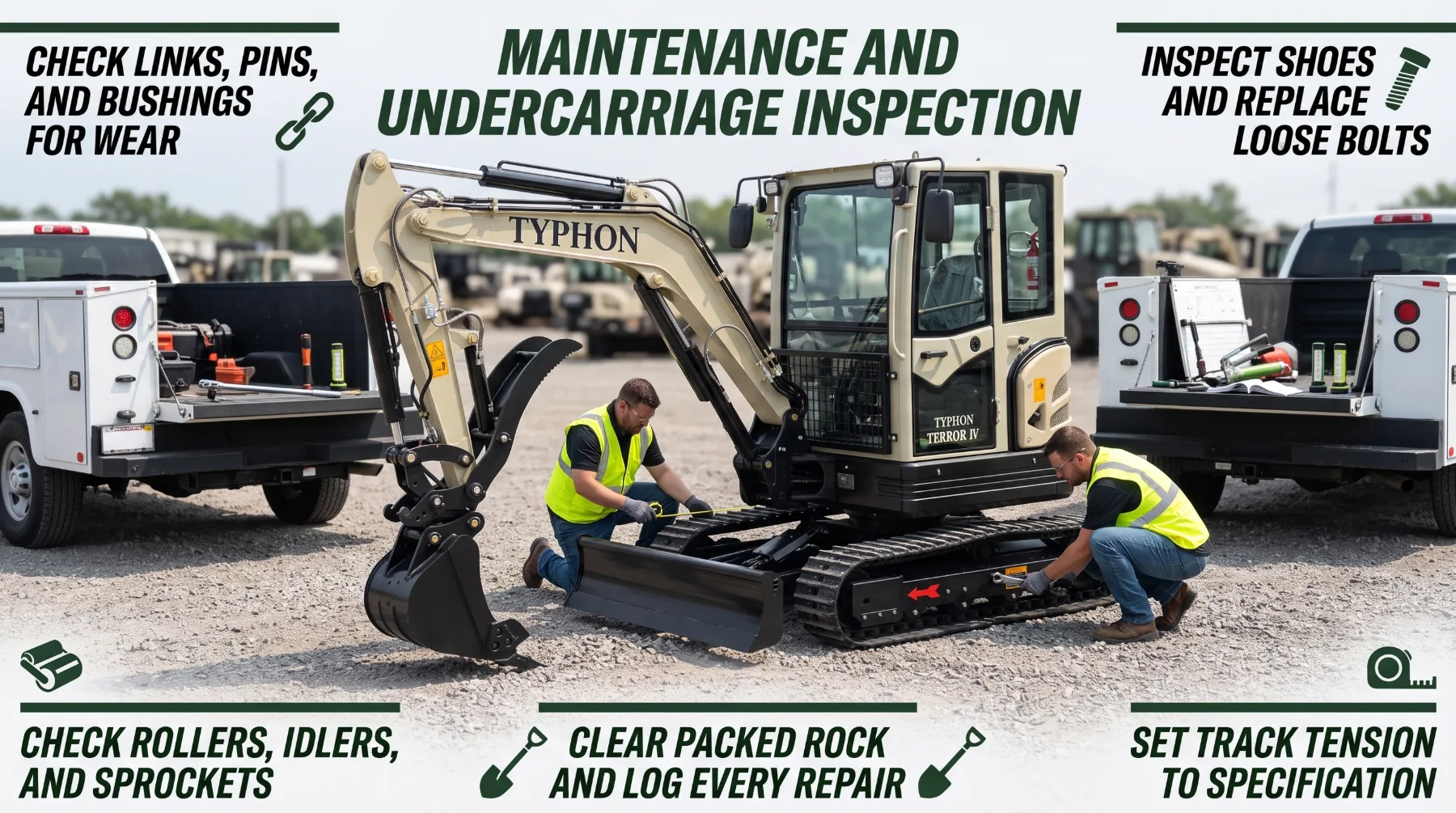
- Track Links, Pins, and Bushings: Check for cracks, excessive movement, and signs of stretching that may indicate wear.
- Track Shoes and Grousers: Inspect shoes for cracks, bends, loose bolts, and worn grousers that can reduce traction.
- Rollers, Idlers, and Sprockets: Look for leaks, uneven wear, damaged seals, and worn sprocket teeth that can affect track movement.
- Track Tension: Check track sag according to the manufacturer's procedure. Incorrect tension can cause the track to come off or accelerate undercarriage wear.
- Cleaning and Maintenance Records: Remove packed mud, rocks, and debris regularly. Record inspections and repairs, and follow the manufacturer's maintenance schedule.
Always park the machine safely and follow the manufacturer's procedures before inspection. Leave major undercarriage repairs to qualified technicians.
Key takeaway: Inspect links, pins, bushings, shoes, rollers, idlers, sprockets, and track tension on schedule, and clear material buildup regularly to address wear before it affects machine movement.
Support Across Uneven Terrain
A continuous track system distributes a mini excavator's weight across a larger contact area than individual wheels typically provide, helping maintain ground contact across irregular surfaces. When one section of track crosses a shallow dip or a rock, other sections can continue supporting the machine's weight, allowing it to move more steadily over uneven terrain. Steel shoes also resist deformation under load, helping the track maintain its shape when traveling across sharp rocks, scattered rubble, and rough ground. These characteristics make steel-track mini excavators useful for demanding site preparation, excavation, and demolition cleanup where consistent ground contact is important.
On rough jobsites, steel tracks can help the excavator travel over shallow ruts, uneven shale benches, and scattered debris while providing a dependable base for digging. Their rigid construction helps the undercarriage withstand repeated contact with hard materials, giving operators a more predictable platform when positioning the machine for routine excavation tasks. However, greater ground contact does not automatically guarantee stability. Actual stability depends on terrain conditions, machine positioning, attachment movements, and operating technique. Steel tracks are also typically heavier than rubber tracks, increasing the machine's overall weight and potentially contributing to sinking in soft or saturated soil. If a track rests on a single high rock or bridges a large gap, the machine may become unevenly supported and rock or tilt as the boom swings, increasing the risk of losing stability.
Careful positioning is essential whenever a mini excavator operates on uneven ground. Choose firm, level ground whenever practical, and avoid placing the machine where one track rests on an isolated rock or spans an unsupported gap. Maintain a safe distance from excavation edges because soil near a fresh cut can collapse under the machine's weight, even when the surface initially appears stable. Where equipped, use the dozer blade according to the manufacturer's instructions and avoid relying on it as a substitute for a stable working position. Keep heavy loads close to the machine, move the boom and attachment smoothly, and avoid swinging loaded buckets toward the downhill side when working on slopes. Always follow the manufacturer's slope limits and operating guidance, and reposition the excavator if the ground becomes unstable or the machine begins to rock. Combining the ground-contact benefits of steel tracks with careful positioning and controlled operation helps reduce unnecessary movement and supports safer, more consistent excavation on challenging terrain.
Key takeaway: Continuous steel tracks distribute machine weight and help maintain ground contact on uneven surfaces, but stability still depends on terrain, careful positioning, and controlled operation.
Performance in Demanding Excavation Work
Steel tracks earn their place on the toughest jobs, including demolition cleanup, rocky site preparation, land clearing, and excavation on debris-filled ground, where the undercarriage faces abrasive materials and repeated impacts. Their rugged construction helps mini excavators withstand demanding conditions that may quickly damage other track types, reducing the risk of unexpected repairs and work interruptions. Demolition sites are a clear example because the ground often contains broken concrete, rebar, nails, scrap metal, and glass after a structure comes down. Although removing debris before excavation is always preferable when practical, steel tracks offer greater resistance to cuts and punctures from sharp materials than rubber tracks, helping keep the machine productive in challenging environments.
Rocky soil creates similar demands during footing installation, trenching, drainage work, and excavation through fractured rock, cobbly ground, or shale. Repeated contact with sharp edges can accelerate undercarriage wear, while land clearing introduces additional obstacles such as stumps, roots, and buried stones. Steel tracks provide a durable option for these applications, but regular inspections remain essential to identify damaged shoes, worn pins, loose bolts, and other problems before they cause more extensive repairs. Operators should also clear avoidable debris from travel routes, plan machine movements carefully, and follow the manufacturer's maintenance recommendations to protect the undercarriage and minimize downtime.
Despite their durability, steel tracks do not increase a mini excavator's digging force, lifting capacity, or permitted operating angles. Operators must follow the manufacturer's rated capacities, working range, and slope guidance while assessing ground stability before positioning or moving the machine. Track selection should also reflect the surface conditions, since steel tracks can damage asphalt, finished concrete, and landscaped areas when suitable protection is not provided. Before beginning excavation, contact the local utility locating service and wait for underground lines to be marked, particularly on redevelopment sites where older services may remain buried. Matching steel tracks to demanding terrain, maintaining the undercarriage consistently, and following safe operating procedures helps reduce avoidable damage, control maintenance costs, and keep mini excavators working reliably on challenging jobsites.
Key takeaway: Steel tracks suit rocky soil, demolition debris, and other demanding ground where durability is a priority, as long as the machine operates within its limits and the surface suits the track design.
Limitations and Surface Protection
Steel tracks bring clear benefits on rough ground, but they aren't the right choice for every site. Their most significant limitation is surface damage. Steel grousers can scrape, crack, and gouge asphalt, finished concrete, pavers, curbs, and lawns. On these surfaces, a few passes or a single sharp turn can leave damage that often becomes the contractor's responsibility to repair.
Noise and vibration are other considerations. Steel tracks typically transmit more vibration to the operator and the surrounding area than rubber tracks. That can make long shifts more tiring, and the added noise may matter near homes, schools, hospitals, and on sites with noise restrictions. Steel tracks can also leave more surface marking on compacted soil and gravel drives than rubber tracks would.
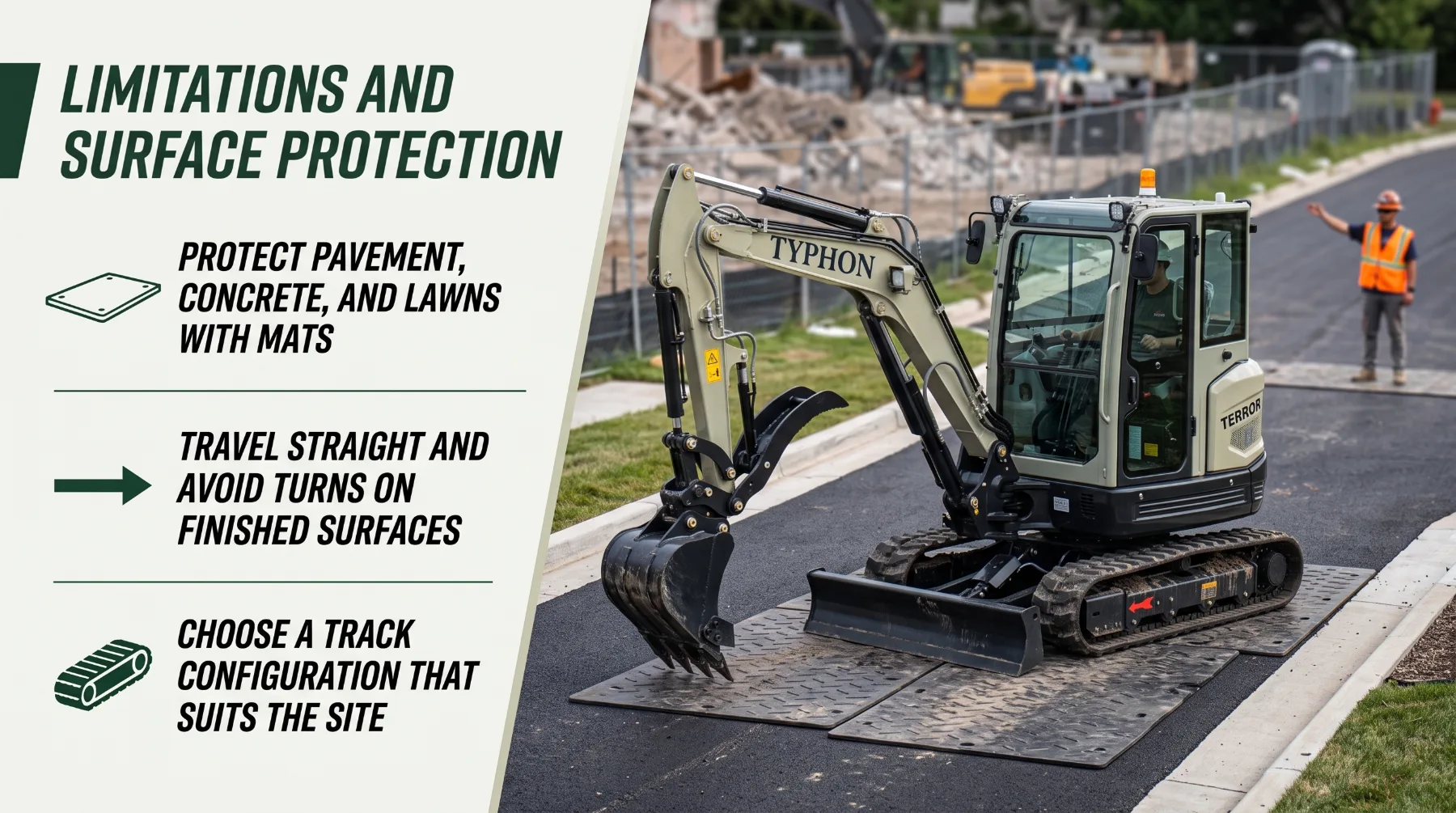
Plan travel routes with these limits in mind. Walk the path between the transport area and the work zone, and note every paved, finished, or landscaped surface the machine must cross. Lay ground protection mats or timber mats wherever crossing is unavoidable. Travel slowly and in straight lines over protected areas, and avoid turning on mats or finished surfaces, since turning creates the most scraping. Plan loading and unloading so the machine doesn't grind across pavement at the trailer. Before digging, inspect the boom cylinder and related hydraulic components for leaks or visible damage, and confirm the digging position and digging options are suitable for the site conditions. Position the machine carefully to allow the boom and attachment to operate without striking nearby structures or damaging protected surfaces.
When a job involves mostly finished, residential, or landscaped surfaces, an appropriate track configuration matters more than raw durability. Depending on the machine, options may include rubber tracks or steel tracks fitted with bolt-on rubber pads. Confirm which configurations your machine supports with the manufacturer or dealer, and match the undercarriage to the work environment.
Key takeaway: Steel tracks can damage asphalt, finished concrete, and lawns and create more noise and marking than rubber tracks, so plan the travel route, protect sensitive surfaces, and choose a track configuration that suits the site.
Conclusion
Steel tracks give mini excavators durable, dependable ground contact on rough and uneven jobsites where other undercarriage options may struggle, making them well suited to rocky site preparation, demolition cleanup, and demanding excavation work. Their rugged links and bolt-on shoes withstand contact with rock, broken concrete, and demolition debris, while properly maintained grousers provide traction on suitable rough terrain. The continuous track design distributes the machine's weight across a larger contact area, helping support stability and controlled movement when working within the manufacturer's limits. Before each shift, park the mini excavator on firm, level ground, lower the bucket, shut off the engine, and remove the key before beginning a thorough inspection. Examine track links, pins, and bushings for cracks, excessive play, stretching, or unusual wear, then check every track shoe for bends, damage, and loose or missing bolts. Inspect grouser height to identify worn shoes that may reduce traction, and examine rollers, idlers, and sprockets for flat spots, leaks, damaged surfaces, or hooked teeth. Measure track sag and confirm tension meets the manufacturer's specifications, making adjustments only according to the recommended procedure. Remove packed mud, rocks, and debris from the undercarriage to prevent buildup from interfering with track movement, and plan travel routes carefully to avoid unnecessary contact with finished surfaces. When crossing pavement, concrete, or landscaped areas, use suitable ground protection mats to reduce surface damage and protect customer property. Operators should also review the manufacturer's slope limits, rated capacities, and operating range for the day's tasks, while contacting the local utility locating service and confirming underground lines are marked before excavation begins. Record inspection findings in the maintenance log and address damaged components or incorrect track tension before returning the machine to service. By matching steel tracks to the terrain, maintaining the undercarriage on schedule, and planning every movement carefully, operators can improve traction, reduce preventable wear, protect finished surfaces, and keep mini excavators performing reliably throughout demanding jobs.
Frequently Asked Questions
Why are steel tracks useful on rough terrain?
Steel tracks are designed to withstand demanding ground contact and abrasive surfaces commonly found on excavation, demolition, and rocky jobsites. Their durable construction can provide reliable traction in challenging conditions when matched to the machine and terrain. Bolt-on track shoes can often be replaced individually when damaged or worn, helping simplify repairs. However, operators should select the appropriate track type for the ground conditions and follow the manufacturer's recommendations to maintain performance and reduce unnecessary wear.
Do steel tracks improve stability on uneven ground?
Steel tracks can help maintain ground contact across some irregular surfaces and provide traction on rough terrain. However, they do not guarantee stability in every condition. Machine design, track width, ground firmness, slope, load position, and operator technique all influence how safely the machine performs. Operators should assess the work area, avoid unstable ground, and follow the manufacturer's operating limits. Careful positioning and controlled movements remain essential when working on uneven surfaces.
Are steel tracks suitable for every jobsite?
No. Steel tracks are often suitable for rough, abrasive, or demanding ground, but they can damage concrete, asphalt, paving, and other finished surfaces. They may also create more noise or leave marks where surface protection is important. For landscaping, indoor work, or sensitive areas, rubber tracks or approved surface protection may be more appropriate. Consider ground conditions, surface requirements, and the machine manufacturer's guidance before choosing a track type for the job.
What maintenance do steel tracks need?
Inspect track links, pins, bushings, shoes, rollers, idlers, and sprockets regularly for damage, looseness, and abnormal wear. Check track tension according to the manufacturer's instructions, since incorrect tension can accelerate wear and affect operation. Remove mud, rocks, and other material buildup that may interfere with moving components. Replace worn or damaged parts as recommended, and investigate unusual noise or movement promptly. Consistent inspections and maintenance help extend track life and reduce unexpected downtime.
Need help turning this research into a real quote request?
Send the machine category, intended use, or product name to the KUVUO team and we can help you take the next step.
Contact KUVUO