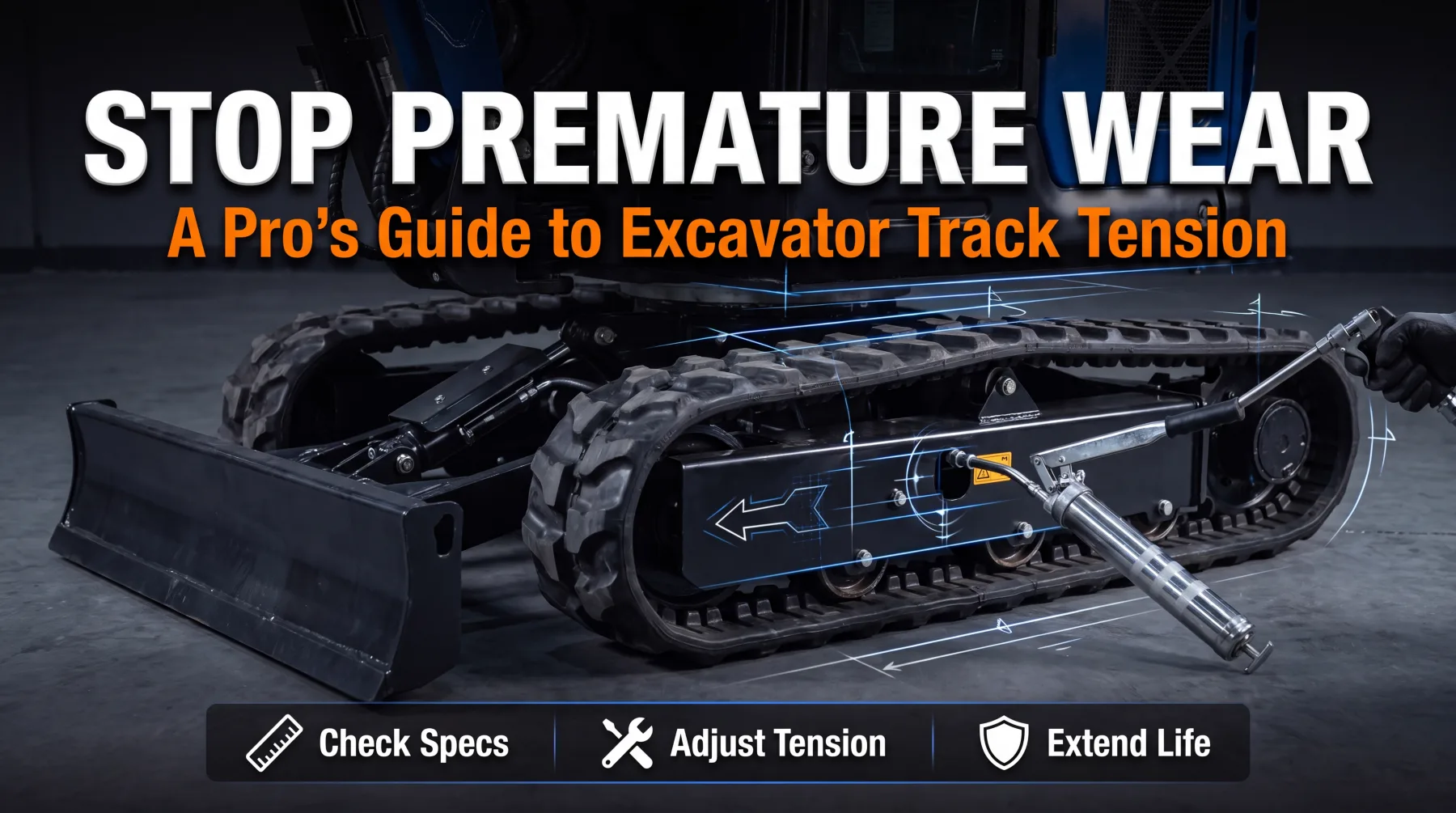
Stop Premature Wear: A Pro's Guide to Excavator Track Tension
Track tension is one of those details that quietly decides how long your excavator's undercarriage lasts. Get it right, and the whole system works in harmony, spreading load evenly and shrugging off the punishment of rough ground. Get it wrong, and you accelerate wear on some of the most expensive components on the machine, inviting derailments, downtime, and repair bills that never had to happen. The undercarriage can account for a huge share of a machine's lifetime operating cost, and improper tension is one of the fastest ways to drive that cost up. The good news is that proper tension is well within your control once you understand what to look for and how to adjust it. This guide walks you through everything an operator or site manager needs to know, from reading sag specs to spotting warning signs, managing debris, adjusting tension safely, and building the habits that keep your tracks running strong for the long haul.
Understanding Proper Track Sag
Track sag is the foundation of everything else in this guide, so it pays to understand it before you touch a grease fitting. Sag refers to the amount of slack in the track between the rollers, and every excavator manufacturer publishes a specific vertical sag measurement for their machines. This specification is your critical baseline, the target every tensioning adjustment aims to hit. Rather than guessing or relying on feel, you measure the vertical distance the track droops at a set point and compare it against the range the manufacturer calls for. That number is the difference between a properly tensioned track and one that wears out early.
Correct slack exists for a reason, and it is not a compromise but a deliberate design choice. Tracks need a measured amount of give to accommodate the constant terrain variations a machine encounters on a real job site. As the excavator travels over rocks, ridges, and uneven ground, the track flexes and moves. Proper sag gives it room to do that naturally, absorbing the shifts without fighting itself. A track pulled too tight loses that flexibility and transfers every impact straight into the undercarriage.
This is where the stakes become clear. When tension strays from the specified sag, you place excessive stress on the undercarriage components that keep the machine moving. Too little slack overloads the idlers, rollers, and drive system, while too much invites the track to wander and derail. Both extremes shorten the life of costly parts. By treating the manufacturer's sag specification as your standard and measuring against it consistently, you protect the entire undercarriage and give every other maintenance habit a solid starting point to build on.
Recognizing the Signs of Improper Tension
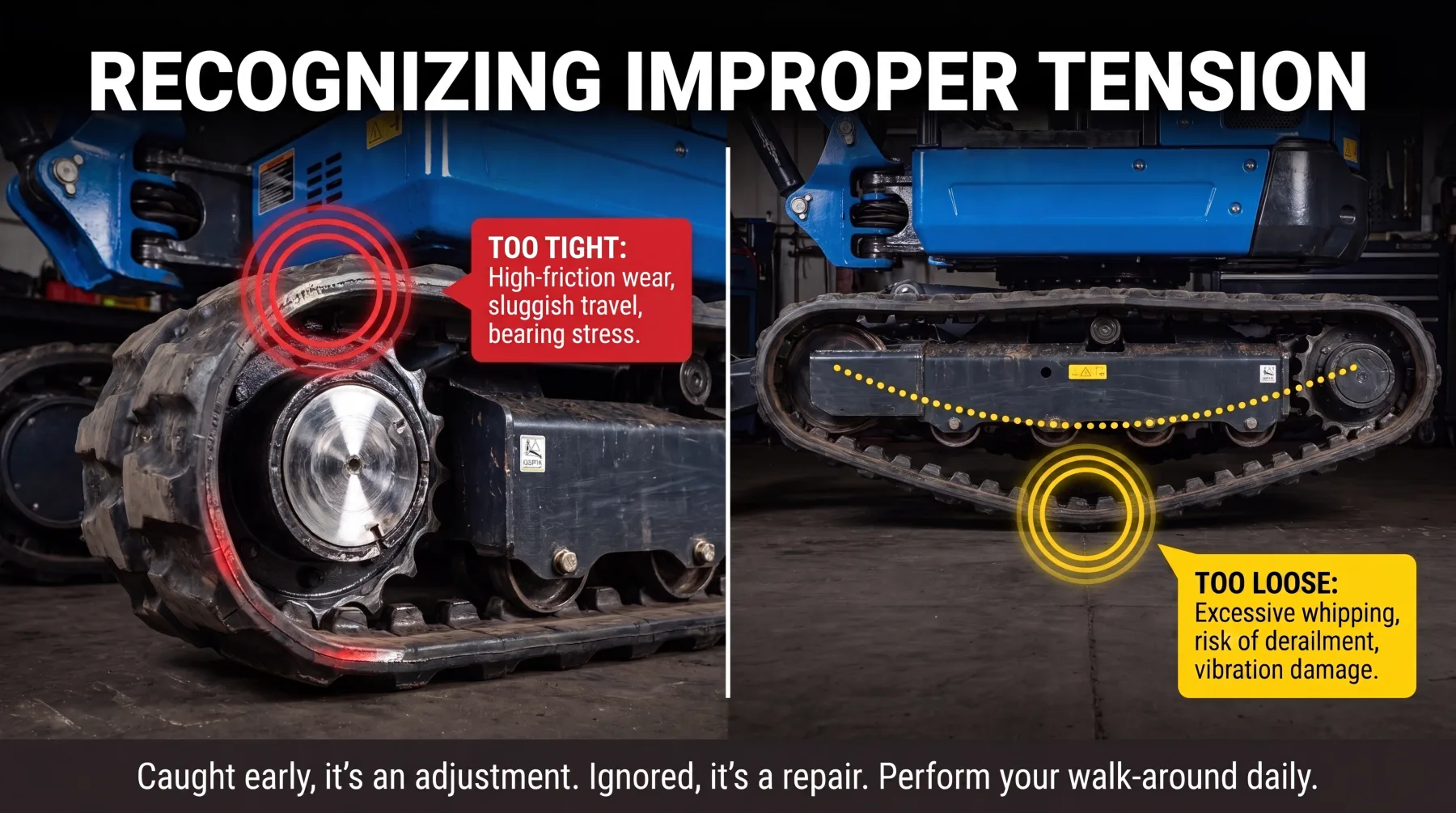
Your excavator gives you plenty of warning when track tension drifts out of range, provided you know what to watch for. Both over-tensioned and under-tensioned tracks leave clear visual and mechanical clues, and catching them early is what separates a quick adjustment from a major repair. An over-tensioned track often shows accelerated wear on the rollers, idlers, and sprockets, because the excessive force grinds these components against one another with every rotation. You may also notice the machine feeling sluggish or laboring during travel, since the drive system fights against tension it was never meant to carry.
Under-tensioned tracks announce themselves differently. A loose track sags too much and tends to slap or whip as the machine moves, and the most serious symptom is frequent derailment, where the track jumps off the sprocket or idlers entirely. That not only strands the machine but can damage components as the track comes free. Watch for these early indicators before they escalate:
- Accelerated roller and sprocket wear pointing to a track that is too tight
- Frequent derailments or a track that jumps signaling too much slack
- Unusual slapping or whipping noises during travel
- Uneven or premature wear patterns across the undercarriage
Learning to read these signs turns you into a first line of defense against costly failures. A track that whips today may derail tomorrow, and rollers wearing fast under high tension will fail long before their expected life. By spotting these warning signs early, you can correct tension before minor symptoms grow into unexpected machine downtime and expensive field repairs. Make a habit of glancing over the tracks during your walk-around, and you will catch most tension problems while they are still cheap and easy to fix.
The Impact of Environmental Debris
Job site conditions have a direct and often underestimated effect on track tension. Mud, rocks, and frozen debris do not just make a mess; they actively pack into the track system and alter your operating tension without you touching a thing. As the machine works, material wedges itself between the track and the sprockets, idlers, and rollers, building up in the tight spaces where the components mesh. This packed debris takes up room that the track needs, effectively tightening the system and increasing tension well beyond the level you carefully set.
Cold weather makes the problem worse. Wet mud that packs in during the day can freeze solid overnight, locking hard, unyielding material into the undercarriage. When you start the machine the next morning, that frozen buildup forces the track tighter than ever, placing extreme stress on the components before the debris breaks loose. Clay is another stubborn offender, clinging and compacting in ways that ordinary dirt does not. In these conditions, a track that is measured perfectly at the start of the shift can be badly over-tensioned within hours.
The defense against this is consistent cleaning and monitoring. Clear packed material from the undercarriage regularly, and never let it harden or freeze in place shift after shift. Pay close attention to the sprockets and idlers, where buildup does the most to change tension. In freezing conditions, clean the tracks at the end of the day so debris cannot lock in overnight. It also helps to check tension after working in especially muddy, rocky, or frozen ground, since those are the conditions most likely to throw your settings off. By keeping the track system clear and monitoring tension as conditions change, you keep your carefully set tension stable no matter what the job site throws at you.
Step-by-Step Tension Adjustment Procedures
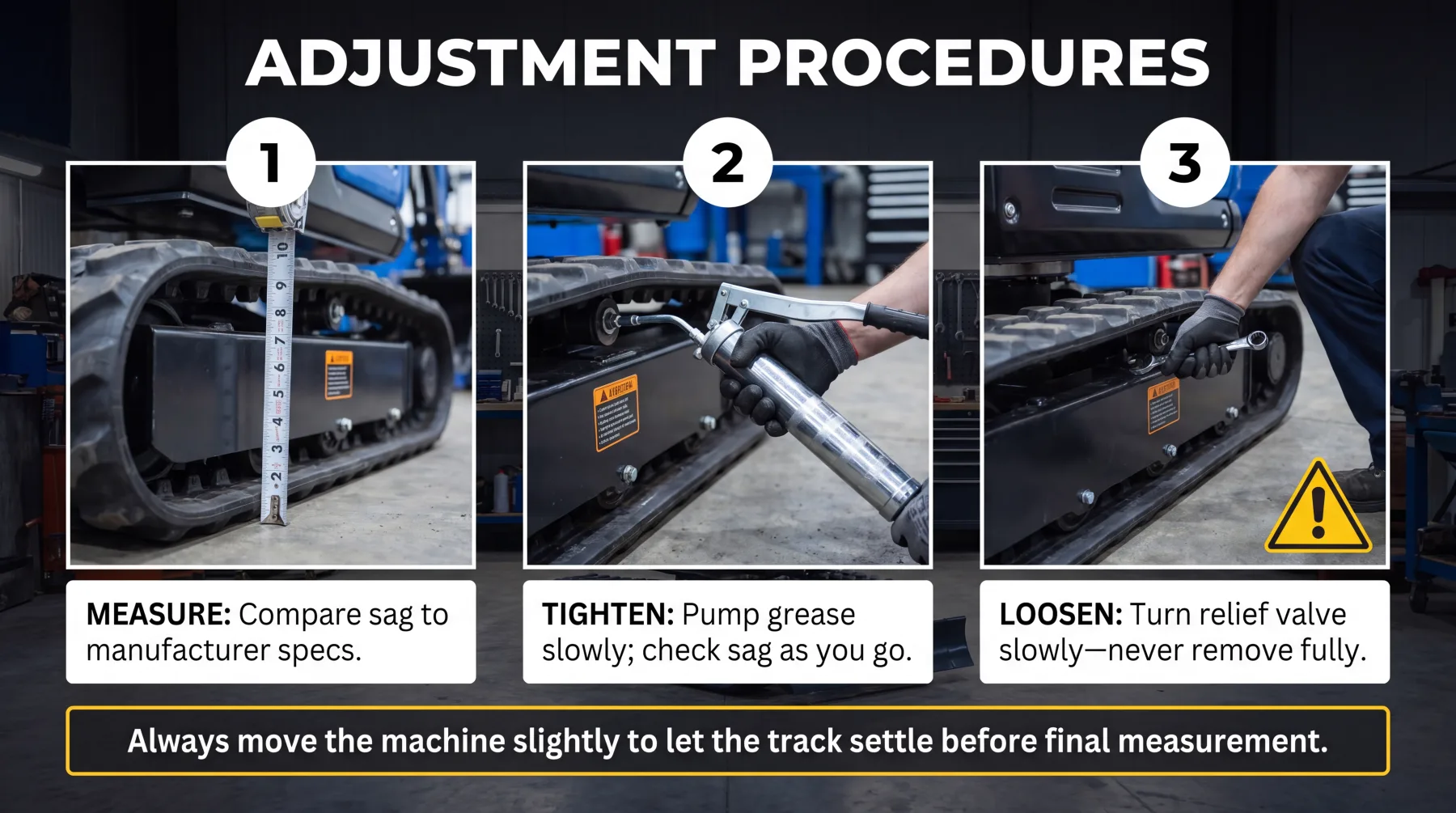
Adjusting track tension is a straightforward job when you follow a safe, deliberate workflow, but it demands respect because the tensioning mechanism holds significant pressure. Most excavators use a grease cylinder to control tension: adding grease pushes the idler out and tightens the track, while releasing grease through the relief valve lets the idler retract and loosens it. Before you begin, park the machine on level ground, lower any attachments, and follow the safe shutdown and lockout procedures in your operator's manual. Then clean any debris from the tracks so your measurement reflects true tension rather than packed material.
To add tension, locate the grease fitting on the track adjuster and pump grease in slowly with a grease gun, checking the sag frequently as you go. Add pressure gradually and measure against the manufacturer's sag specification rather than overshooting and backing off. Work through the process methodically:
- Measure current sag and compare it to the manufacturer's specification
- Add grease slowly through the fitting to tighten, checking sag as you work
- Release grease carefully through the relief valve to loosen when needed
- Recheck the measurement and move the machine slightly to let the track settle
Releasing tension calls for extra caution, because the grease cylinder is under high pressure. Loosen the relief valve slowly, no more than the amount specified in your manual, and never stand in line with the fitting or fully remove it, as pressurized grease can escape with dangerous force. Turn the valve just enough to let grease bleed out gradually, then close it and recheck the sag. Working slowly at every step protects both you and the tensioning mechanism, ensuring you add or release pressure correctly without damaging the components you are trying to preserve.
Best Practices for Long-Term Maintenance
The real payoff from understanding track tension comes when you turn it into a consistent habit rather than an occasional fix. A regular inspection schedule is the backbone of long-term undercarriage health, letting you monitor track condition and catch minor issues before they grow into premature system failure. Build a routine that includes a quick daily check of tension and track condition during your walk-around, plus more thorough inspections at set intervals. Watch sag, look for the wear and derailment signs covered earlier, and clean packed debris as part of the rhythm. When these checks become second nature, problems rarely have the chance to escalate.
The reason this matters so much comes down to the components at stake. Proper tension and consistent care directly protect the pins, bushings, sprockets, rollers, and idlers that make up the undercarriage, and these are among the most expensive parts to replace on the machine. A track running at the correct tension distributes load evenly and reduces the grinding, impact, and stress that wear these components down. Neglect tension, and you accelerate the wear on all of them at once, shortening the life of the entire system.
Integrating these habits into your daily routine costs only a few minutes but delivers substantial returns. Keep clear records of your inspections and adjustments so you can spot trends and plan service before something fails. Train every operator who runs the machine to check tension and report anything unusual, since the crew in the seat is often the first to notice a change. Address small problems promptly rather than letting them ride, and clean the tracks consistently to keep tension stable. Commit to these practices, and you will significantly extend the lifespan of your pins, bushings, and sprockets, keeping your excavator productive and dependable for years.
Conclusion
Proper track tension is one of the most cost-effective forms of protection you can give your excavator, and it rests entirely on habits you control. Start with the manufacturer's sag specification as your baseline, because correct slack is what lets the tracks handle rough terrain without overloading the undercarriage. Learn to read the warning signs of over- and under-tensioned tracks, from accelerated roller wear to frequent derailments, so you can act before small symptoms become major repairs. Stay ahead of the mud, rocks, and frozen debris that quietly pack into the system and throw your tension off, and adjust tension with a safe, deliberate workflow that respects the pressure in the grease cylinder. Above all, weave these checks into a consistent inspection routine that protects your pins, bushings, sprockets, and rollers day in and day out. Do this well, and you stop premature wear before it starts, extending undercarriage life, avoiding costly downtime, and keeping your machine working hard on every job. When wear or damage runs beyond routine care, trust a qualified technician to keep your excavator performing at its best.
Need help turning this research into a real quote request?
Send the machine category, intended use, or product name to the KUVUO team and we can help you take the next step.
Contact KUVUO