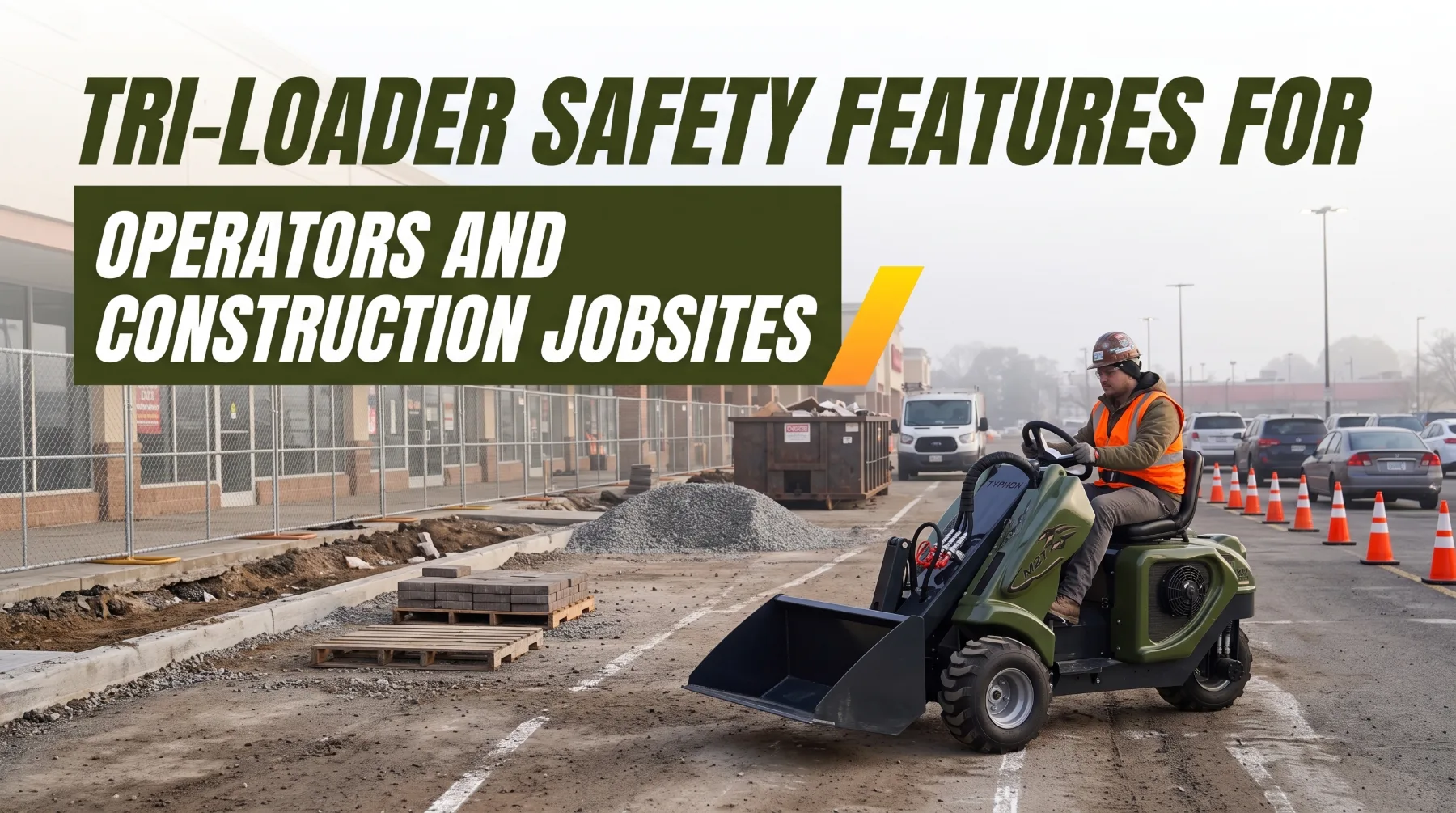
Operating a tri-loader near workers, vehicles, buildings, and public access areas requires reliable safety equipment and constant awareness. Faulty restraints, limited visibility, unsecured attachments, and malfunctioning warning systems can increase the risk of incidents during material handling. Inspecting these systems before starting work helps identify potential hazards before the machine enters an active work zone.
Several safety features address different operating risks. Seat belts and operator presence systems help protect the operator, while mirrors and backup alarms improve awareness of nearby people and obstacles. Attachment locking mechanisms secure forks, buckets, and other tools, while protective structures and hydraulic controls support operator protection and controlled machine movement. Each feature must function correctly to provide its intended benefit.
Daily walkaround checks should cover restraints, mirrors, alarms, attachment locks, controls, and other installed safety equipment. Any defect should be corrected before operation according to the manufacturer's instructions. Clear visibility, fully secured attachments, controlled travel speeds, and awareness of nearby people help make these safety features effective on construction and landscaping sites.
Operator Protection and Restraint Systems
The operator station is the operator's protected workspace. It should provide protection suited to the machine's intended applications, whether that's loading gravel on an open site or handling debris near overhead structures. Depending on the design, the station may include a rollover protective structure, overhead protection against falling objects, side screens, and guards that keep hands and arms away from moving loader components. Check the certification label on your machine to confirm which protection standards the structure meets.
Restraints make that protection effective. A protective structure can only help an operator who stays inside it during a tip, a sudden stop, or a wheel dropping into a rut. Fasten the seat belt every time you operate, including short moves across the site. Wear the lap belt low and snug across the hips. Where the machine has a restraint bar or operator presence system, use it exactly as the manufacturer directs. These systems may hold or disable certain functions when the operator leaves the seat, and bypassing them removes an important layer of protection.
Inspect protection and restraint components before every shift. Check the belt webbing for cuts, fraying, and sun damage, and confirm the buckle latches and releases cleanly. Look over the protective structure for cracks, bends, and missing bolts, especially if it has contacted a beam, wall, or tree limb. Never drill, weld, or bolt accessories onto a certified structure, since modifications can weaken it in ways you can't see. Repairs should be completed by a qualified technician using the manufacturer's procedures.
Safe entry and exit belong here as well. Lower the attachment fully to the ground, engage the parking brake, and shut off the engine before leaving the seat. Use the designated steps and handholds, and keep three points of contact. Never climb over or under raised loader arms.
Key takeaway: Protective structures, seat belts, restraints, and guards reduce the operator's exposure to jobsite hazards, so use every installed system according to the manufacturer's instructions and keep each one in good condition.
Stability and Load Management Features
A tri-loader's stability depends on the relationship between load weight, attachment position, ground conditions, and load height. The compact three-wheel layout forms a triangular base of support. The machine stays upright while the combined center of gravity of the machine and its load remains inside that triangle. Every lift, turn, and change in ground shifts that center of gravity.
Manufacturers build stability into the machine through counterweighting, wheel placement, and loader geometry. They also publish load-related limits, including the rated operating capacity shown on the capacity decal and in the operator's manual. Some machines add specific stability aids, such as load indicators or travel speed limits under certain conditions. Learn which features your machine has, but treat them as guidance rather than permission to push limits.
These features don't replace good operating practice. Rated capacity includes the attachment's weight, and dense materials such as wet soil, crushed stone, and broken concrete reach that limit quickly. Pallet forks place loads farther forward than a bucket, which gives the same weight more leverage on the machine. Load by weight rather than by how full the bucket or forks look, and review the full capacity information for each attachment you use.
Working surfaces matter just as much. Soft soil, recent backfill, ruts, and slopes can tilt the machine without warning. Walk travel routes before work begins, lay ground protection mats across soft or sensitive areas, and follow the manufacturer's slope limits. Carry loads low, raise them only at the placement point, and avoid turning with a raised or full attachment.
Key takeaway: Load limits and stability features help guide safe operation, but they don't replace staying within rated capacity, keeping loads low, and working on suitable surfaces.
Visibility and Operator Awareness
Tri-loaders often operate in tight, busy areas where workers, vehicles, and materials may be nearby. Keeping visibility features clean and using safe operating habits help operators identify obstacles, monitor their surroundings, and reduce accident risks.
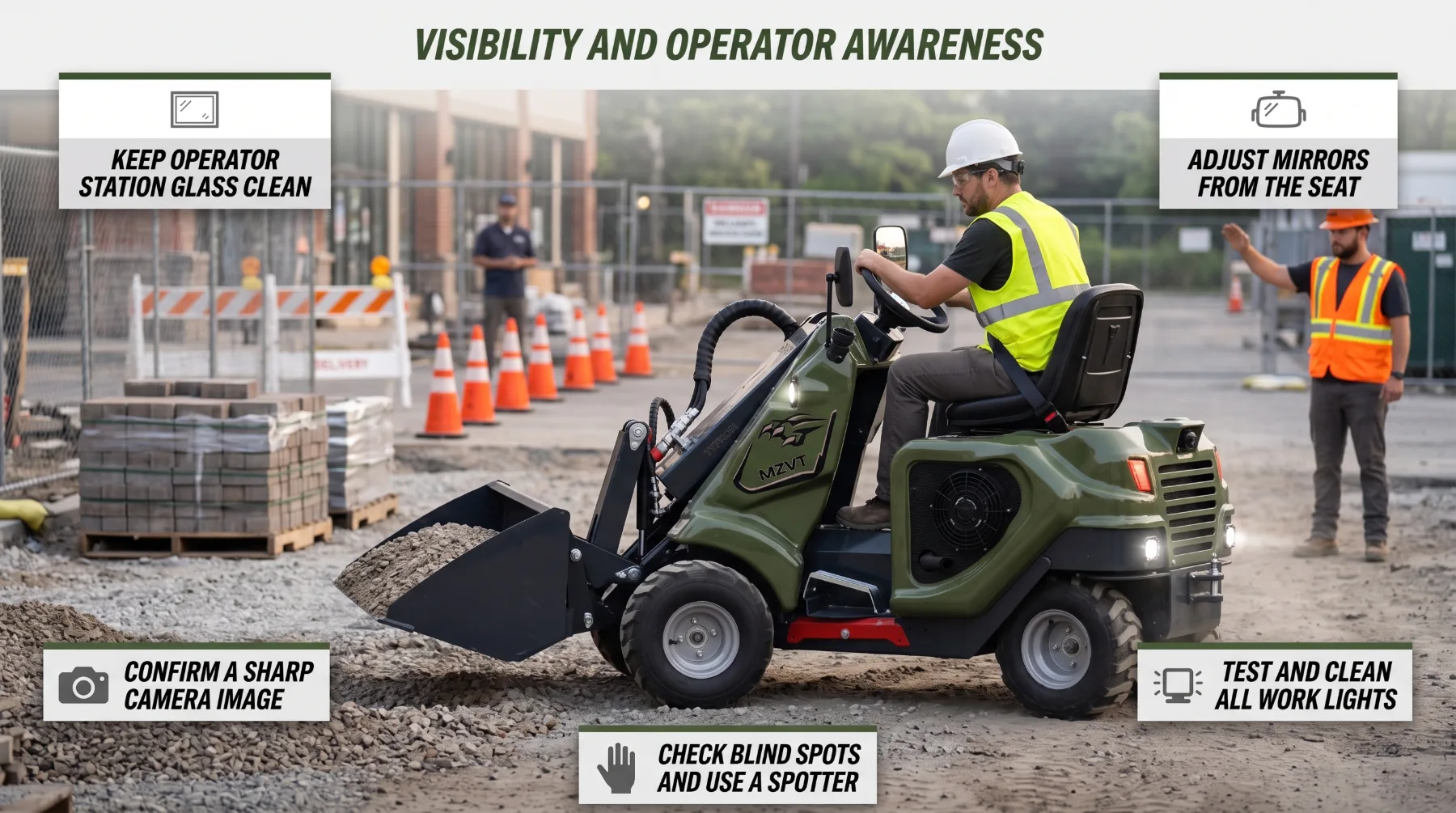
Windows and Operator Station: Keep windows and viewing areas clean and clear of dust, mud, and condensation to maintain visibility.
Mirrors: Clean and adjust mirrors before each shift to improve awareness of areas around the machine.
Cameras: Check rear cameras and displays before operation, and clean the lenses to maintain a clear view when reversing.
Work Lights: Test and clean work lights to improve visibility around the attachment and travel path in low-light conditions.
Blind Spots and Pedestrians: Carry loads low, check the direction of travel, and use a trained spotter when visibility is limited. Stop if anyone enters the work zone unexpectedly.
Key takeaway: Windows, mirrors, cameras, and work lights improve awareness, but operators must still check blind spots and keep people clear of the machine's travel path and working attachment.
Hydraulic Controls and Machine Response
Hydraulics power the loader arms and many of the attachments a tri-loader uses. Predictable control response lets the operator raise, lower, tilt, and position loads with precision. That precision is a safety feature in its own right, especially when the machine works close to workers, storefronts, vehicles, and other equipment.
Proportional controls let the operator meter movement gradually instead of jumping straight to full speed. Start each movement slowly, build speed once the load is moving smoothly, and feather inputs to a gentle stop before changing direction. Sudden starts and stops shift the load, shock the loader arms, and can unsettle the machine's balance at the moment it's most sensitive. Some machines offer adjustable response settings, so choose a smoother setting for precise placement near people or finished surfaces.
Several hydraulic features add protection. Where equipped, a hydraulic lockout prevents loader and attachment movement while the operator enters or exits. Load-holding valves help keep the arms in position if hydraulic pressure is lost. A float function lets the attachment follow the ground during back-dragging and finish grading. Review your operator's manual so you know exactly how each feature behaves on your machine.
Hydraulic response also tells you about the machine's condition. Loader arms that drift down with the controls in neutral, delayed or jerky movement, and unusual pump noise can point to low fluid, a leak, or worn components. Lower the load to the ground and have the system inspected before continuing. Inspect hoses and fittings daily, and never check for leaks with your hand. Pressurized fluid can penetrate skin and cause serious injury, so use a piece of cardboard instead.
Key takeaway: Predictable hydraulic response helps operators position loads carefully around people and structures, so use gradual inputs, know your machine's hydraulic safety features, and stop at the first sign of drift or irregular movement.
Attachment Locking and Security
A tri-loader's versatility depends on its attachments. In a single day, the same machine may run a bucket, pallet forks, and a grapple. Each change relies on locking mechanisms, pins, couplers, and hydraulic connections to keep the tool firmly attached. An attachment that separates during lifting can drop its load on workers, vehicles, or finished work.
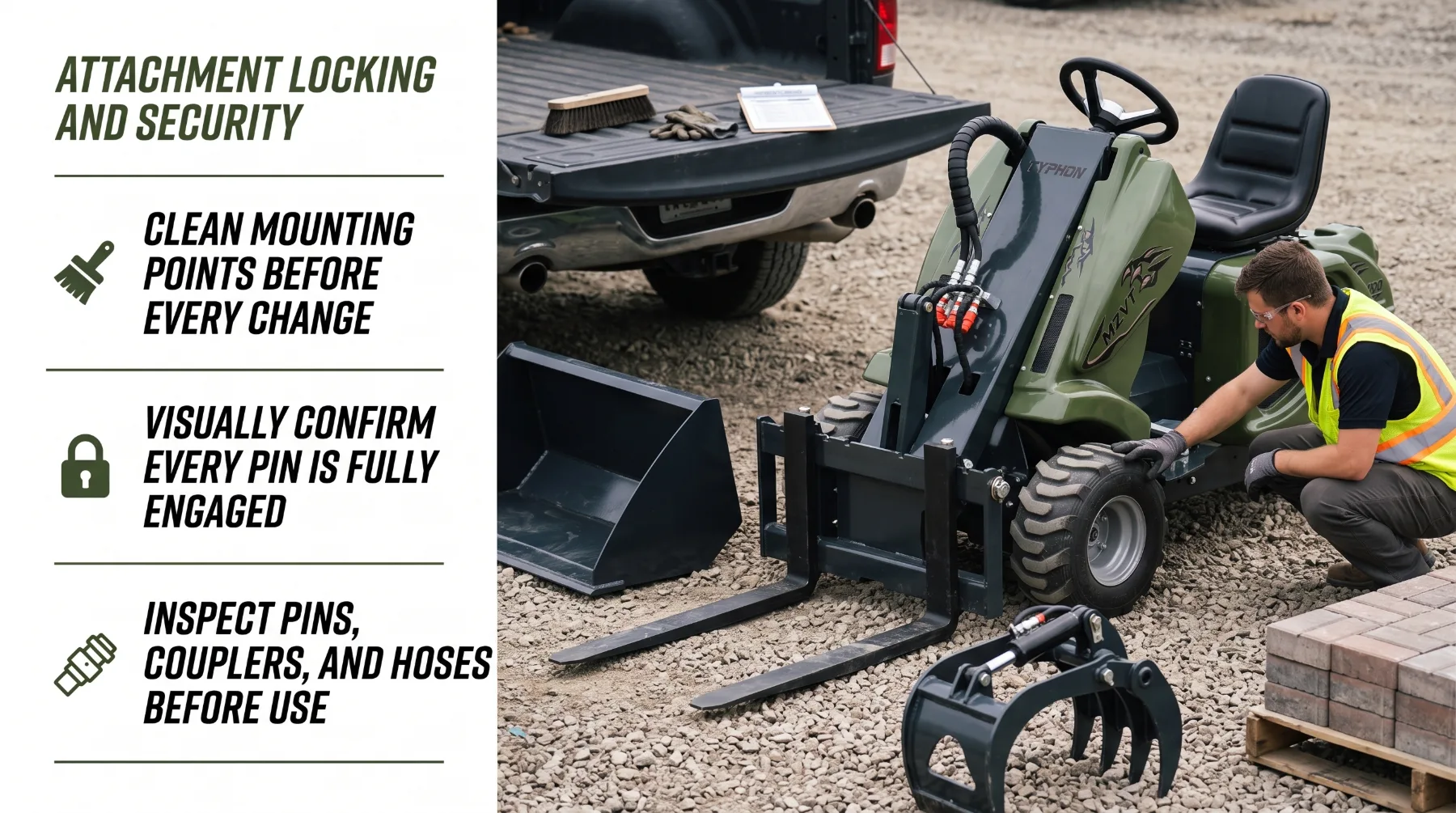
Locking systems vary by machine. Some use manual levers that drive pins or wedges through the attachment frame. Others use a powered lock engaged from the operator station, sometimes with a status indicator. An indicator is helpful, but it doesn't replace a visual check. Packed mud or gravel in a lock slot can stop a pin short of full engagement while the system still appears locked.
Follow the same procedure for every attachment change. Park on firm, level ground and clean the mounting plate and locking points. Seat the attachment and engage the lock according to the manufacturer's instructions. Then visually confirm that every pin or wedge passes fully through its slot, and test the connection with light downward pressure before lifting any load. Confirm the attachment is approved for the machine and that its weight fits within rated capacity.
Powered attachments need extra care. Relieve hydraulic pressure before connecting or disconnecting hoses, wipe couplers clean, and route hoses away from pinch points. Inspect pins, couplers, springs, and levers regularly for wear, bending, and cracks. Replace damaged parts with approved components before the attachment returns to work, and never stand beneath a raised attachment during connection or testing.
Key takeaway: Attachment locks keep compatible tools securely connected, so clean every connection, verify full engagement visually, and inspect pins, couplers, and hydraulic connections before each use.
Warning Devices and Emergency Controls
Warning lights, alarms, instrument indicators, and emergency controls give the operator and the crew extra information and support when conditions change. They signal machine movement, flag developing mechanical problems, and allow a fast response to unexpected situations. Their value depends on knowing what each one means and acting on it immediately.
External warning devices protect people around the machine. The backup alarm signals reversing movement, and the horn lets the operator alert someone before moving. Beacons make the machine easier to spot across a busy site. Test each device before every shift, and confirm the alarm is loud enough to be heard over saws, compressors, and traffic. Brief the crew so everyone understands that an alarm means real machine movement.
Instrument indicators protect the machine and the operator. Depending on the design, the display may monitor engine temperature, hydraulic temperature, oil pressure, charging, and fuel level. Watch for indicators to illuminate briefly at start-up and clear once the engine runs. If a warning appears during work, lower the load, move to a safe, level position, and respond according to the machine's operating instructions. Working through an active warning can turn a minor issue into a breakdown or a hazard.
Emergency controls provide the last line of response. Depending on the machine, these may include an emergency stop, an engine shutdown, a parking brake, and a hydraulic lockout. Learn the location and function of each control before operating, and confirm they work during the pre-shift check. Where a fire extinguisher is installed, confirm it's present, charged, and secured.
Key takeaway: Warning devices and emergency controls support a fast response when unexpected conditions arise, so understand each function before use and respond to every warning according to the operating instructions.
Conclusion
Tri-loader safety features work together to protect the operator and support controlled, predictable machine operation on busy construction jobsites, but their protection depends on how consistently they're inspected, maintained, and used. Protective structures and restraints keep the operator secure, while load limits and stability features guide safe lifting when they're paired with rated capacity and suitable working surfaces. Predictable hydraulic controls allow careful placement near people and structures, and clean, properly adjusted visibility aids help the operator track loads, obstacles, and workers on foot. Fully engaged attachment locks keep tools and materials where they belong, and warning devices and emergency controls give everyone on site a faster response when conditions change. No feature replaces safe operating practice, so following the manufacturer's instructions, respecting rated limits, and staying aware of the work area remain the foundation of every safe shift. Before your next shift, walk around the machine, test every restraint, visibility aid, and warning device, and visually confirm your attachment lock before the first lift.
Frequently Asked Questions
What safety features should a tri-loader have?
Depending on its design, important features include operator protection, restraints, visibility aids, attachment locks, warning devices, and emergency controls. Each one addresses a specific jobsite hazard.
How do attachment locks improve safety?
They keep compatible buckets, forks, and other tools securely connected during operation. Always confirm full engagement visually, even when the machine has a lock indicator.
Why is visibility important on a construction site?
Good visibility helps operators monitor loads, obstacles, workers, and nearby equipment. Clean mirrors, cameras, and lights reduce the risk of contact incidents, especially during reversing.
Do safety features eliminate the need for safe operating practices?
No. Operators must still follow the manufacturer's instructions, respect rated limits, inspect the machine, and maintain awareness of the work area.
Need help turning this research into a real quote request?
Send the machine category, intended use, or product name to the KUVUO team and we can help you take the next step.
Contact KUVUO