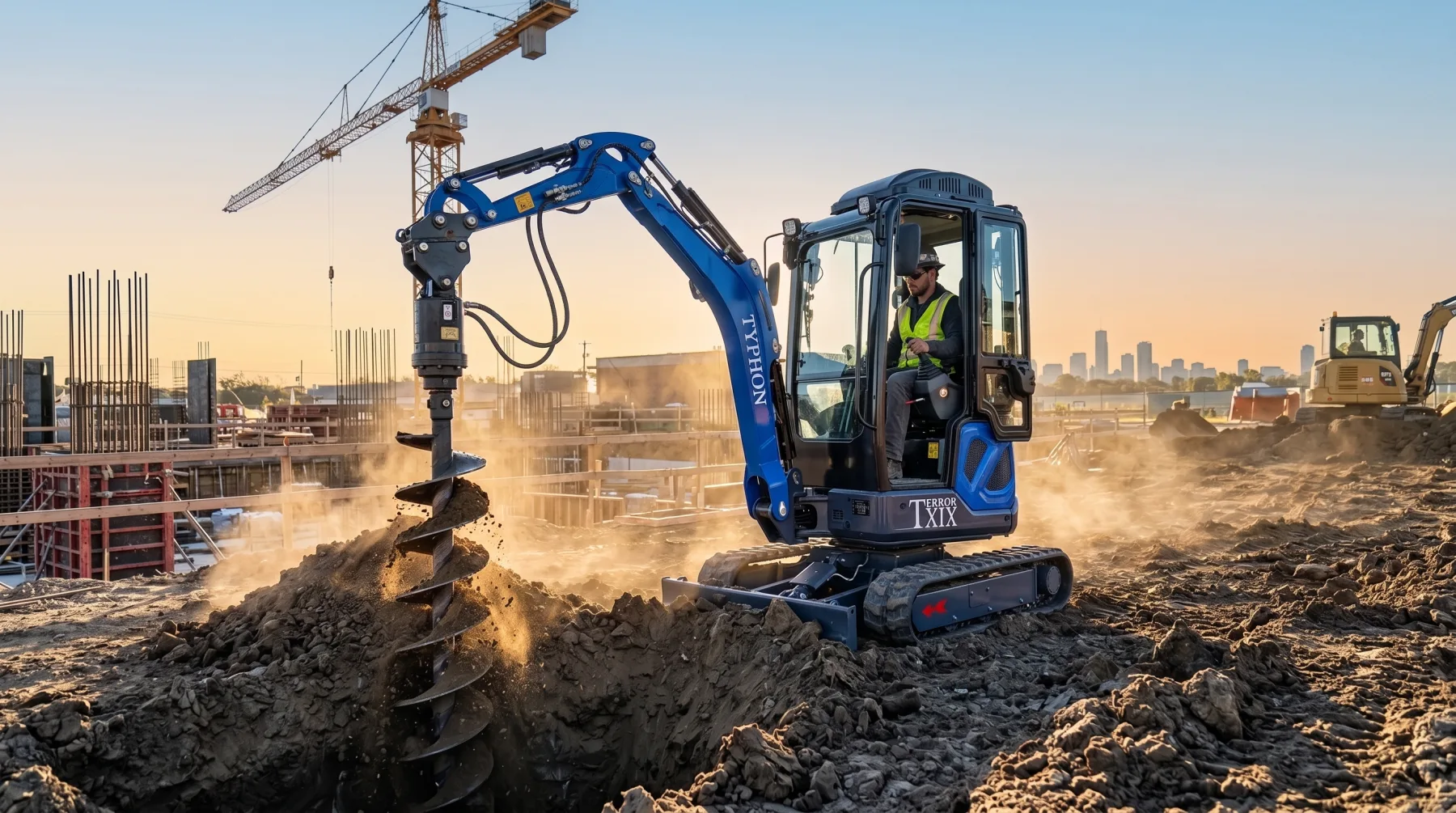
You line up your auger over the mark, drop the bit, and start the first few feet without a hitch. Then, six feet down, the rotation slows. The bit bogs, the machine strains, and no matter how much down-pressure you add, the auger just spins in place or stops cold. You back it out, and half your spoil comes with it, but the hole isn't deep enough. That stall isn't a fluke or an operator error. It's a torque shortage, and the deeper you drill, the more it decides whether you finish the hole or fight it.
Torque is the twisting force that lets an auger keep turning against resistance, and it becomes the single most important spec once holes get deep. In this guide, you'll learn what auger torque actually is, why depth demands more of it, how soil type and bit diameter change the equation, how too little torque stalls a drill, the warning signs to watch for, and how to match torque to the job. By the end, you'll size an auger the right way, the first time.
What Auger Torque Actually Is
Torque is the key force behind an auger’s ability to break through tough ground conditions. It determines how much twisting power the drill can apply when cutting into soil, clay, or rocky material, making it a critical factor when matching an auger to the job. Unlike speed, which controls how quickly the bit spins, torque provides the strength needed to keep drilling when resistance increases.
A properly sized auger with enough torque delivers smoother operation, reduces strain on the machine, and prevents the bit from stalling in demanding conditions. Understanding torque helps operators choose equipment that can handle the depth, diameter, and material they need to drill.
Torque Versus Speed
Torque is rotational force, the twisting power that turns the auger bit against the ground's resistance. Speed, measured in revolutions per minute, is how fast the bit spins. The two are different jobs entirely: speed clears easy ground quickly, while torque breaks through ground that fights back.
Think of a wrench on a stubborn bolt. Spinning it fast does nothing if you can't apply enough force to break the bolt loose. Drilling works the same way. When the ground resists, raw twisting force, not rotation speed, is what keeps the bit advancing.
Takeaway: Torque is the twisting force that overcomes resistance, and it matters far more than speed the moment the ground gets tough.
How an Auger Generates Torque
Torque comes from the auger drive's motor working through its gearing. On hydraulic setups, pressurized oil drives the motor, and the gearbox multiplies that force into the high torque needed to turn a bit through soil. Higher hydraulic pressure and heavier gearing produce more twisting power at the bit.
This is why two drives with similar rotation speeds can perform completely differently. One may spin fine in loose dirt but stall in clay, while the other keeps cutting. The difference is the torque each delivers, and that's set by the drive's design, not by how fast it turns.
Takeaway: Auger torque is produced by the drive's motor and gearing, so the drive you choose determines how much force reaches the bit.
Why Depth Demands More Torque
Deep holes aren't just longer versions of shallow ones. As the bit goes down, resistance climbs on several fronts at once, and that's exactly when a torque shortage reveals itself. Understanding why depth compounds the load helps you size for the whole hole, not just the first few feet.
Deeper drilling creates greater resistance as the bit works through more material and has less room to clear debris. This added load demands consistent torque to keep the auger turning smoothly. Sizing the setup for the full drilling depth helps prevent slow performance, stalling, and unnecessary strain on the equipment.
Resistance Builds as You Go Down
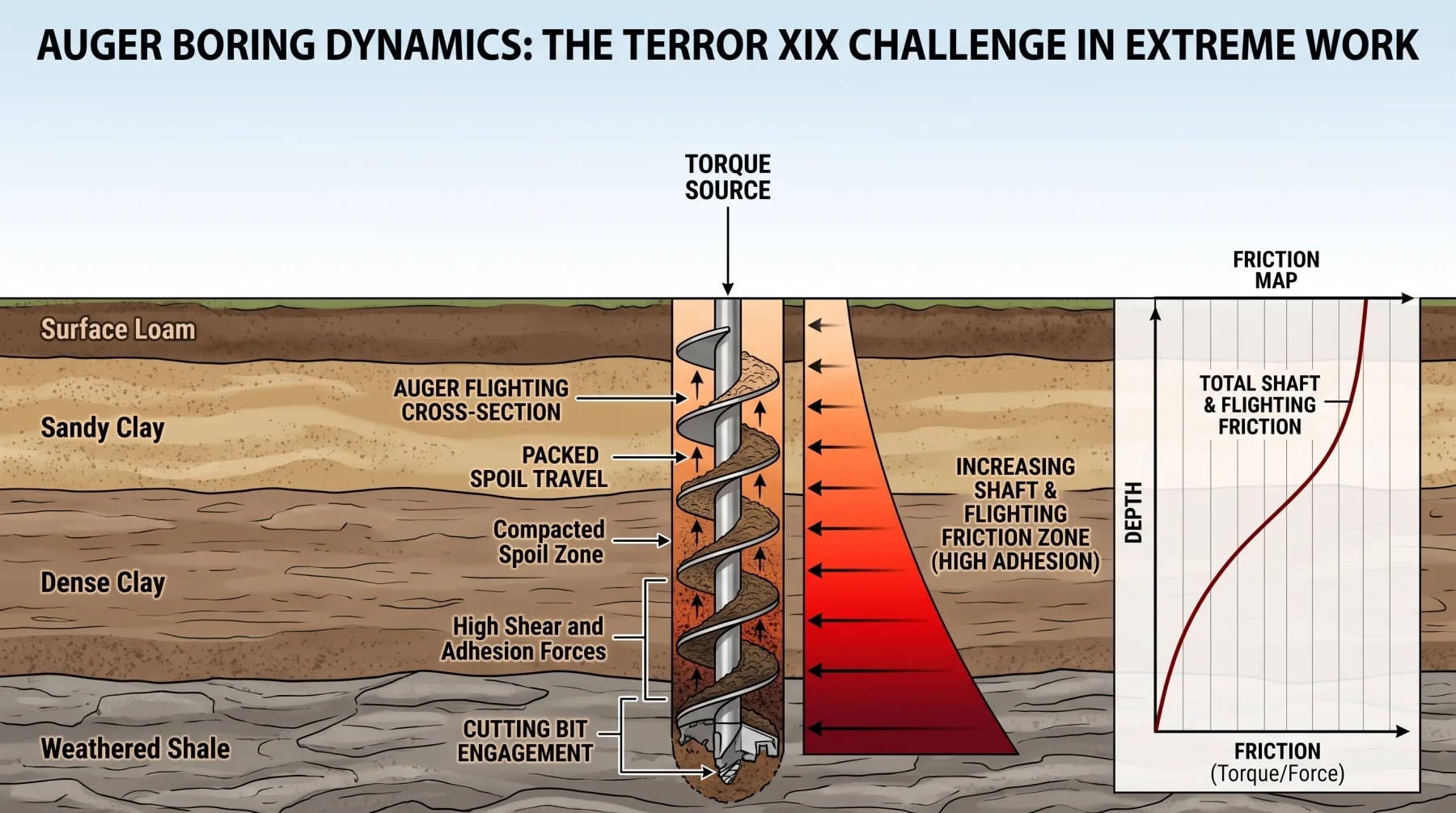
The deeper you drill, the more soil sits in contact with the auger flighting and shaft, and all of it creates friction. The bit has to keep cutting at the bottom while the entire column of the auger drags against the surrounding ground. That combined load grows with every foot, so the torque that felt ample at three feet may fall short at twelve.
Ground often gets harder with depth, too. Loose topsoil gives way to compacted layers, dense clay, or rock below, so the bit meets tougher material precisely when the drill is already working hardest. You're asking for more force to cut just as friction along the shaft is peaking.
Takeaway: Resistance and friction climb steadily with depth, so deep holes demand far more torque than their opening feet suggest.
Spoil Removal Gets Harder
An auger doesn't just cut; it lifts and spoils the flighting and out of the hole. As the hole deepens, that spoil has farther to travel, and if it packs instead of clearing, it binds the auger and spikes the torque needed to keep turning. Packed flighting can seize a drill that had plenty of power moments before.
This is why torque and spoil management work together on deep holes. Adequate torque keeps the flighting turning to carry spoil up, and clearing spoil regularly keeps the torque demand from spiraling. Skip either, and the auger bogs down in its own cuttings.
Takeaway: Deep holes make spoil removal harder, and packed flighting drives torque demand up sharply, so power and spoil clearing must keep pace together.
How Soil Type Changes Torque Requirements
The same auger behaves completely differently depending on what it's cutting. Soil is the biggest variable in how much torque a job needs, and reading it correctly is the difference between a drive that breezes through and one that stalls. Match your torque to the ground, not to a guess.
Auger performance changes greatly with the type of material being drilled. Soft soil may require moderate torque, while clay, compacted ground, or rocky conditions demand much more power to keep the bit moving. Understanding the ground conditions helps you choose a setup that delivers steady drilling without unnecessary strain.
Soft and Granular Soils
Loose soils like sand, loam, and soft dirt offer little resistance, so they need relatively modest torque. The bit cuts easily and the flighting clears spoil without much strain, which means even a moderate drive drills these grounds efficiently. Here, rotation speed often matters as much as force.
The catch with granular soils is hole stability, not torque. Sandy ground can collapse or slough, so the challenge is finishing the hole clean rather than generating power. If your work stays in soft ground, you can prioritize speed and size torque conservatively.
Takeaway: Soft, granular soils need modest torque, so drilling them is more about speed and hole stability than raw force.
Clay and Compacted Ground
Dense clay and heavily compacted ground are where torque earns its keep. These materials resist cutting and cling to the flighting, so the drive needs strong, sustained force to keep the bit advancing. Wet clay is especially punishing, packing the flighting and multiplying the load until an underpowered drive simply stops.
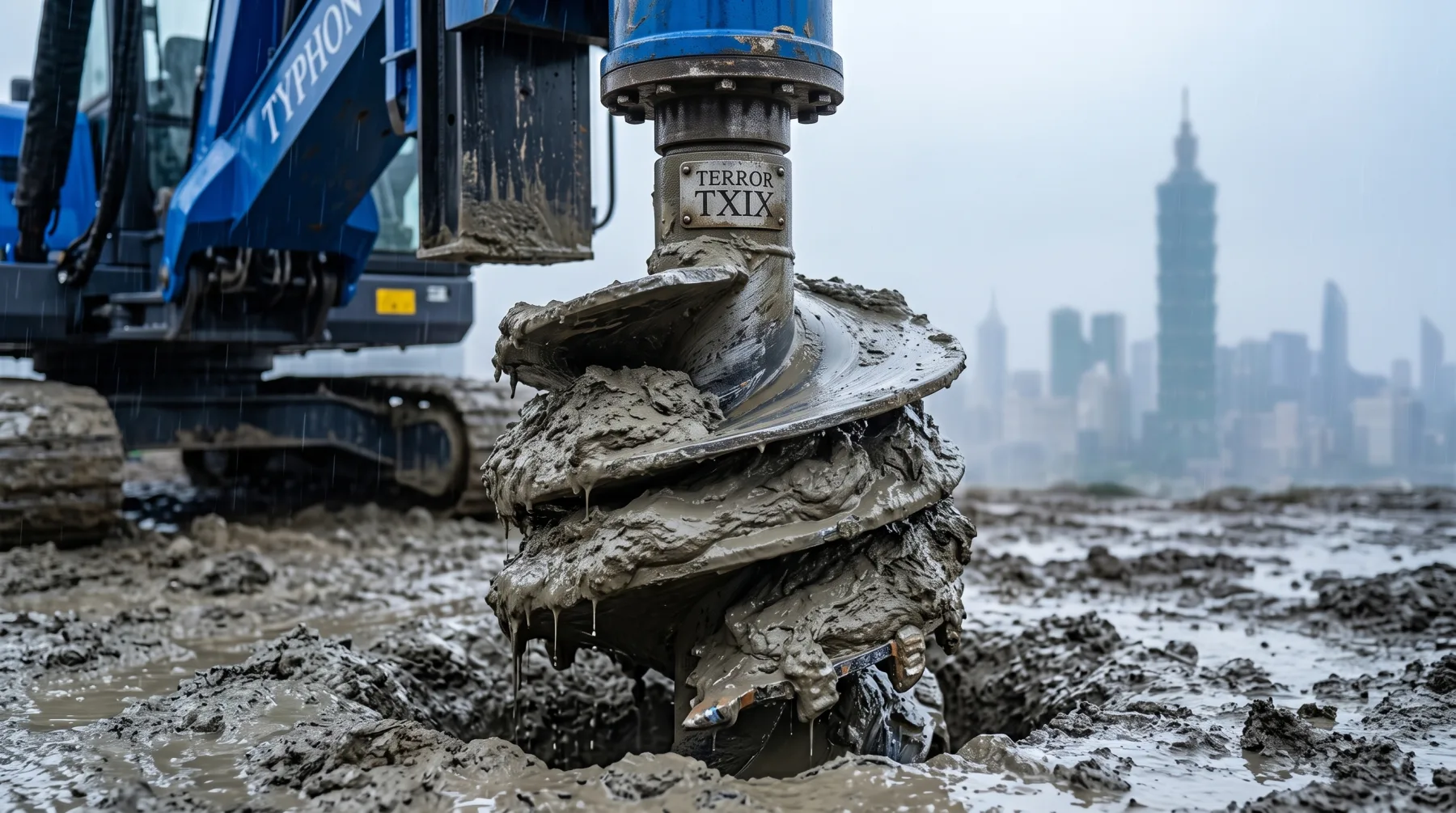
For these grounds, you size the drive for high torque and expect to clear spoil often. Trying to muscle through clay with a light drive wastes time and risks burning up the motor. Match the torque to the resistance, and the auger cuts steadily instead of stalling.
Takeaway: Clay and compacted ground demand high, sustained torque, so size the drive for the resistance and clear spoil frequently.
Rock, Frozen, and Debris-Laden Ground
The hardest conditions, rock, frozen soil, and ground full of cobbles or debris, demand the most torque of all, plus the right bit. These materials won't yield to speed; they require the raw twisting force to break and grind through unyielding material. An undersized drive stalls almost immediately here.
Bit selection matters as much as torque in these grounds. Carbide-tipped rock teeth and reinforced flighting let the available torque bite in and hold an edge, while a general-purpose bit would spin, wear, and stall. Torque and the correct bit work as a pair against hard ground.
Takeaway: Rock, frozen, and debris-laden ground need maximum torque paired with the right bit, so plan for both when conditions are severe.
The Relationship Between Torque and Bit Diameter
Depth isn't the only thing that drives torque demand; diameter does too, and it does so dramatically. A wider hole isn't a small step up in difficulty. Understanding how diameter multiplies the load keeps you from pairing a big bit with a drive that can't turn it.
Auger torque requirements increase as the bit diameter grows because a larger cutting area creates more resistance against rotation. A small increase in size can place a much greater load on the drive system, especially in tough ground. Matching the bit diameter with the available torque helps prevent slow drilling, stalling, and excessive wear.
Wider Bits Multiply the Load
A larger-diameter auger displaces far more soil per rotation than a narrow one, so it needs substantially more torque to keep turning. Stepping from a 6-inch to an 18-inch bit doesn't triple the demand; it can raise it far more, because both the cutting width and the friction along the flighting grow with diameter.
This is why a drive that spins a small bit through clay with ease can stall hard trying to turn a wide bit through the same ground. The soil hasn't changed, but the force required to cut and lift a wider column of it has climbed steeply. Diameter and torque have to be read together, always.
Takeaway: Wider bits demand sharply more torque, so a drive comfortable with a small bit may stall on a large one in identical ground.
Depth and Diameter Together
The real challenge comes when a job needs a hole that's both wide and deep. Diameter raises the torque demand per rotation, and depth adds friction and spoil load on top of that, so the two compound. A large-diameter deep hole is one of the most torque-intensive jobs an auger faces.
Plan for the worst combination you'll actually drill, not the average. Size your drive so it has the torque to turn your largest bit at your greatest depth, in your toughest ground. Undersize for that scenario, and you'll finish the easy holes but stall on the ones that matter most.
Takeaway: Depth and diameter compound each other, so size your drive for the widest, deepest hole in your hardest ground.
Conclusion
Auger torque is the twisting force that decides whether you finish a deep hole or fight it to a stall. Torque, not speed, overcomes the resistance that builds with every foot, and depth compounds the demand as friction climbs and spoils must travel farther to clear. Soil type raises the stakes further, since clay, compacted ground, and rock demand far more force than soft soil, and bit diameter multiplies the load on top of that. When a drive falls short, you get stalled bits, incomplete holes, overheating, and downtime, all avoidable with the right sizing.
The operations that drill deep holes efficiently don't guess. They define their hardest realistic hole, size torque with headroom to spare, match the drive to a carrier that can power it, and pair the right bit to the ground. Before your next deep drilling job, take an honest look at your maximum depth, bit diameter, and soil conditions, then confirm your torque covers them. If you'd like help matching the right auger drive, bit, and torque rating to your work, reach out to a trusted equipment specialist who can match dependable, reliable equipment to the results your projects depend on.
Frequently Asked Questions
Is high torque or high speed more important for deep hole drilling? Torque is usually more important for deep drilling. Speed helps in soft soil, but deeper holes create more friction and resistance that require stronger torque. A high-speed drive without enough torque can stall when conditions become difficult.
Why does my auger drill well near the surface but stall deeper down? As the auger goes deeper, friction increases and spoil removal becomes harder, raising the torque demand. If the drive cannot provide enough power, it will stall. A higher-torque auger drive or better spoil clearing may solve the issue.
How does bit diameter affect the torque needed for drilling? Larger bits require much more torque because they move more material with each rotation. Choose an auger drive based on the largest bit and toughest ground conditions you regularly handle to avoid stalling and excessive wear.
Need help turning this research into a real quote request?
Send the machine category, intended use, or product name to the KUVUO team and we can help you take the next step.
Contact KUVUO