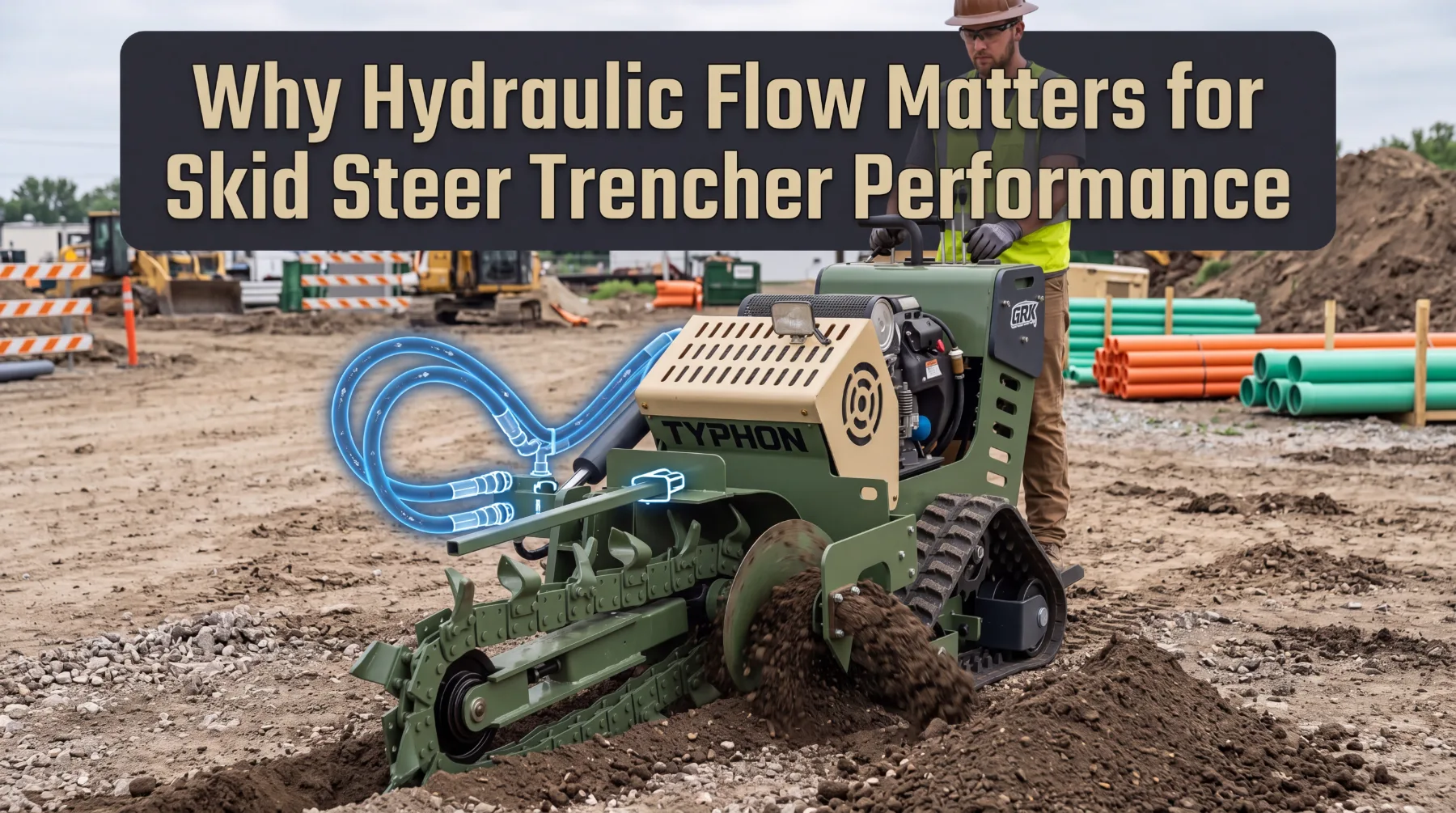
A skid steer trencher lives and dies by the hydraulic power feeding it. The attachment has no engine of its own, so every bit of digging force comes from the fluid the host machine sends its way. When that flow is strong and well matched, the trencher cuts cleanly and steadily. When it falls short, the whole operation slows, and even simple trenches become a struggle. Understanding hydraulic flow is the key to getting dependable performance from your trencher on every job.
This guide explains why hydraulic flow matters for skid steer trencher performance across five practical areas. You will learn how flow reaches the trencher motor, how it affects trenching speed, how soil conditions change hydraulic demand, how flow and pressure work together under load, and how to choose a hydraulic system that fits your work. By the end, you will have a clear, dependable understanding of what drives trencher performance.
Understanding Hydraulic Flow in a Skid Steer Trencher
Hydraulic flow determines how much hydraulic fluid reaches the trencher's motor during operation, and this delivery sits at the foundation of how the attachment performs. A skid steer trencher runs on the auxiliary hydraulic system of the host machine. The skid steer pumps fluid through its auxiliary circuit, and that fluid drives the trencher's hydraulic motor, which in turn powers the digging chain or cutter. In simple terms, the flow arriving at the motor is what turns the cutting mechanism and lets the trencher do its work.
The available flow rate directly affects how effectively the attachment can power its digging mechanism. Flow is usually measured in gallons or liters per minute, describing the volume of fluid the skid steer sends to the trencher over time. When the machine supplies flow at the rate the trencher motor is designed to receive, the digging chain turns at a productive speed and cuts through the ground steadily. The attachment performs as intended, delivering the cutting action it was built to provide.
This relationship explains why flow is so central to trencher performance. The trencher motor has a flow requirement, and meeting that requirement is what allows it to run properly. When the skid steer supplies too little flow, the motor cannot reach its intended operating speed, and the digging mechanism turns more slowly and with less authority. When the flow is well matched to the motor, the trencher runs at full capability. Understanding this connection helps you see the trencher not as a standalone tool but as part of a hydraulic system, where the flow the host machine delivers shapes everything the attachment can accomplish.
Hydraulic Flow and Trenching Speed
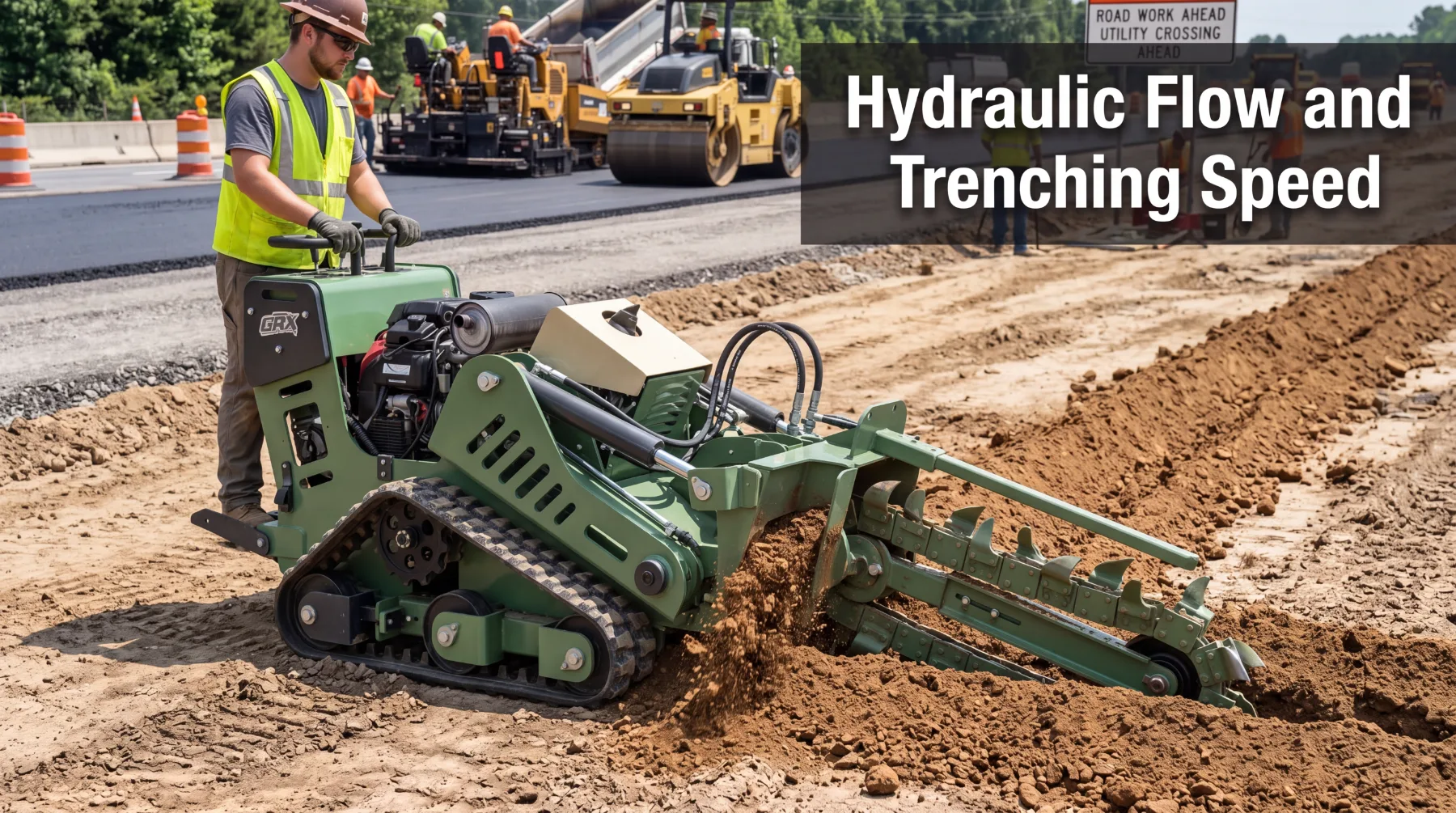
Adequate hydraulic flow helps the trencher maintain consistent chain or cutter movement while working through the soil, and that consistency is what keeps trenching productive. When the flow reaching the motor is steady and sufficient, the digging chain turns at a reliable speed, cutting through the ground at a predictable pace. This steady movement is exactly what you want, because it lets the trencher advance along the trench line smoothly and complete each cut without hesitation.
Insufficient flow tells a very different story. When the skid steer cannot supply the flow the trencher motor needs, the digging mechanism slows down and loses the momentum that keeps it cutting effectively. Operating speed drops, and the trencher struggles to maintain productive trenching cycles. Rather than moving steadily along the trench, the operator may find the chain bogging down, stalling, or cutting too slowly to keep the work on schedule. This turns a straightforward job into a frustrating one and pulls down the productivity of the whole operation.
The link between flow and speed becomes especially clear over the course of a working day. A trencher supplied with adequate flow cuts each trench at a consistent, efficient pace, so the operator can plan the work and move from one trench to the next without delay. A trencher starved of flow forces repeated slowdowns, and those lost minutes accumulate across many trenches into a real reduction in output. For work where trenching volume matters, maintaining consistent chain movement through adequate flow is a genuine advantage. Ensuring the host machine can supply the flow the trencher requires keeps the cutting speed steady, the cycles productive, and the whole job moving reliably from the first trench to the last.
Matching Flow to Soil Conditions
Different ground conditions place different demands on the trencher's hydraulic system, so the soil you cut through has a strong influence on how the hydraulics need to perform. Soft, loose soil offers little resistance and lets the digging chain move through it easily, while tougher ground fights back against the cutting action. As resistance rises, the hydraulic system has to work harder to keep the chain turning, which is why matching hydraulic performance to your soil conditions is so important.
Several types of demanding ground place added strain on the hydraulics:
Hard, compacted soil, which resists the chain and requires the system to maintain performance against greater resistance
Rocky ground, where the chain meets solid obstacles that increase the load on the motor
Heavily rooted soil, where roots grip and resist cutting, demanding sustained power to work through them
Dense or clay-heavy material, which can cling to the cutting mechanism and add to the effort required
Each of these conditions asks more of the hydraulic system than soft, workable ground does. When the chain meets increased resistance, the motor needs the hydraulic system to keep delivering performance so the trencher can continue cutting rather than stalling. A system with the capacity to maintain sufficient performance under load pushes through these tough conditions and keeps the trench progressing, while one that falls short may slow or struggle when the ground gets difficult.
This is why understanding your typical soil is essential when evaluating a trencher and its host machine. If your work regularly involves hard, rocky, or rooted ground, you need a hydraulic system with the capability to maintain performance under that added resistance. Matching the system to the conditions you face most keeps the trencher cutting reliably even when the ground is at its most demanding.
Flow Rate and Cutting Performance
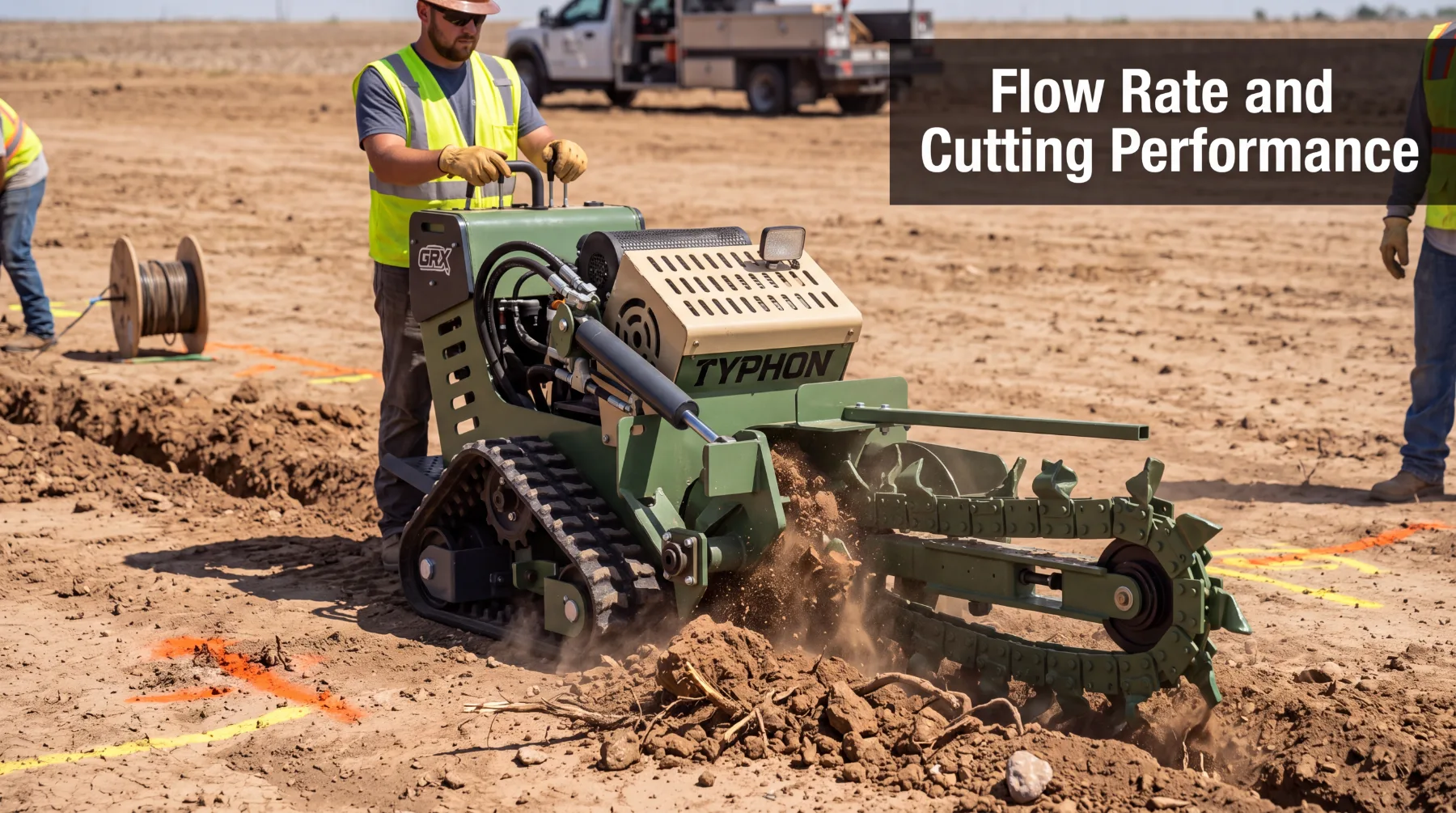
Hydraulic flow works together with pressure to determine how the trencher performs under load, and understanding this partnership clarifies what really drives cutting performance. Flow governs how fast fluid reaches the motor, which relates to the speed at which the digging chain turns. Pressure relates to the force the system can generate to keep that chain turning against resistance. Both are essential, and neither delivers strong cutting performance on its own. The trencher needs adequate flow to maintain chain speed and sufficient pressure to sustain that speed when the ground pushes back.
This combination matters most when digging conditions become more demanding. In easy soil, the chain turns freely and the demand on the system stays modest. When the trencher hits hard, compacted, or rooted ground, resistance climbs, and the system must supply both the flow to keep the chain moving and the pressure to overcome the added load. A properly matched hydraulic system meets both needs at once, which helps maintain cutter speed and reduces the performance drops that occur when a system cannot keep up.
The value of a well-matched system shows in how the trencher behaves when the work gets tough. A system that supplies adequate flow and pressure together holds its cutting speed steadily, powering through demanding ground without significant slowdown. A poorly matched system, by contrast, may see the chain speed fall away as resistance rises, since it cannot deliver the force needed to sustain the cut. This performance drop slows the work and makes tough trenching far harder than it should be. By recognizing that flow and pressure operate as partners, you can evaluate a trencher's hydraulic requirements more accurately and choose a setup that maintains dependable cutting performance across the full range of conditions your work involves.
Choosing the Right Hydraulic System
When evaluating a skid steer trencher, the smartest approach is to consider the machine's auxiliary flow, hydraulic pressure, and trencher motor requirements together as a complete system rather than focusing on any single figure. Cutting performance is the product of these elements working in harmony, so a setup that succeeds on one job may fall short on another if the specifications do not align. The goal is a balanced system in which the host machine supplies what the trencher needs to perform reliably.
Each element plays a defined role in that balance. The skid steer's auxiliary flow sets how much fluid reaches the trencher motor, which shapes the chain speed available. The hydraulic pressure determines the force the system can generate to sustain cutting under resistance. The trencher motor's requirements define what the attachment needs to run at its full capability. When the host machine's auxiliary flow and pressure match the trencher motor's requirements, the two work together to deliver dependable trenching. When they do not, the trencher either cannot reach its intended performance or asks for more than the machine can supply.
The intended workload should anchor the whole decision. A trencher cutting deep, wide trenches in demanding ground has different hydraulic needs from one handling shallow, narrow cuts in soft soil, and the system should reflect that reality. Matching these specifications helps ensure the hydraulic system can support the intended trenching depth, width, and workload. Look honestly at the trenches you need to cut, the ground you cut through, and the volume of work you handle, then confirm that the host machine's auxiliary flow and pressure meet the trencher motor's requirements. When the whole system aligns with your application, you gain a trencher that performs dependably, cuts consistently, and keeps your projects moving efficiently.
Conclusion
Hydraulic flow sits at the heart of skid steer trencher performance, driving the motor that powers the digging chain and shaping how well the attachment cuts. Adequate flow keeps the chain moving at a consistent, productive speed, while insufficient flow slows the work and undermines your trenching cycles. Soil conditions raise the demand on the system, and flow working together with pressure determines how the trencher holds up when the ground gets tough. Matching auxiliary flow, pressure, and the trencher motor's requirements as a complete system is what delivers reliable results.
Before choosing a skid steer trencher, take an honest look at the work ahead. Consider the trenches you need to cut, the soil you dig through, and the volume of work you handle, then confirm that the host machine's hydraulic system meets the trencher's requirements. When flow, pressure, and motor specifications align with your application, you gain a trencher that cuts consistently, powers through demanding ground, and performs dependably job after job. Reach out to discuss which hydraulic specifications best suit your trenching work.
Frequently Asked Questions
1. What is hydraulic flow and why does it matter for a skid steer trencher?Hydraulic flow refers to how much hydraulic fluid reaches the trencher's motor during operation, and it matters because that fluid is what powers the entire digging action. A skid steer trencher has no engine of its own, so it runs on the auxiliary hydraulic system of the host machine. The skid steer pumps fluid through its auxiliary circuit, and that fluid drives the trencher's hydraulic motor, which turns the digging chain or cutter. Flow is usually measured in gallons or liters per minute, describing the volume of fluid the machine delivers over time. The available flow rate directly affects how effectively the attachment can power its digging mechanism. When the skid steer supplies flow at the rate the trencher motor is designed to receive, the chain turns at a productive speed and cuts steadily through the ground. When the flow falls short of the motor's requirement, the digging mechanism cannot reach its intended speed and turns more slowly with less authority. Understanding this relationship helps you see the trencher as part of a hydraulic system, where the flow the host machine delivers shapes everything the attachment can accomplish.
2. What happens if my skid steer does not supply enough hydraulic flow?If your skid steer cannot supply the flow the trencher motor needs, the digging mechanism slows down and loses the momentum that keeps it cutting effectively. Adequate flow is what maintains consistent chain or cutter movement through the soil, so when the flow is insufficient, operating speed drops and the trencher struggles to maintain productive trenching cycles. Instead of advancing steadily along the trench line, you may find the chain bogging down, stalling, or cutting too slowly to keep the work on schedule. This turns a straightforward job into a frustrating one and reduces the productivity of the whole operation. The effect becomes especially clear over a full working day. A trencher supplied with adequate flow cuts each trench at a consistent, efficient pace, letting the operator move from one trench to the next without delay. A trencher starved of flow forces repeated slowdowns, and those lost minutes accumulate across many trenches into a real reduction in output. For work where trenching volume matters, ensuring the host machine can supply the flow the trencher requires is essential to keeping cutting speed steady and cycles productive.
3. How do soil conditions affect the hydraulic demand of a trencher?Soil conditions have a strong effect on hydraulic demand because different ground places different loads on the trencher's system. Soft, loose soil offers little resistance and lets the digging chain move through it easily, keeping demand on the hydraulics modest. Tougher ground fights back against the cutting action, and as resistance rises, the hydraulic system has to work harder to keep the chain turning. Hard, compacted soil resists the chain and requires the system to maintain performance against greater resistance. Rocky ground presents solid obstacles that increase the load on the motor. Heavily rooted soil grips and resists cutting, demanding sustained power to work through it, while dense or clay-heavy material can cling to the cutting mechanism and add to the effort required. Each of these conditions asks more of the hydraulic system than soft, workable ground does. When the chain meets increased resistance, the motor needs the system to keep delivering performance so the trencher continues cutting rather than stalling. This is why understanding your typical soil is essential. If your work regularly involves hard, rocky, or rooted ground, you need a hydraulic system with the capability to maintain performance under that added resistance so the trencher keeps cutting reliably.
4. How do hydraulic flow and pressure work together during trenching?Hydraulic flow and pressure work as partners to determine how the trencher performs under load, and both are essential to strong cutting performance. Flow governs how fast fluid reaches the motor, which relates to the speed at which the digging chain turns. Pressure relates to the force the system can generate to keep that chain turning against resistance. Neither delivers good performance on its own. The trencher needs adequate flow to maintain chain speed and sufficient pressure to sustain that speed when the ground pushes back. This combination matters most when digging conditions become demanding. In easy soil, the chain turns freely and demand stays modest. When the trencher hits hard, compacted, or rooted ground, resistance climbs, and the system must supply both the flow to keep the chain moving and the pressure to overcome the added load. A properly matched hydraulic system meets both needs at once, which helps maintain cutter speed and reduces the performance drops that occur when a system cannot keep up. A system that supplies adequate flow and pressure together holds its cutting speed steadily and powers through demanding ground, while a poorly matched system may see chain speed fall away as resistance rises.
5. How do I choose the right hydraulic system for a skid steer trencher?Choosing the right hydraulic system means considering the machine's auxiliary flow, hydraulic pressure, and trencher motor requirements together as a complete system rather than focusing on a single specification. Cutting performance is the product of these elements working in harmony, so a setup that succeeds on one job may fall short on another if the specifications do not align. The skid steer's auxiliary flow sets how much fluid reaches the trencher motor, which shapes the chain speed available. The hydraulic pressure determines the force the system can generate to sustain cutting under resistance. The trencher motor's requirements define what the attachment needs to run at full capability. When the host machine's flow and pressure match the motor's requirements, the two work together to deliver dependable trenching. The intended workload should anchor the decision, since a trencher cutting deep, wide trenches in demanding ground has different needs from one handling shallow, narrow cuts in soft soil. Matching these specifications helps ensure the hydraulic system can support the intended trenching depth, width, and workload. Look honestly at the trenches you need to cut, the ground you dig through, and the volume of work you handle, then confirm the host machine meets the trencher's requirements for reliable performance.
Need help turning this research into a real quote request?
Send the machine category, intended use, or product name to the KUVUO team and we can help you take the next step.
Contact KUVUO